
1913-1928·Feast February 10
St. José Sánchez del Río
Lay Martyr
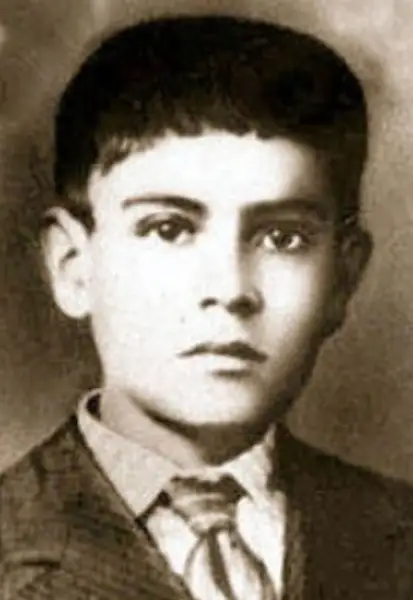
Overview
José Luis Sánchez del Río, affectionately called Joselito, was born at Sahuayo in Michoacán on 28 March 1913 and schooled first in his hometown and then in Guadalajara. When the Cristero War broke out in 1926, after the Mexican government closed churches and seized religious property under anti-clerical laws, his older brothers joined the Catholic rebels. José, not yet fourteen, begged to follow: his mother refused, and the local commander refused, but the boy insisted he wanted the chance to die for Christ, and he was made flagbearer of the troop. The Cristeros nicknamed him Tarcisius, after the young Roman martyr of the Eucharist. In heavy fighting in January 1928 he gave his own horse to a mounted soldier whose had been killed, then fired until his ammunition was gone and was captured. In prison he prayed the Rosary each day and wrote to his mother that he was ready to do God's will. His father's ransom came too late. On the evening of 10 February 1928 the soles of his feet were cut away and he was marched toward the cemetery, slashed with a machete, and told his life would be spared if he cursed Christ the King; his answer, repeated until the end, was that he would never yield: long live Christ the King.
The Complete Life
Early Life
José Luis Sánchez del Río first drew breath on 28 March 1913, at Sahuayo in Michoacán, Mexico, and was known all his short life as Joselito. He went to school first in his hometown and then in Guadalajara, Jalisco. His family was Catholic in the ordinary Mexican way, and by the time he was thirteen that inheritance had become, for him, a matter worth fighting for: his older brothers joined the rebel forces when the Cristero War began in 1926, and José asked to join too. His mother refused — he was too young — and he is said to have answered that he would rather die for Christ than live without Him, and that he would see her in heaven. The objection was overcome, or simply worn down, and the boy was taken on in a support role, looking after horses and running errands for the men. The war he joined had begun with the Calles government's enforcement of the anti-clerical articles of the Constitution: church property seized, religious schools and convents closed, priests exiled or executed.
§ Introduction
Conversion and Vocation
Joselito's vocation needs no conversion story, because it is the vocation of a boy raised in a faith under attack, who took the attack personally. His brothers had gone to fight; his parish and its sacraments had been outlawed; his mother's refusal to let him follow was answered with the argument that a Catholic who would not defend the faith had no right to expect heaven. What he wanted was the Cristero cavalry, and the refusal he met is itself part of the record: the grown men around him thought a thirteen-year-old belonged anywhere but the firing line, and the compromise that admitted him — drudge work with the column — kept him in the war and out of the saddle until the end. The famous cry later associated with him, that he would never give in, was already the position he had taken before anyone had asked him for anything.
§ Introduction
Mission and Ministry
José's part in the war was small and brief, as a thirteen- and fourteen-year-old's necessarily was. He served with the Cristero forces in the region of his home state, and in early 1928 the column he rode with was engaged near Cotija. When the horse of one of the commanders was shot from under him, José gave the man his own mount, and in the withdrawal that followed he was taken prisoner by federal troops. He was fourteen years old. He was held first at Cotija and then imprisoned in the sacristy of his own parish church in Sahuayo, which the army had desecrated and was using as a jail — a detail his biographers never fail to note, since the boy was being held in the very building in which he had been baptized and taught. In prison he prayed the Rosary every day and wrote a letter to his mother telling her that he was ready to do the will of the God to whom he had given himself; his father tried to raise a ransom, and failed to satisfy the authorities in time.
§ Life and Cristero War
Trial and Final Years
The army's problem was that a fourteen-year-old prisoner who would not recant was more dangerous alive than dead. To break him, the guards made him witness the hanging of another Cristero then held in custody; José encouraged the man instead, telling him they would soon meet again in heaven. On the evening of 10 February 1928 the government gave up on persuasion. Witnesses described what followed: the soles of his feet were cut and he was forced to walk barefoot through the town toward the cemetery, struck at intervals with a machete until he bled from several wounds. He wept and moaned with the pain but did not give in. When his guards stopped him and offered to spare his life if he would shout 'Death to Christ the King,' he shouted that he would never give in — that Christ the King should live. He was killed at the cemetery of Sahuayo on 10 February 1928.
§ Torture and death
Canonization
The cause opened at Zamora on 1 May 1996 and closed that October; the Congregation for the Causes of Saints granted the nihil obstat on 21 October 1996, making him a Servant of God, and the positio on his martyrdom followed in 2003. John Paul II approved the findings on 22 June 2004, declaring him venerable, and Benedict XVI beatified him in Mexico on 20 November 2005. The miracle required for canonization was the inexplicable recovery, in 2008-09, of a Mexican baby whom doctors judged beyond hope; Francis approved it on 21 January 2016, and José Sánchez del Río was canonized in Saint Peter's Square on 16 October 2016. He was the youngest canonized saint of the Cristero War and among the youngest non-martyr-child saints in the modern calendar. The ceremony of 2005 was held in the stadium at Guadalajara with the Cardinal-Prefect of the Congregation presiding on Benedict XVI's behalf, and the canonization of 2016, in the same jubilee-year program that raised Mother Teresa, gave Mexico its youngest modern saint.
§ Beatification process
Legacy
His remains lie above a side altar of Saint James the Apostle's church at Sahuayo, his hometown, which remains the center of the devotion. He has become the icon of the Cristero cause for the young: a fourteen-year-old who chose torture and death rather than a sentence against Christ the King, remembered in Mexico on his feast and invoked by children and adolescents. At Mankato, Minnesota, the Institute of the Incarnate Word founded in 2008 a preparatory seminary high school under his patronage, a boys' preparatory seminary named for him, and his image — a boy in a Cristero's hat — circulates far beyond Mexico as the most recognizable face of the persecution of the 1920s. Reliquaries containing his relics circulate among Mexican and American parishes, and the standard iconography — a boy in a Cristero hat, feet bare, crying the royal slogan — has made him the image most often chosen for catechesis on the persecution.
§ Introduction
Timeline
- 28 Mar 1913
Born in Sahuayo, Michoacán, the boy whom the Cristeros would nickname Joselito.
§ Life and Cristero War
- 1926
Cristero War breaks out; his brothers join the rebel forces while his mother initially forbids him to enlist.
§ Life and Cristero War
- 25 Jan 1928
During heavy fighting he gives his horse to a stranded soldier, fires until his ammunition runs out, and is captured.
§ Life and Cristero War
- 10 Feb 1928
Tortured that evening at Sahuayo, he is killed after refusing every demand to renounce Christ the King.
§ Torture and death
- 1 May 1996
Diocesan phase of his beatification cause opens in Zamora.
§ Beatification process
- 21 Oct 1996
The Congregation for the Causes of Saints grants a nihil obstat, making him a Servant of God.
§ Beatification process
- 29 Nov 2002
Roman ratification of the process lets officials draft the positio on his martyrdom the next year.
§ Beatification process
- 22 Jun 2004
Pope John Paul II approves the findings, declaring him venerable.
§ Beatification process
- 20 Nov 2005
Beatified at Guadalajara by Cardinal José Saraiva Martins acting on behalf of Pope Benedict XVI.
§ Beatification process
- 21 Jan 2016
Pope Francis approves an inexplicable baby's recovery as a miracle worked through his intercession.
§ Beatification process
- 15 Mar 2016
An ordinary consistory of cardinals confirms the approved miracle.
§ Beatification process
- 16 Oct 2016
Canonized by Pope Francis in Saint Peter's Square.
§ Beatification process
In Their Own Words
Yo nunca voy a ceder! Viva Cristo Rey!
The Record
- Patron of
- Persecuted Christians·Children·Adolescents·Sahuayo
- Symbols
- Crucifix·Palm branch
- Canonization
- Beatified by Pope Benedict XVI (Cardinal Saraiva Martins presiding) on 20 November 2005 at Guadalajara; canonized by Pope Francis on 16 October 2016
Prayer
Bibliography
Show 8 sources
- 1 2 Lichon, Katy et al. "¡Viva Cristo Rey! Honoring Saint José Sánchez del Río", University of Notre Dame
- ↑ "At 14, the martyr José Sánchez had more value than all the enemy troops: model for the young" . Religion en Libertad. March 19, 2016 . Retrieved March 20, 2016 .
- 1 2 3 "14 year-old Mexican martyr to be beatified Sunday" . Catholic News Agency . Retrieved March 19, 2016 .
- 1 2 3 "Our Patrons" . Archived from the original on March 4, 2016 . Retrieved March 19, 2016 .
- ↑ "},"date":{"wt":""},"website":{"wt":"Holy Family Catholic Church, Lawton, Oklahoma"},"publisher":{"wt":""},"access-date":{"wt":"17 June 2026"},"quote":{"wt":""}},"i":0}}]}' id="mwvg"/> "Meet the Saint in our Narthex: St. José Luis Sánchez
- ↑ "Image of where Saint Joselito's relics are enshrined" . Retrieved October 23, 2016 .
- ↑ Villa, Carmen Elena. "St. José Sánchez del Río: The boy who died for love of Christ the King", Denver Catholic , October 25, 2016
- ↑ Vatican website, Holy Mass and Canonization of the Blesseds: Salomon Leclercq, José Sánchez del Río, Manuel González García, Lodovico Pavoni, Alfonso Maria Fusco, José Gabriel del Rosario Brochero, Elisabeth of the Holy Trinity Catez
Profile text adapted from the Wikipedia article, licensed CC BY-SA 4.0.
Pray with this saint every day
Save St. José Sánchez del Río to your favorites, read the full profile, and get feast-day reminders in the Saints app.
Get the Saints AppFree on the App Store for iPhone and iPad