
died 1900·Feast July 9
St. Joseph Mary Gambaro
Priest and Martyr
Overview
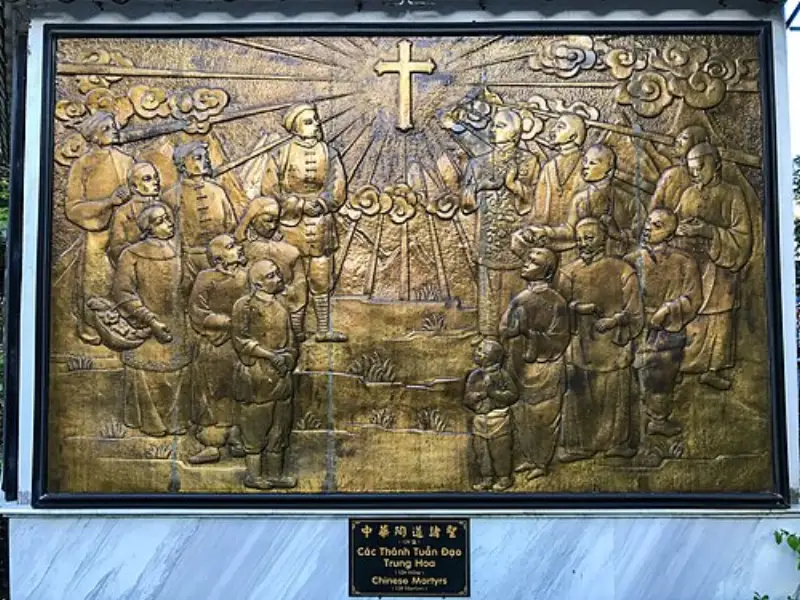
Joseph Mary Gambaro, an Italian priest of the Franciscan Friars Minor, served in southern Hunan under Bishop Anthony Fantosati. The Boxer uprising of 1900 fanned violent attacks on foreign missionaries and their converts across wide stretches of China, and by the summer of that year the unrest had reached the Franciscan missions of southern Hunan, where Gambaro labored alongside his bishop. He was martyred on 7 July 1900 at his bishop's side, three days after his confrere Cesidio Giacomantonio had become the first of the small community to fall. John Paul II canonized him on 1 October 2000 among the 120 Martyr Saints of China.
The Complete Life
Conversion and Vocation
Joseph Mary Gambaro was an Italian priest of the Franciscan Friars Minor who gave his life to the China missions. He belongs to the great nineteenth-century revival of Franciscan foreign missions, in which the Order, rebuilt in Europe after the Napoleonic upheavals, sent its men back to the vicariates it had once served across Asia. For an Italian friar of that generation the path ran through the Order's seminaries at home and then, by voluntary offering, to one of the Chinese provinces where friars still died with unsettling regularity. Gambaro took that path as a priest, accepting both the pastoral powers of Holy Orders and the specific dangers that fell on foreign clergy in a China increasingly resentful of everything foreign — a resentment the political exactions of the European powers had done much to earn and that Chinese Christians, quite unjustly, were made to share.
Mission and Ministry
Gambaro's assignment was southern Hunan, the vicariate entrusted to Bishop Anthony Fantosati. It was among the hardest ground in the China missions: a province with a reputation for hostility to outsiders, where the Catholic community was small, scattered along rivers and into hill country, and dependent on Chinese catechists for its daily instruction. The Italian friars there were very few, and a young priest's work meant long circuits of village chapels, the training and encouragement of catechists, the administration of the sacraments to households that might see a priest twice a year, and the patient maintenance of the mission's schools and property. Gambaro worked in this setting under an older bishop whom the Chinese Christians had known for decades, sharing fully in the isolation, the slow growth, and the accumulating danger that such a mission demanded of everyone who stayed.
Trial and Final Years
The Boxer uprising of 1900 made southern Hunan deadly ground. Through June and early July, bands hostile to foreigners and their Chinese associates moved through the province, and the mission's protection by any lawful authority was thin. The little Franciscan community was struck in sequence: on 4 July 1900 the priest Cesidio Giacomantonio was killed — the first of them to fall — and three days later, on 7 July, Gambaro himself was put to death at Bishop Fantosati's side. Neither man had fled; the option of withdrawal toward the treaty ports existed for foreign missionaries, and each of them declined it. Gambaro died a young priest, two days before the larger massacre of his confreres at Taiyuan sealed the summer's harvest. The deaths left the Hunan Catholics leaderless and, by the logic of that year, proved that the missionaries had not come for profit or protection, since those were exactly what their presence cost them.
Canonization
The deaths of the Hunan Franciscans were taken up with those of their confreres elsewhere in China into a single complex of causes, pursued on the testimony of the Chinese survivors. Pope Pius XII beatified the Franciscan martyrs of the Boxer uprising, Gambaro included, on 24 November 1946. On 1 October 2000, in St. Peter's Square, Pope John Paul II canonized him among the 120 Martyr Saints of China — the largest single canonization in the history of the Chinese church, deliberately uniting foreign missionaries and Chinese faithful of every rank in one commemoration. His canonization came, by coincidence of the calendar, at a moment of fresh tension between Rome and Beijing, which gave the act a public meaning beyond the liturgical one and made the martyrs' names a point of contested memory in China itself.
Legacy
Gambaro is remembered with Fantosati and Giacomantonio as the Franciscan witness of southern Hunan, the province's small but complete claim on the roll of the 120. His life illustrates the ordinary arithmetic of the missions: one bishop, a few priests, and a dependent network of Chinese catechists, all of it built by men who died before they could know whether any of it would last. The church in Hunan did last, and honors him on the shared feast of the Martyr Saints of China as one of the priests who stayed at his post when staying was the whole of his remaining duty — a short life whose meaning was settled entirely by its end.
Timeline
- 4 Jul 1900
Fellow priest Cesidio Giacomantonio of the same Hunan mission is martyred, the first of the community to fall.
§ Martyrs of the Boxer Rebellion
- 7 Jul 1900
Killed with Bishop Anthony Fantosati in southern Hunan during the Boxer violence.
§ Martyrs of the Boxer Rebellion
- 24 Nov 1946
Beatified by Pope Pius XII among twenty-nine martyrs of China.
§ Introduction
- 1 Oct 2000
Canonized by Pope John Paul II among the 120 Martyr Saints of China.
§ Introduction
The Record
- Canonization
- Canonized by Pope John Paul II on 1 October 2000, among the 120 Martyr Saints of China
Prayer
Profile text adapted from the Wikipedia article, licensed CC BY-SA 4.0.
Pray with this saint every day
Save St. Joseph Mary Gambaro to your favorites, read the full profile, and get feast-day reminders in the Saints app.
Get the Saints AppFree on the App Store for iPhone and iPad