
1860 – 1923·Feast 20 March
St. Józef Bilczewski
Archbishop of Lviv and tireless friend of the poor
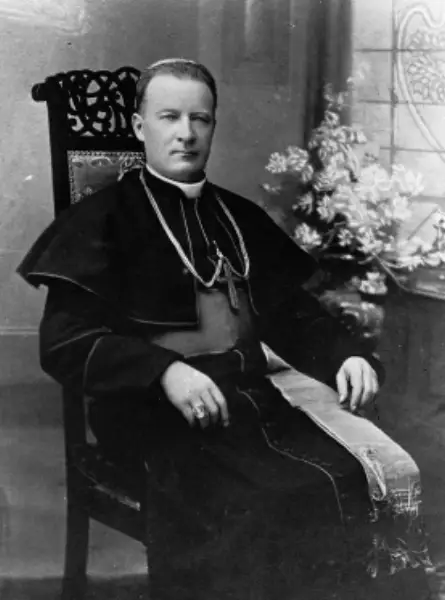
Overview
Józef Bilczewski was a Polish prelate who led the Archdiocese of Lviv from 1900 until his death in 1923. Born to peasant parents in Wilamowice, then part of the Austrian Empire, he was the eldest of nine children. After earning doctorates in Kraków and Vienna and pursuing further studies in Rome and Paris, he became a professor of dogmatic theology at the Lviv college, later serving as dean and rector. Emperor Franz Joseph I chose him for the see of Lviv, and Pope Leo XIII confirmed the appointment in December 1900. As archbishop he promoted the building of more than 330 churches, fostered Eucharistic devotion, convened the first Mariological Congress in Poland, and welcomed new religious congregations to his territory. Through the First World War and the conflicts that followed it, he organized relief for refugees, the hungry, beggars, and the homeless, and worked to calm ethnic and political tensions alongside other church leaders. He died of pernicious anemia on 20 March 1923. Pope John Paul II beatified him in Lviv in 2001, and Pope Benedict XVI canonized him in Saint Peter's Square in 2005.
The Complete Life
A Peasant's Son in the Austrian Empire
Józef Bilczewski was born on 26 April 1860 in Wilamowice, a town in the Austrian Empire that lies in Poland today. His parents, Franciszek Biba and Anna Fajkisz, were commoners, and Józef was the first of their nine children. The family name Biba remained with his line, and descendants bearing the names Biba, Pietrzak, Makuch, and Lukaszka were still living, mainly in Poland, in modern times. His earliest schooling took place in his hometown between 1868 and 1872, after which he moved to Wadowice for secondary studies. He spent eight years there, from 1872 to 1880, and received his diploma upon completing the course. That same year he graduated from the local school in Wadowice and made the decision that would shape the rest of his life: he entered studies for the priesthood in Kraków. The path from a large peasant household to the intellectual life of the Church was demanding, but the eldest son of the Biba family proved capable of sustained academic work, a capacity that would carry him through some of the finest universities of central Europe and finally to the leadership of one of its great dioceses.
§ Life
Scholar, Priest, and Professor
Bilczewski combined priestly formation with remarkable scholarly achievement. He earned a doctorate at the Jagiellonian University and was ordained to the priesthood in 1884 by Cardinal Albin Dunajewski. His studies continued abroad: he spent 1885 and 1886 in Vienna, where he took a doctorate in theological studies, and then moved to Rome to pursue dogmatics and archaeology at the Pontifical Gregorian University from 1886 to 1887, followed by a semester in Paris in 1888. Armed with this preparation, he took up pastoral and educational work. Between 1888 and 1890 he ministered in Kęty as vicar and catechist, then spent 1891 teaching religion as an assistant at the Kraków church of Saints Peter and Paul. The Jagiellonian granted him his habilitation in 1890, opening the way to university teaching, and the following year he accepted a chair of dogmatics at the Lviv college. His academic rise was swift. A full professorship reached him in 1893, and the Theological Department made him its dean from 1896 through 1897. In 1900 his colleagues elected him rector of the college, an office he soon relinquished for a higher calling.
§ Life
Archbishop of Lviv
In 1900 Bilczewski was elected rector of the Lviv college, but he relinquished it when Emperor Franz Joseph I named him on 30 October 1900 to head the see of Lviv. Leo XIII gave the nomination papal form on 17 December 1900, and a month later Bilczewski received episcopal consecration in Lviv Cathedral at the hands of Jan Maurycy Paweł Puzyna z Kosielsko, with Andrij Aleksander Sheptytsky and Józef Sebastian Pelczar serving as co-consecrators. His two decades at the head of the archdiocese were marked by energetic pastoral planning. He championed the construction of new churches on an extraordinary scale, initiating more than 330 building projects, among them the monumental Saint Elizabeth Church. He promoted the cultus of Blessed James of Strepar, welcomed the Pallottines into the archdiocese in 1907, and organized the first Mariological Congress in Poland in 1904. Concerned for the formation of his clergy, he arranged courses to prepare priests for social work among the poor and provided financing for several Catholic societies. His warmth toward students made him a popular figure well beyond Catholic circles, reaching members of other denominations, and he made several ad limina visits to Rome to report to Leo XIII, Pius X, and Benedict XV.
§ Life
Devotion at the Heart of Administration
Behind Bilczewski's administrative energy lay a defined spiritual program centered on the Eucharist and the Heart of Christ. He encouraged devotion to the Sacred Heart of Jesus throughout the archdiocese and urged his priests to establish Eucharistic Adoration in their parishes, believing that the faithful would be renewed through prayer before the Blessed Sacrament. His promotion of the first Mariological Congress in Poland in 1904 reflected a deep Marian piety, as did his support for the cultus of Blessed James of Strepar, a holy bishop of the region whose memory he sought to revive. Yet his spirituality found its clearest expression in concrete charity. He aided beggars and the homeless of his archdiocese, and when war brought displacement and hunger he threw himself into organizing relief. The poor responded with their own form of recognition: in 1917 the homeless he had helped gave him an affectionate title of their own devising, honoring him as a patron. For Bilczewski, doctrinal learning, liturgical devotion, and care for the destitute were not separate pursuits but a single pastoral whole, and the credibility of his scholarship and preaching rested on his visible solidarity with those who had nothing.
§ Life
War, Relief, and a Quiet Death
The First World War transformed Bilczewski's archdiocese into a zone of shortage and displacement. He helped found relief committees for Galicia's workers, left by the fighting without enough to eat, and during the Polish-Ukrainian War of 1918 and the Siege of Lviv he organized the delivery of food to the besieged population. Together with Andrij Sheptytsky he attempted to mediate and ease tensions between the contending peoples, and though these efforts met with limited success, the two churchmen continued their work alongside the apostolic nuncio Achille Ratti, the future Pope Pius XI. When Bolshevik forces occupied Poland and Ukraine, Bilczewski met them with the same composure. The cost was grievous, for his archdiocese counted 120 priests gone between 1918 and 1921. Honors arrived in recognition, including the second tier of the Cross of Valor in 1922 and the Grand Cross of the Order of Polonia Restituta, awarded on 2 May 1922, after an honorary doctorate from Warsaw in 1921. In mid-January 1923 he fell ill with pernicious anemia, and he died in Lviv on 20 March of that year, sixty-two years old. Pius XI ranked him among the finest bishops anywhere in the church. His heart has rested since 2001 in an urn within the Lviv Cathedral, where a monument commemorating him has stood since 20 March 1928.
§ Life
From Servant of God to the Altar
The cause of Józef Bilczewski began formally on 2 July 1944, when Pope Pius XII's era saw the introduction of his beatification process and he received the title Servant of God. Only in 1952 did the informative phase open, running until 1962 while documents and the interrogatories of witnesses were gathered and boxed for the Congregation for Rites in Rome. Long silence followed. Not until 8 June 1990 did the Congregation for the Causes of Saints declare that phase valid, and the postulation then submitted its Positio dossier in 1997, won the approval of consultor theologians on 16 May of that year, and that of the congregation's cardinals on 11 November. On 18 December 1997 Pope John Paul II declared him Venerable, confirming his heroic virtue. Beatification required a miracle, which came in the healing of Marcin Gawlik, nine years old at the time, whose grievous burns faded away on 24 July 1995 once his family sought Bilczewski's help. Boards of physicians and theologians ratified the cure, and on 26 June 2001 John Paul II beatified the archbishop at the Lviv Hippodrome. A second healing, validated and approved by medical experts on 24 June 2004 and by theologians that September, opened the way to sainthood. Cardinal Angelo Sodano fixed the date at a consistory on 24 February 2005, and Pope Benedict XVI canonized Bilczewski in Saint Peter's Square on 23 October 2005.
§ Sainthood
A Patron Remembered
Bilczewski's memory endures in the places he served and the people he championed. The Archdiocese of Lviv honors him as its patron, as do the teachers whose work he supported and the beggars and homeless people whose cause he made his own. His hometown of Wilamowice formally named him its patron on 5 October 2013, closing a circle that began when a farmer's son left the town for school more than a century and a half earlier. In the Latin Cathedral of Lviv a statue commemorates the archbishop who rebuilt the Church's presence across the region, and his monument in the cathedral has marked his memory there since 1928. The more than 330 churches he initiated remain visible testimony to his conviction that worship deserved worthy buildings even in hard times. His canonization in 2005 placed a twentieth-century bishop, formed in the universities of the Austro-Hungarian world and tested by two wars, among the saints of the universal Church. For the Catholics of Poland and Ukraine he stands as an example of pastoral perseverance across ethnic and political division, and for all who work with the urban poor he remains a model of practical, unembarrassed charity.
§ Patronage
Timeline
- 26 Apr 1860
Born in Wilamowice, the eldest of nine children of Franciszek Biba and Anna Fajkisz.
§ Life
- 6 Jul 1884
Ordained a priest in Kraków by Cardinal Albin Dunajewski after earning a doctorate at the Jagiellonian.
§ Life
- 1886
Received a doctorate in theological studies from Vienna, having studied there from 1885 to 1886.
§ Life
- 1891
Became professor of dogmatics at the Lviv college after passing his habilitation at the Jagiellonian.
§ Life
- 1896
Assumed the deanship of the Theological Department at the Lviv college, serving through 1897.
§ Life
- 17 Dec 1900
Pope Leo XIII formalized his appointment as Archbishop of Lviv at Emperor Franz Joseph I's nomination.
§ Life
- 20 Jan 1901
Received episcopal consecration in Lviv Cathedral from Jan Maurycy Paweł Puzyna z Kosielsko.
§ Life
- 1904
Organized the first Mariological Congress held in Poland.
§ Life
- 1907
Welcomed the Pallottines, allowing them to settle within his archdiocese.
§ Life
- 1917
The homeless of his archdiocese honored him with an affectionate title in gratitude for his help.
§ Life
- 1918
Worked to ease tensions during the Polish-Ukrainian War and organized food for the besieged city.
§ Life
- 1921
Received an honorary doctorate from the Warsaw college.
§ Honours
- 2 May 1922
Awarded the Grand Cross of the Order of Polonia Restituta.
§ Honours
- 18 Jan 1923
Was first struck by the pernicious anemia that would claim his life.
§ Life
- 20 Mar 1923
Died in Lviv at the age of sixty-two.
§ Life
- 2 Jul 1944
The beatification cause was introduced under Pope Pius XII and he became a Servant of God.
§ Sainthood
- 24 Jul 1995
A nine-year-old boy's severe burns vanished after appeals for his intercession, the beatification miracle.
§ Sainthood
- 18 Dec 1997
Pope John Paul II declared him Venerable after confirmation of his heroic virtue.
§ Sainthood
- 26 Jun 2001
Beatified by Pope John Paul II at the Lviv Hippodrome during the papal visit to Ukraine.
§ Sainthood
- 23 Oct 2005
Canonized by Pope Benedict XVI in Saint Peter's Square.
§ Sainthood
The Record
- Major works
- Oversaw the construction of more than 330 churches across the Archdiocese of Lviv, including the monumental Saint Elizabeth Church·Convened the first Mariological Congress in Poland (1904)·Organized courses preparing priests for social work among the poor and financed several Catholic societies
- Patron of
- Archdiocese of Lviv·teachers·Wilamowice·beggars·homeless people
- Symbols
- Episcopal attire
- Canonization
- Canonized by Pope Benedict XVI on 23 October 2005 in Saint Peter's Square, Vatican City.
Prayer
Bibliography
Show 4 sources
- "Saint Jósef Bilczewski". Saints SQPN. 17 March 2017. Retrieved 8 April 2017.
- "Saint Josef Bilczewski". Santi e Beati. Retrieved 8 April 2017.
- "Joseph Bilczewski (1860-1923)". Holy See. Retrieved 8 April 2017.
- "O Świętym". jozef.bilczewski.pl (in Polish). Archived from the original on 27 December 2017. Retrieved 27 December 2017.
Profile text adapted from the Wikipedia article, licensed CC BY-SA 4.0.
Pray with this saint every day
Save St. Józef Bilczewski to your favorites, read the full profile, and get feast-day reminders in the Saints app.
Get the Saints AppFree on the App Store for iPhone and iPad