
died c. 305·Feast March 16
St. Julian of Antioch
Cilician martyr of the Diocletianic persecution
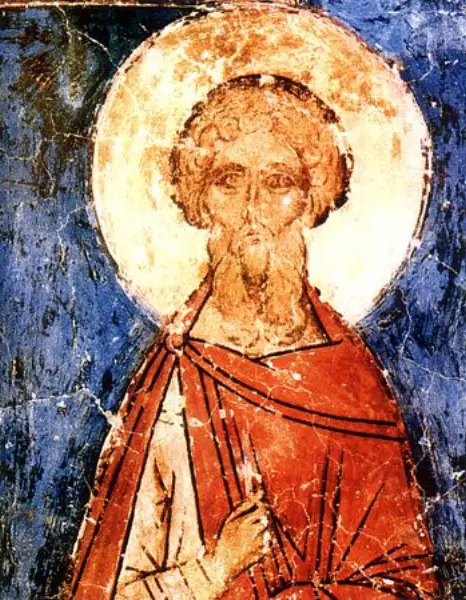
Overview
Julian of Antioch, called also Julian the Martyr, Julian of Tarsus, Julian of Cilicia, and Julian of Anazarbus, was a fourth-century Christian martyr put to death in the persecutions of Diocletian, dying around 305. He was of senatorial rank, a fact that made his fall to torment and execution the more conspicuous in the cities of Roman Cilicia. According to the legend of his passio, his tormentors put him through dreadful tortures and led him in procession day after day for a full year from city to city across Cilicia, a public spectacle of endurance meant to break him and meant, instead, to display him. At the last he was stitched up inside a sack packed with scorpions, sand, and vipers and thrown into the sea. The waters, the legend says, carried his body to Alexandria, where he was buried, before his relics were translated to Antioch. There his cult took deep root: John Chrysostom himself preached a homily in his honor, and the city's chief basilica, said to hold his relics, bore his name. The Eastern Orthodox Church keeps his feast on 21 June and the Roman Catholic Church on 16 March. He is sometimes confused with the Julian martyred alongside his wife Basilissa.
The Complete Life
A Senator Before the Proconsul
Julian belonged to the senatorial order, the aristocracy of the Roman world, and that rank frames everything the tradition records about him. When Diocletian's persecution demanded that Christians sacrifice to the gods, a man of his standing had much to lose and the means, seemingly, to lose nothing: rank bought exemptions, silence, and survival. Julian refused the bargain and was killed for it, dying around the year 305 in the wave of persecution that swept the eastern provinces. Later hagiographers dressed his trial in cruel pageantry. The legend tells of terrible tortures inflicted on him, and then of a punishment devised for its theatrical cruelty: he was paraded daily for a whole year through the various cities of Cilicia, from Tarsus to Anazarbus, the towns that cling to his memory in his many titles. Each day's procession was an invitation to apostasy and a lesson in endurance; each city that saw the bound senator saw the empire's power made ridiculous by his patience. Whatever the historical core beneath the legend, the Church of the fourth century remembered Julian as proof that the faith could reach the highest orders of society and that neither rank nor torment could buy from a believer the one thing persecution wanted, the surrender of the name of Christ.
§ Life
The Sack and the Sea
The legend of the passio brings Julian's martyrdom to a grotesque close. When the year of processions through the towns of Cilicia had failed to break him, the executioners stitched him up inside a bag stocked with vipers, scorpions, and sand and consigned the bag to the waves. The image fixed itself in his iconography, and artists have shown him ever since swallowed by the waves in his shroud of serpents, or his coffin floating bearing four seated angels, or led bound through the streets on a dromedary. The sea, however, refused to be the empire's accomplice, as the legend tells it: the waters carried his body to Alexandria, where the Christians buried him with honor, and from that Egyptian tomb his relics were in time translated to Antioch. There the story takes on its most credible dimension, for Antioch's chief basilica was said to enshrine his remains and took its dedication from his name. The martyrdom thus ends where the tradition of the ancient Church most loved to end, with a body guarded by the elements, a grave known to the faithful, and bones carried in triumph to a great city that would keep his feast for centuries on both sides of the old Roman world.
§ Life
Chrysostom's Pulpit and a Basilica's Name
The surest sign of Julian's standing in the ancient Church is the company his cult kept. John Chrysostom, the greatest preacher of the patristic age, mounted the pulpit at Antioch and delivered a homily in Julian's honor, a public act that tied the martyr's memory to the city's most celebrated Christian voice. The chief basilica of Antioch, by tradition the resting place of his translated relics, was known by his name, so that the martyr entered the very geography and liturgy of one of the great sees of Christendom. His feast settled into two calendars: 21 June in the Eastern Orthodox Church and 16 March in the Roman Catholic Church, dates that have carried his memory through the schism that divided the two communions. Iconography preserved the legend's strangest scenes, the sack of serpents and scorpions, the floating coffin attended by angels, the bound prisoner on his dromedary. Later ages sometimes muddled his identity, confusing him above all with the Julian martyred with his wife Basilissa at Antinoe, one of thirty-nine saints of the name in the Roman Martyrology. Modern scholarship, notably Efthymios Rizos's edition and study of his Passio, continues to sort the traditions surrounding this Cilician witness.
§ Veneration
The Record
- Symbols
- cast into the sea in a sack full of serpents and scorpions·his coffin floating with four angels seated on it·led bound on a dromedary
- Canonization
- Pre-congregation
Prayer
Bibliography
Profile text adapted from the Wikipedia article, licensed CC BY-SA 4.0.
Pray with this saint every day
Save St. Julian of Antioch to your favorites, read the full profile, and get feast-day reminders in the Saints app.
Get the Saints AppFree on the App Store for iPhone and iPad