
1894 – 1979·Feast June 14
St. Justin Popović
Serbian Orthodox theologian and archimandrite of Ćelije
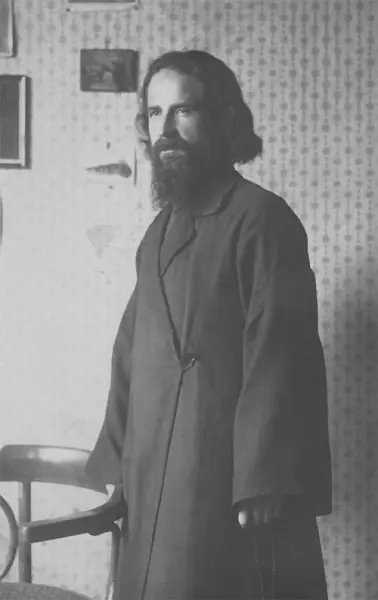
Overview
Justin Popović, born Blagoje Popović, was a Serbian Orthodox theologian, archimandrite of the Ćelije Monastery, Dostoevsky scholar, and writer. He came from a priestly family in the southern Serbian town of Vranje and was educated at the Faculty of Theology of the University of Belgrade, where the teaching of Nikolaj Velimirović shaped him decisively. During the First World War he served as a student nurse with the Serbian Army and took monastic vows in Shkodër in 1916, receiving the name Justin after St. Justin the Philosopher. He then studied in Russia and England, earning a doctorate in Athens in 1926, and taught dogmatics at the Theological Faculty in Belgrade from 1934. Removed from his chair after the communist takeover in 1945, he spent the remaining thirty-one years of his life at Ćelije Monastery under police surveillance, writing prolifically and becoming a stern critic of ecumenism when it relativized the truth of God. His multivolume dogmatics, hagiographies, and sermons are regarded as a major contribution to Orthodox theology. He died at Ćelije on 7 April 1979, the day after his eighty-fifth birthday, and was glorified by the Serbian Orthodox Church in 2010.
The Complete Life
A Priestly Line in Vranje
The child who would become one of the most influential Serbian theologians of the twentieth century was born on 6 April 1894 in Vranje, a town in the south of Serbia. His parents gave him the secular name Blagoje, chosen at his baptism in honor of the Feast of the Annunciation, whose Serbian name recalls the good news of the angel's greeting. He was born into what was by then a deeply rooted clerical dynasty: seven generations before his own father Spiridon, who served as a sexton, the heads of the Popović family had been priests, the very surname carrying the Serbian word for priest. The boy's formation therefore unfolded within a household already consecrated to the service of the Church. His intellectual gifts carried him to the University of Belgrade, where he completed nine years of study at the Faculty of Theology in 1914. There he came under the influence of the School of St. Sava, an institution renowned throughout the Orthodox world for its combination of rigorous scholarship and severe asceticism. Foremost among its teachers stood the hieromonk Nikolaj Velimirović, who held the chair of philosophy and theology, and his spiritual direction would prove decisive for the young man's entire course.
§ Early life
Monastic Tonsure amid War
The First World War transformed the student theologian into a servant of suffering humanity. In the autumn of 1914 he served as a student nurse in Shkodër, Niš, and throughout Kosovo, and contracted typhus as winter came and lay in a Niš hospital for upward of a month. He went back on duty on 8 January 1915 and shared the fortunes of the Serbian Army on the road from Peć to Skadar, during which some hundred thousand Serbian soldiers perished. In the midst of this catastrophe his vocation took formal shape: on 1 January 1916 he received the monastic habit in the Orthodox cathedral of Shkodër, taking the name Justin in honor of St. Justin the Philosopher. Shortly afterward he traveled with other students to Petrograd, where study at the Orthodox seminary deepened his commitment to the monastic life; there the great Russian ascetics first met his gaze, from Anthony and Theodosius of the Caves to Seraphim of Sarov, Sergius of Radonezh, and John of Kronstadt. His spiritual father Nikolaj urged him onward to England, where he pursued theological studies from 1916 to 1926. His doctoral thesis on the philosophy and religion of Dostoevsky, with its radical critique of Western humanism and rationalism, was not accepted at Oxford, but its publication in 1923 marked the beginning of his literary apostolate.
§ World War I
Teacher of Dogmatics
Academic recognition and ecclesiastical service followed in quick succession. In 1926 the Faculty of Theology in Athens granted him the title of Doctor of Theology for a dissertation on the problem of personality and knowledge according to St. Macarius of Egypt. For his courses on the lives of the saints he undertook the translation of hagiographic material from Greek, Syriac, and Slavonic sources into Serbian, together with homilies of John Chrysostom, Macarius, and Isaac the Syrian, and he produced a study of the theory of knowledge according to Isaac the Syrian drawn from the Ascetical Homilies. From 1930 to 1932 he taught briefly at the Theological Academy of St. Cyril and Methodius in Prizren and then served as the associate of Bishop Joseph of Bitola in the difficult work of reorganizing the Church of the Carpatho-Russians in Czechoslovakia, where converts were returning from Uniatism to Orthodoxy. In Bitola his path crossed that of the young John Maximovich, later of Shanghai and San Francisco, who served as his assistant at the seminary. In 1934 he was chosen professor of dogmatics at the Theological Faculty of St. Sava in Belgrade, a chair he held until 1945, and in 1938 he helped found the Serbian Philosophical Society.
§ Belgrade
The Theology of the God-Man
Justin's theology was centered on the God-Man Christ, and from that center he judged every philosophy and every ecclesiastical fashion. His criticism of Western humanism, rationalism, and anthropocentrism, first voiced in the Dostoevsky dissertation, matured into a comprehensive Orthodox vision expressed in his three volumes of dogmatics and in works such as The Man and the God-Man. He was equally unsparing toward what he regarded as the dangers of the ecumenical movement, opposing any tendency to relativize the truth of God, and toward what he called the innovations of Rome; his judgment was cited approvingly by the Synod of the Church of Greece when it forbade common prayer with other Christian confessions. Yet his thought was not merely polemical. Through his translations of the Fathers, his twelve volumes of hagiographies of the saints published between 1972 and 1977, and his homilies for feasts, Sundays, and Pascha, he labored to make the living experience of the Church accessible to his own people. The Greek academician John N. Karmiris found himself able to call him the secret conscience of the Serbian Church, while the theologian John Meyendorff, even as he recorded his objections, granted the worth of his contribution to Orthodox theology.
§ Communist regime
Confessor at Ćelije
The communist seizure of power in Yugoslavia in 1945 ended Justin's academic career. Deemed ineligible to teach by the new regime, he was ousted from the Theological Faculty together with several colleagues, and state atheism left no room for his anti-communism or his missionary zeal. He withdrew to the small monastery of Ćelije, where he passed the final thirty-one years of his life under unbroken watch by the communist police, with his public appearances restricted to the monastic walls. Yet confinement did not silence him. Unlike his spiritual father Nikolaj Velimirović, who never returned to Yugoslavia after the war, Justin remained in the country and took an active part in the organization of the Serbian Orthodox Church, perhaps precisely because, as a simple hieromonk rather than a bishop, he attracted less attention from the authorities. He died on 7 April 1979, one day past his eighty-fifth birthday, which that year coincided with the Feast of the Annunciation as kept on the Julian calendar — a coincidence his devotees found fitting for a man whose baptismal name, Blagoje, honored that same feast. He was buried at Ćelije, the monastery that had become his desert and his pulpit.
§ Communist regime
Glory of the Serbian Church
The Serbian Orthodox Church solemnly numbered Justin among its saints on 2 May 2010, when the Holy Synod of the Church proclaimed his canonization. The decision, announced by the Holy Assembly of Bishops, placed the former professor and monk alongside the great figures of Serbian sanctity, and he is now liturgically commemorated as Justin of Ćelije, Venerable Father. His feast is kept on 14 June, corresponding to 1 June on the Julian calendar. In iconography he is shown holding a book of hagiographies, the literary form to which he devoted the final decades of his earthly life. Patriarch Porfirije of the Serbian Church has ranked him among the three Serbian theologians most recognized internationally, a testimony to the reach of a man who never held a chair after 1945 and rarely left his monastery. His glorification confirmed what many in the Orthodox world had long believed: that the monk of Ćelije, through decades of restriction and obscurity, had attained the holiness his writings presupposed, and that his intercession now serves the Church he served with pen and prayer.
§ Justin Popović
A Continuing Theological Presence
Justin Popović's legacy rests on an extraordinary body of writing produced largely in obscurity. His Dogmatics of the Orthodox Church, his philosophical studies, his exegetical commentaries on the Gospels and the epistles, his akathists, and his twelve volumes of lives of the saints continue to be read throughout the Orthodox world. The Orthodox Church and Ecumenism, published in Greek and Serbian in 1974 and in English translation in 2001, remains a reference point in debates over Orthodox participation in the ecumenical movement, invoked both by those who share his reservations and by those who dispute them. In his hometown of Vranje a bust commemorates the town's most famous son, and pilgrims frequent the monastery of Ćelije, where his relics repose and where his memory is kept with particular devotion. Scholars in Serbia and abroad have examined his struggle for Orthodoxy under a communist state as a case study in the Church's endurance under persecution. Whatever judgments are passed on his polemics, his standing as a theologian of the God-Man, a translator of the Fathers, and a witness who paid for his convictions with the loss of every academic honor remains secure in the memory of the Serbian Church.
§ Legacy
Timeline
- 6 Apr 1894
Born in Vranje to Spiridon, a sexton, and Anastasija Popović, and named Blagoje at baptism.
§ Early life
- 6 Apr 1914
Completed his nine-year theological studies at the University of Belgrade's Faculty of Theology.
§ Early life
- Oct 1914
Served as a student nurse in Shkodër, Niš, and Kosovo during the early part of the First World War.
§ World War I
- 8 Jan 1915
Resumed his nursing duties with the Serbian Army on its retreat from Peć to Skadar.
§ World War I
- 1 Jan 1916
Received the monastic habit at Shkodër's Orthodox cathedral, assuming the name Justin.
§ World War I
- 1916
Began studies at the Theological School in Oxford at the prompting of his spiritual father Nikolaj Velimirović.
§ Oxford
- 1923
Published his doctoral thesis on the philosophy and religion of Dostoevsky and became editor of The Christian Life.
§ Oxford
- 1926
Promoted to Doctor of Theology at the Faculty of Theology in Athens with a dissertation on St. Macarius of Egypt.
§ Athens
- 1930
Served as an associate of Bishop Joseph of Bitola, reorganizing the Church of the Carpatho-Russians in Czechoslovakia.
§ Athens
- 1934
Chosen professor of dogmatics at the Theological Faculty of St. Sava in Belgrade.
§ Belgrade
- 1938
Became one of the founders of the Serbian Philosophical Society together with noted Belgrade intellectuals.
§ Belgrade
- 1945
Ousted from the Faculty of Theology along with fellow professors under the new communist government.
§ Communist regime
- 7 Apr 1979
Died at Ćelije Monastery on the Feast of the Annunciation by the Julian calendar, aged eighty-five.
§ Communist regime
- 2 May 2010
Enrolled among the saints by the Serbian Orthodox Church's Holy Synod.
§ Justin Popović
The Record
- Major works
- The Philosophy and Religion of F.M. Dostoevsky (1923)·Dogmatics of the Orthodox Church, I-III (1932, 1935, 1980)·The Progress in the Death Mill (1933)·The Foundations of Theology (1939)·Dostoevsky on Europe and Slavism (1940)·Philosophical Abysses (1957)·The Man and the God-Man (1969)·Hagiographies of the Saints, I-XII (1972-1977)·The Orthodox Church and Ecumenism (1974)
- Symbols
- Shown holding a hagiography book
- Canonization
- Canonized 2 May 2010 by the Holy Synod of the Serbian Orthodox Church
Prayer
Bibliography
Show 5 sources
- Mijalković, Nenad (2026). The Reception of Roman Catholic Doctrine in Serbian Orthodox Theology From 1958 to the Present. Cambridge Scholars Publishing. p. 31. ISBN 9781036471897.
- Vukic, Neven (2021). "The Church in a Communist State: Justin Popovic (1894–1979) and the Struggle for Orthodoxy in Serbia/Yugoslavia". Journal of Church and State. 63 (2): 278–299. doi:10.1093/jcs/csaa033.
- Rogich, Daniel M. (1994). Serbian Patericon: Saints of the Serbian Orthodox Church. Vol. 1. Platina, California: St. Herman of Alaska Brotherhood. pp. 247–260. ISBN 0-938635-75-1.
- Popovich, Justin (1994). "The Theory of Knowledge of Saint Isaac the Syrian". Orthodox Faith and Life in Christ. Belmont, Massachusetts: Institute for Byzantine Modern Greek Studies. pp. 117–168.
- Meyendorff, John (1979). "Archimandrite Justin Popovich". St. Vladimir's Theological Quarterly. 23: 118–119.
Profile text adapted from the Wikipedia article, licensed CC BY-SA 4.0.
Pray with this saint every day
Save St. Justin Popović to your favorites, read the full profile, and get feast-day reminders in the Saints app.
Get the Saints AppFree on the App Store for iPhone and iPad