
reigned 514 – 534·Feast 28 May
St. Kaleb of Axum
Aksumite king who defended the Christians of Yemen
Overview
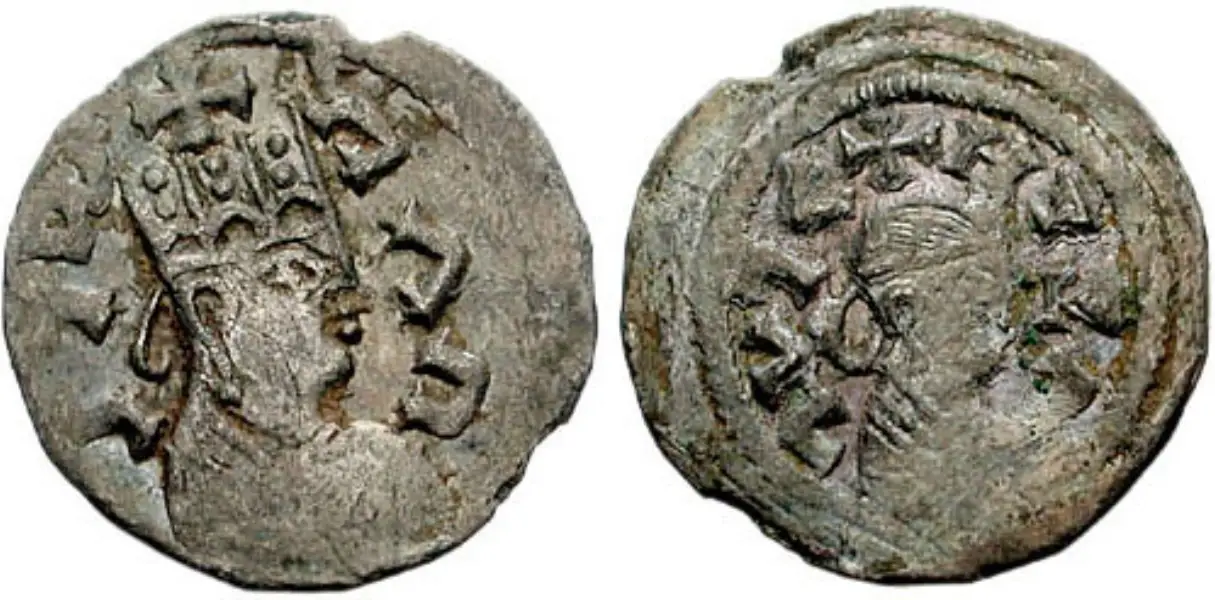
Kaleb, remembered in Christian tradition as Saint Elesbaan, ruled the Kingdom of Axum, a power located in what are now Ethiopia and Eritrea, from 514 to 534. His regnal name appears in Greek sources as Ella Asbeha or Hellestheaios, and inscriptions at Axum style him the son of Tazena. His reign is chiefly remembered for the expedition he led across the Red Sea around 520 against the Himyarite king Dhu Nuwas, who had been persecuting the Christian community of Najran in Yemen. Kaleb's soldiers defeated and killed the persecutor, and the king installed a native Christian as viceroy of Himyar. In gratitude for this defense of the persecuted, he entered the Roman Martyrology and became venerated across the Oriental Orthodox, Eastern Orthodox, and Catholic churches. His reign also saw the incorporation of the Agaw tribes of the interior into the kingdom. Ethiopian tradition holds that he eventually abdicated, sent his crown to the Church of the Holy Sepulchre in Jerusalem, and withdrew to a monastery, fulfilling a vow. His tomb, a pair of ruined structures at Axum, has drawn travelers and archaeologists from the nineteenth century to the present.
The Complete Life
Son of Tazena, King of Axum
Kaleb was born at Axum, the ancient capital of a kingdom that occupied territory in present-day Ethiopia and Eritrea. His own inscriptions, his coins, Ethiopian hagiographical sources, and the royal king lists all identify him as the son of Tazena, and an inscription at Axum numbered RIE 191 renders his name in unvocalized Ge'ez as the record of Kaleb Ella Asbeha, son of Tazena. His given name derives from the biblical Caleb, while the names by which the wider world knew him were regnal titles: the Greek-speaking historian Procopius called him Hellestheaeus, a version of his throne name Ella Asbeha, and later writers transformed this into a whole family of variants, among them Hellestheaios, Ellestheaeus, Elesbaan, and Elesboam. He came to the throne in 514, succeeding King Ousas. Little direct testimony survives about his childhood and upbringing, but the kingdom he inherited was a literate, coin-striking, inscription-raising Christian power with long-distance trade routes stretching to the south, and he would rule it for two decades before the abdication that Ethiopian tradition remembers as the crowning act of his life.
§ Name
A Christian King in a Divided Red Sea World
Kaleb ruled as a Christian sovereign at a moment when the fate of believers across the Red Sea hung in the balance. In Himyar, the Yemen of late antiquity, the king Yūsuf As'ar Yath'ar, known as Dhu Nuwas, a convert to Judaism, was persecuting the Christian community of Najran. Contemporary historians including Procopius and John of Ephesus record that Kaleb resolved to act. Around 520 he mounted an invasion of Yemen, and after heavy fighting his soldiers routed Yusuf's forces and killed the Himyarite king. Rather than annex the territory outright, Kaleb appointed Sumyafa Ashwa, a native Christian whom Procopius calls Esimiphaios, as his viceroy. This intervention defined his reputation for the centuries that followed: because he had protected Christians under threat of extermination, the churches of the East and West alike would honor him as a saint. His vocation as a ruler, in the pattern later Christian writers celebrated, joined royal responsibility to the defense of the faith, and his willingness to campaign overseas for the sake of the persecuted became the deed for which he was ultimately inscribed among the saints.
§ Life
Rule at Home and Across the Sea
Kaleb's ambitions were not confined to the war against Dhu Nuwas. Aksumite control of West Yemen endured until about 525, when Abraha deposed the viceroy Sumyafa Ashwa and made himself king. Procopius reports that Kaleb mounted several attempts to recover the lost overseas province, all unsuccessful; his successor later settled terms by which Abraha recognized the Axumite ruler's overlordship and sent tribute. Munro-Hay judged that by this expedition Axum had overextended itself, and that this final crossing of the Red Sea was the kingdom's swan-song as a great regional power. At home, Kaleb's reign drew the Agaw tribes of what are now the Wag and Lasta districts firmly within his kingdom. The merchant-traveler Cosmas Indicopleustes supplies documentary confirmation, recording a governor of the Agau charged by Kaleb with guarding the southern caravan routes. Taddesse Tamrat holds that this governor probably kept his seat of government in the Lasta region, which later became the center of the Zagwe dynasty. A further mark of his international standing survives in the record of his meeting with Nonnosus, the Byzantine ambassador and historian, in the year 530.
§ Life
The Crown Sent to Jerusalem
The most beloved story about Kaleb concerns not his wars but his renunciation. Ethiopian tradition states that he eventually abdicated his throne, sent his crown to the Church of the Holy Sepulchre at Jerusalem, and retired to a monastery, a course the Roman Martyrology would later describe as a monastical life he had vowed. The gesture placed a symbol of Axumite kingship in the church raised over the site of the resurrection, an act of piety that fixed his image as the king who preferred Christ to his diadem. Later Muslim historians who recounted his reign, among them ibn Hisham, ibn Ishaq, and al-Tabari, preserved the memory of his Yemeni campaigns, while within Ethiopia his name attached itself to the evangelization of the interior. Taddesse Tamrat recorded a tradition from an aged priest at Lalibela that Kaleb was a man of Lasta whose palace stood at Bugna, the place where the later king Gebre Mesqel Lalibela would establish his own center. Whether as warrior, pilgrim, or monk, Kaleb was remembered as a sovereign whose final ambition was not territory but holiness, and three ancient churches claimed his memory on their calendars of saints.
§ Life
Abdication, Death, and the Tomb at Axum
Kaleb's rule ended in 534, and the years that followed his withdrawal from the throne were remembered with less clarity than his campaigns. Sources give contradictory accounts of the succession. One relates that Za Israel, the eldest son, appointed viceroy of Himyar by his father, returned with an army on hearing of his father's death and of his younger brother's accession, beginning a long and unresolved struggle. Another claims Gebre Meskel was the eldest son but lost the throne for a time to a brother because he was away in Shewa at the moment of abdication, until priests who consulted Kaleb confirmed him as the chosen heir, whereupon Israel dropped dead. A further tradition has Israel instead vanish into hiding, carrying off the Ark of St. Michael and becoming leader of the Zar cult. The Kebra Nagast simply relates that Gebre Meskel succeeded after Kaleb retired to a monastery. At Axum itself, a pair of ruined structures stands, one held to be Kaleb's tomb and the other the tomb of his son Gabra Masqal. Henry Salt first examined them as an archaeological subject in the early nineteenth century, the Deutsche Aksum-Expedition partially cleared and mapped them in 1906, and the British Institute of Eastern Africa excavated the tomb most recently in 1973.
§ Issue and successors
Saint Elesbaan in the Martyrology
Kaleb's sanctity was never the product of a formal process but of ancient and unanimous devotion. Because he had protected the Christians of Najran from destruction, he came to be honored as a saint across the Oriental Orthodox Churches, the Eastern Orthodox Church, and the Roman Catholic Church. His formal entry into Western liturgical memory came through Caesar Baronius, the sixteenth-century cardinal whose edition of the Roman Martyrology, the Latin Church's register of its martyrs and confessors, received the king's name. The entry the Martyrology preserves captures the shape of his life as tradition received it: an Ethiopian king who defeated the enemies of Christ, sent his royal diadem to Jerusalem, and, in the time of the emperor Justin, fulfilled his vow by living as a monk until his death. His commemoration settled on different days in different traditions: the Eastern Orthodox Church remembers Blessed Elesbaan the King of Ethiopia on 24 October, the Ethiopian Orthodox Tewahedo Church keeps his feast on 28 May under the name Kaleb, and the Catholic Church celebrates Saint Elesbaan on 27 October. He thus stands among the rare rulers honored as saints by the whole of ancient Christianity, East and West alike.
§ Kaleb of Axum
Kingdom, Sons, and Living Memory
Kaleb's legacy reached far beyond his own lifetime. Literary, numismatic, and epigraphic sources name three of his sons who reigned after him: Gebre Meskel, Israel, and Gebre Krestos. Gebre Meskel appears on several official regnal lists as Kaleb's successor; Israel is attested by coins struck in his name; and Gebre Krestos, possibly the same man as Gebre Meskel under another throne name, surfaces on a single regnal list as Gebru, while a Ge'ez inscription in Sabaean characters styles him Man of Hadafen, Son of Ella Asbeha. The dynasty's Christian character continued in Ethiopian memory, and late medieval Brazilian painting shows Saint Kaleb striking down the Himyarite king beside Ephigenia of Ethiopia, bearing the banner of the Lion of Judah with a cross. His name remained tied to Lasta and the Zagwe heartland that grew from the Agaw territory he incorporated. At Axum, inscriptions bearing his name still stand beside the tomb attributed to him, visited and excavated from Henry Salt's era through the campaigns of 1906 and 1973. Historians from Procopius to Munro-Hay have debated the costs of his Red Sea adventure, but the churches have never wavered in the judgment that mattered to them: the king who crossed the sea for persecuted Christians is a saint.
§ Issue and successors
Timeline
- 514
Succeeded Ousas as King of Axum.
§ Kaleb of Axum
- 520
Led an invasion of Yemen against the Himyarite king Dhu Nuwas, persecutor of the Christians of Najran.
§ Life
- 525
In Yemen, Abraha deposed Kaleb's appointee Sumyafa Ashwa and seized the kingship for himself.
§ Life
- 530
Received the Byzantine ambassador and historian Nonnosus, a meeting preserved in the historical record.
§ Life
- 534
His reign ended; Ethiopian tradition relates that he abdicated, sent his crown to Jerusalem, and became a monk.
§ Life
- 1906
The Deutsche Aksum-Expedition partially cleared and mapped the structures identified as his tomb.
§ Life
- 1973
The British Institute of Eastern Africa carried out the most recent excavation of his tomb.
§ Life
In Their Own Words
In Ethiopia, St. Elesbaan, king, who, after having defeated the enemies of Christ and sent his royal diadem to Jerusalem, in the time of the emperor Justin, led a monastical life, as he had vowed, and went to his reward.
The Record
- Major works
- Expedition across the Red Sea that ended the persecution of Najran's Christians and installed a Christian viceroy in Himyar·Integration of the Agaw tribes of Wag and Lasta into the Kingdom of Axum
- Symbols
- Banner of the Lion of Judah bearing a cross
- Canonization
- Pre-congregation canonization; honored as Saint Elesbaan after Cardinal Caesar Baronius added him to the Roman Martyrology in the sixteenth century.
Prayer
Bibliography
Show 6 sources
- Budge, E. A. Wallis (1928). A History of Ethiopia: Nubia and Abyssinia (Volume 1). London: Methuen & Co. p. 261.
- Sellassie, Sergew Hable (1972). Ancient and Medieval Ethiopian History to 1270. Addis Ababa. p. 159.
- The Roman Martyrology. Transl. by the Archbishop of Baltimore. Last Edition, According to the Copy Printed at Rome in 1914. Revised Edition. Baltimore: John Murphy Company, 1916. p. 331.
- S. C. Munro-Hay, Aksum: An African Civilization of Late Antiquity (Edinburgh: University Press, 1991), p. 84.
- Taddesse Tamrat, Church and State in Ethiopia (Oxford: Clarendon Press, 1972), p. 50.
- Bowersock, G.W, The Throne of Adulis: Red Sea Wars on the Eve of Islam (2013), p. 109.
Profile text adapted from the Wikipedia article, licensed CC BY-SA 4.0.
Pray with this saint every day
Save St. Kaleb of Axum to your favorites, read the full profile, and get feast-day reminders in the Saints app.
Get the Saints AppFree on the App Store for iPhone and iPad