
c. 401 – 18 January 474·Feast January 20
St. Leo I (Leo the Thracian)
Eastern Roman Emperor and Chalcedonian Confessor
Overview
Leo I, sometimes called the Thracian or, by later generations, the Great, ruled the Eastern Roman Empire from 457 to 474. Born around 401 to a Thraco-Roman family in Thracia or the neighboring Dacia Aureliana, he rose through the army to the rank of comes rei militaris and seemed, to the powerful Alan general Aspar, an ideal puppet when the throne fell vacant on Marcian's death. Leo proved anything but submissive. His coronation on 7 February 457 introduced the first Christian element into the imperial rite — the emperor depositing his crown on the altar of Hagia Sophia and receiving it back from the patriarch, a gesture that symbolized the transformation of Roman kingship into something medieval and Christian. Over seventeen years Leo asserted independence from Aspar, sealed an alliance with the Isaurians by marrying his daughter to their leader, the future emperor Zeno, and at last had Aspar and his son Ardabur killed in 471 — a deed that earned him the ancient soubriquet 'the Butcher'. He appointed Anthemius as Western emperor in 467, and in 468 launched a vast armada against the Vandals of Africa, 1,113 ships bearing 100,000 men, which was wrecked by the mismanagement of Basiliscus and drained the treasury. The first Eastern emperor to legislate in Koine Greek, he died of dysentery on 18 January 474 and is commemorated as a saint in the Orthodox Church on 20 January.
The Complete Life
A Soldier of Thracian Stock
Leo was born around 401 into a Thraco-Roman family of the Balkan interior, in either the province of Thracia or Dacia Aureliana near historic Thrace. His ethnic roots were a matter of interest to the ancient sources: Candidus Isaurus records his Dacian origin, while John Malalas held that he sprang from Bessian Thracian stock. The Patria of Constantinople preserves a domestic detail, reporting that he had a sister named Euphemia who never married; Leo was said to visit her in Constantinople every week, and she later honored him with a statue, though the source is late and her existence remains open to doubt. His career was made in the army. He served in the Roman forces and rose to the rank of comes rei militaris, a count of the military affairs, proving himself within the professional soldierly world of the fifth-century East. That career placed him precisely where the palace could see him. When Emperor Marcian died in 457, the effective master of the state was Aspar, the Alan commander-in-chief who had already placed one emperor on the throne and now sought another who would obey. Leo, a devout Chalcedonian Christian of modest origin with no dynastic base of his own, appeared to Aspar to be exactly such a man.
§ Early life
A Coronation Made Christian
Leo's elevation on 7 February 457 marked not merely a change of ruler but a change in the character of Roman kingship. The formal coronation took place at Hebdomon, where the campidoctor — the drill-master of the field army — crowned him in the traditional military fashion, and Aspar rode beside the new emperor in his chariot during the adventus into Constantinople, offering him a golden crown at the Forum of Constantine in a studied display of patronage. But Leo then did something no emperor had done before: he proceeded to Hagia Sophia, laid his crown upon the altar, and as he left the church received it back from the Patriarch of Constantinople. The choreography said that imperial authority came from God through the Church, and it symbolized the transformation of the old Roman imperial traditions into the medieval, Christian ones that courts across Europe would later imitate. Leo had been the last in Aspar's line of puppet emperors, chosen precisely because he seemed pliable. Instead, the soldier-emperor used his reign to make the throne independent of the general who made him — a contest of wills that would define his seventeen years and end in blood at the palace.
§ Reign
Throwing Off Aspar, Aiding the West
Leo's great internal struggle was with Aspar, whose control of the army had made and unmade emperors. The tension between the two mounted as Leo grew ever more independent, and the emperor found his counterweight in the Isaurians, the hardy mountain people of southern Anatolia: the bargain required a dynastic wedding: Leo gave his daughter to the Isaurian chief Tarasicodissa, who took the name Zeno and would himself wear the crown in 474. Aspar struck back — in 469 he very nearly succeeded in assassinating Zeno — and in 471 a conspiracy against the throne caught up Aspar's son Ardabur. Leo struck before his rivals could: palace eunuchs, acting on his orders, killed Ardabur, and Aspar perished with him. The murder of the old general and his son earned Leo the grim ancient nickname 'the Butcher', the name by which contemporary writers more often knew him than the 'Thracian' of the modern handbooks. Abroad, Leo threw his weight behind the failing Western Empire. In 467 he appointed Anthemius, an able aristocrat with eastern experience, as Western Roman emperor — his most consequential western achievement — and in 468 he staked the empire's resources on a gigantic seaborne expedition against the Vandal Kingdom in Africa, an armada of 1,113 ships carrying 100,000 men that was destroyed by the inept generalship of his own brother-in-law Basiliscus. Procopius reckoned the loss at 130,000 pounds of gold; the catastrophe left the state bled of soldiers and treasure for decades.
§ Reign
A Chalcedonian on the Throne
Leo's faith was that of a Chalcedonian Christian, loyal to the Definition of Chalcedon that his predecessor Marcian's councils had secured, and his piety left marks on both liturgy and law. The coronation ritual he initiated at Hagia Sophia made the cathedral, not the camp, the source of legitimacy, and his example was the beginning of the long tradition of Byzantine imperial liturgy. The Orthodox tradition venerates him as Holy and Right-Believing Emperor, and Russian icons depict him enshrining the Robe of the Theotokos in the church of Sts. Peter and Mark at Blachernae — the relic of the Virgin's garment whose veneration became one of Constantinople's treasured cults. As lawgiver he was the first Eastern emperor to legislate in Koine Greek rather than Late Latin, a decisive step in the language and culture of the medieval Roman state. His Christianity also had a coercive edge characteristic of the age: in 472 he issued an edict ordering that high officers who allowed pagan sacrifices on their land be demoted and stripped of their possessions, while men of humbler rank faced the torture chamber and condemnation to the mines. Zeal for the faith, dynastic calculation, and raw imperial power were, in Leo, a single habit of rule — the mixture of holiness and severity that his feast of 20 January still remembers.
§ Reign
Death and Succession
Leo's last years were shadowed by the Vandal catastrophe and by the death of the male heirs of his house. Of his three children by the empress Verina, the son born in 463 died in infancy, five months after his birth — a loss known to us only from a horoscope drawn by Rhetorius and from the life of Daniel the Stylite — while the daughters Ariadne and Leontia carried the dynasty forward through their marriages. Leontia, first betrothed to a son of Aspar, married Marcian, son of the Western emperor Anthemius; Ariadne became the wife of Zeno. Leo's own health failed in the winter of 473-474. He contracted dysentery and died at Constantinople on 18 January 474 at the age of 73, the correct date secured by cross-checking the notices of Theophanes and Cyril of Scythopolis against the earlier claim of 3 February in Malalas. The Auctarium Prosperi recorded his passing in a single line: the greater Leo is dead. The crown passed to his grandson, a child acclaimed as Leo II, in whose honor the elder emperor is sometimes distinguished as 'the Great' or 'the Elder' against the boy called 'the Small' — a courtesy of nomenclature, Bury observed, rather than a verdict on greatness earned.
§ Marriage and children
The Saint on the Coin and the Calendar
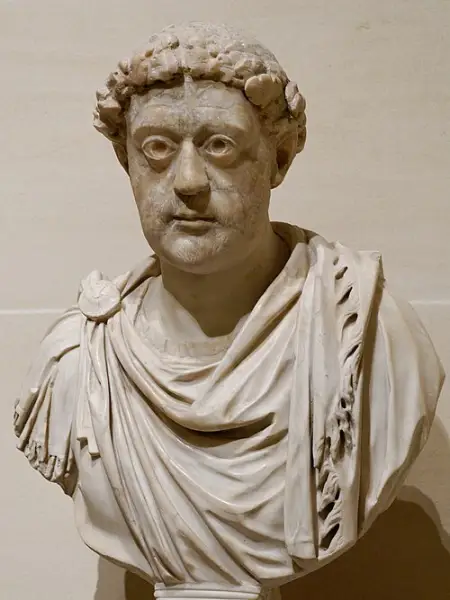
Leo's seventeen-year reign fixed the shape of the Eastern Empire for the century that followed. By destroying Aspar he freed the Byzantine throne from its Germanic and Alanic kingmakers at exactly the moment when the Western Empire was slipping into the hands of Ricimer and his successors — a contrast contemporaries could see plainly, since Leo's own appointee Anthemius reigned in the West until 472. His Isaurian alliance raised Zeno to the purple and through Zeno's marriage to Ariadne founded the Leonid dynasty's continuation; his legislation in Greek announced the Hellenization of imperial government; his coronation ritual became the template for a millennium of Byzantine and, later, European royal ceremony. The church's memory outlasted the politician's. The Eastern Orthodox Church numbers him among the saints as the Holy and Right-Believing Emperor of the Romans, keeping his feast on 20 January, and honors him with the attributes of imperial attire; the Catholic Church also venerates him. Art has kept his face uncertain — the alabaster head in the Louvre, wearing a civic crown and a short beard matching his coinage, is traditionally identified with him though the identification is not certain — and ancient writers' darker epithet, Macellus the Butcher, stands beside the calendar's honorific, an honest reminder that sanctity in a sovereign is always a contested judgment.
§ Leo I (emperor)
Timeline
- 401
Born into a Thraco-Roman family in Thracia or the province of Dacia Aureliana
§ Early life
- 7 Feb 457
Crowned emperor at Hebdomon; in a first for the rite he lays his crown on the altar of Hagia Sophia before the patriarch restores it to his head
§ Reign
- 458
Holds the consulship alongside the Western Augustus Majorian
§ Leo I (emperor)
- 463
An unnamed son is born to Leo and Verina; the boy dies five months later
§ Marriage and children
- 467
Appoints Anthemius as Western Roman emperor, the high point of his western policy
§ Reign
- 468
Launches the great expedition against the Vandal Kingdom — 1,113 ships and 100,000 men — which ends in disaster under Basiliscus' command
§ Reign
- 469
Aspar comes close to assassinating Zeno, Leo's Isaurian son-in-law
§ Reign
- 471
Aspar's son Ardabur is implicated in a plot and killed by palace eunuchs on Leo's orders, with Aspar himself also slain
§ Reign
- 472
Issues an edict demoting and confiscating the property of officers who allow pagan sacrifices on their land
§ Reign
- 18 Jan 474
Dies of dysentery in Constantinople at the age of 73; succeeded by his grandson Leo II
§ Reign
The Record
- Major works
- Edict of 472 penalizing officers who permitted pagan sacrifices on their lands
- Symbols
- Imperial attire
- Canonization
- Pre-congregation; commemorated as Holy and Right-Believing Emperor in the Eastern Orthodox Church, feast on 20 January
Prayer
Bibliography
Show 10 sources
- "Statue – Louvre Collections. Léon (?". Louvre Collections (in French). Retrieved 6 February 2024.
- "Leo I". Encyclopædia Britannica.
- PLRE 2 p. 664. The Prosopography of the Later Roman Empire, vol. 2.
- Oxford Dictionary of Byzantium, pp. 1206–1207.
- Bury, John Bagnell (1958). History of the Later Roman Empire: from the death of Theodosius I to the death of Justinian. Vol. 1. Dover Publications.
- Friell, Gerard (1998). The Rome That Did Not Fall: The Survival of the East in the Fifth Century. London: Taylor & Francis. ISBN 978-0-415-15403-1.
- Herrin, Judith (2007). Byzantium: The Surprising Life of a Medieval Empire. Penguin. pp. 53–54. ISBN 978-0713999976.
- Croke, Brian, "Dynasty and Ethnicity: Emperor Leo and the Eclipse of Aspar", Chiron 35 (2005), 152.
- Wickham, Chris (2009). The Inheritance of Rome. Penguin. ISBN 978-0-670-02098-0. p. 90.
- "Ὁ Ἅγιος Λέων Μακέλλης ὁ Μέγας" [Saint Leo Makelles the Great] (in Greek). Μεγασ Συναξαριστης [Great Synaxaristes].
Profile text adapted from the Wikipedia article, licensed CC BY-SA 4.0.
Pray with this saint every day
Save St. Leo I (Leo the Thracian) to your favorites, read the full profile, and get feast-day reminders in the Saints app.
Get the Saints AppFree on the App Store for iPhone and iPad