
died 1079·Feast July 12
St. Leo I of Cava
Second Abbot of La Trinità della Cava
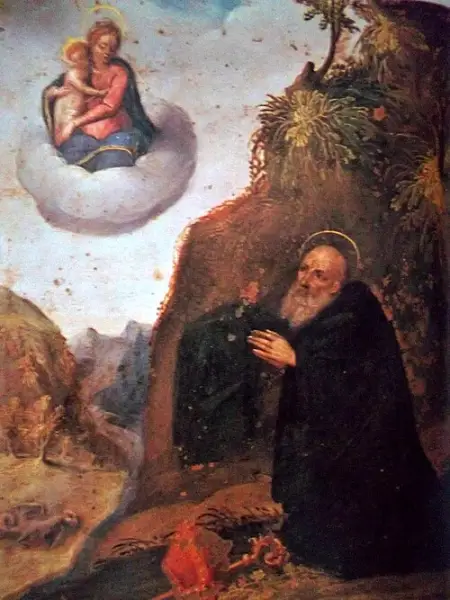
Overview
Leo I of Cava, in Italian San Leone I Abate, was the second abbot of the Abbey of La Trinità della Cava at Cava de' Tirreni in southern Italy, governing the community from about 1050 until his death in 1079. A native of Lucca in Tuscany, he had traveled south to become a monk at the young Benedictine foundation that Alferius, a Lombard noble turned hermit, had established in the hills above the Gulf of Salerno. Upon Alferius' death Leo succeeded him as abbot, and under his leadership the monastery broadened its religious and social influence across the surrounding region during a decisive period of its history. Tradition credits him with strengthening the Benedictine observance and the spiritual life of his monks, consolidating the foundation his predecessor had begun and preparing it to become one of the great abbeys of Norman southern Italy. He died at Cava de' Tirreni in 1079 and was venerated at once by his community. On 21 December 1893 Pope Leo XIII officially recognized the sanctity of the first four abbots of Cava — Alferius, Leo I, Peter of Pappacarbone, and Constabilis — confirming a cultus that the abbey had preserved for more than eight centuries. His feast is kept on 12 July.
The Complete Life
From Lucca to the Caves of Cava
The records leave Leo's childhood in shadow: all that is known with confidence is that he was born at Lucca, the ancient Tuscan city, and that at some point in the first half of the eleventh century he made his way south to the Abbey of La Trinità della Cava and took the Benedictine habit there. The choice placed him in one of the most storied young foundations of southern Italy. The abbey had been founded by St Alferius, a noble of the Lombard aristocracy of Salerno who, after a journey to France and an illness undergone on pilgrimage, had withdrawn to live as a hermit in the caves of the metellian hill above Cava de' Tirreni; disciples gathered around him, and the community that grew from that hermitage took its name from the caves themselves. To leave Lucca for Cava was to join a monastery still in its first generations, without endowment or fame, where the daily substance of religious life was the observance handed on by a holy founder. Leo's monastic formation there proved the making of him: when Alferius died, the community looked to the Tuscan newcomer, and around 1050 Leo, by then proved in the cloister, succeeded the founder as second abbot of Cava.
§ Life
Abbot in a Growing Land
Leo governed La Trinità della Cava from about 1050 to 1079, the decades in which southern Italy passed from Lombard principalities to Norman domination and in which the young abbey grew from a founder's hermitage into an institution of regional weight. Under his abbacy, the sources say, the monastery widened its religious and social reach across the district that lay around it — an expansion that meant pastoral care, land management, and the quiet authority a holy community exercises over its neighbors. He is traditionally associated above all with two works: the strengthening of the Benedictine rule as the discipline of the house, and the deepening of the community's spiritual life. Both were the abbot's proper task, and both proved foundational, for it was on the footing Leo gave it that Cava would rise to become one of the great abbeys of the Mezzogiorno, its scriptorium and its schola destined to flourish under his successors Peter of Pappacarbone and Constabilis. His abbacy of nearly thirty years gave the monastery continuity across a generation of upheaval; when he died at Cava de' Tirreni in 1079, he left an observant community, secure in its vocation, to the third abbot who had already been formed under his rule.
§ Life
Four Abbots, One Honor
Leo was honored as a saint by his own monastery from the time of his death, and the abbey's medieval chroniclers — among them Hugone, abbot of Venusino, who wrote the Lives of the four first abbots of Cava — preserved the memory of Alferius, Leo, Peter, and Constabilis as a chain of holy superiors stretching across a century and a half. The formal recognition came late but was decisive: on 21 December 1893 Pope Leo XIII officially acknowledged the sanctity of the first four abbots of Cava together, confirming their ancient cultus for the whole Church. The collective nature of the honor is itself a testimony to what Leo built; the Church ratified not a single miracle-worker's reputation but the unbroken tradition of a community that had prayed at the tombs of its first superiors for eight centuries. Leo is commemorated in the Roman Catholic Church with a feast on 12 July, the date on which the Church's calendar keeps his memory alongside that of the abbey he served. The scholarly literature on Cava — from the seventeenth-century chronicles to Simeone Leone's history of the abbey and Massimo Buchicchio's catalog of its abbots — continues to treat the four saints of 1893 as the hinge of Cava's history.
§ Veneration
Timeline
- 1050
Succeeds Alferius as the second abbot of La Trinità della Cava
§ Veneration
- 1079
Dies at Cava de' Tirreni after roughly three decades governing the abbey
§ Life
- 21 Dec 1893
Pope Leo XIII officially recognizes the first four abbots of Cava, including Leo I, as saints
§ Veneration
The Record
- Major works
- Strengthening of the Benedictine rule and observance at La Trinità della Cava
- Canonization
- Cultus confirmed on 21 December 1893 by Pope Leo XIII, together with the first four abbots of Cava
Prayer
Bibliography
Show 6 sources
- AnaStpaul (12 July 2023). "Saint of the Day – 12 July – Saint Leo of Cava (c. 990–1079) Abbot". AnaStpaul. Retrieved 25 March 2026.
- Watkins, Basil (2015). The Book of Saints: A Comprehensive Biographical Dictionary. Bloomsbury Publishing. p. 426. ISBN 9780567664150.
- Hugone abbate Venusino, Vitae quatuor priorum abbatum cavensium Alferii, Leonis, Petri et Costabilis, in Rerum Italicarum Scriptores, Bologna, 1941.
- Simeone Leone, Dalla fondazione del cenobio al secolo XVI, in La badia di Cava, Cava de' Tirreni, 1985.
- Massimo Buchicchio, Cronotassi degli Abati della Santissima Trinità de La Cava, Cava de' Tirreni, 2010.
- Joseph Ratzinger, Santi. Gli autentici apologeti della Chiesa, Lindau Edizioni, Torino, 2007. ISBN 978-88-7180-706-5.
Profile text adapted from the Wikipedia article, licensed CC BY-SA 4.0.
Pray with this saint every day
Save St. Leo I of Cava to your favorites, read the full profile, and get feast-day reminders in the Saints app.
Get the Saints AppFree on the App Store for iPhone and iPad