
died c. 443·Feast December 1
St. Leontius of Fréjus
Provençal bishop and friend of the monks of Lérins
Overview
Leontius led the church of Fréjus, on the Provençal coast, through the opening decades of the fifth century. He was probably born at Nîmes towards the close of the fourth century, and it is likely that he was a brother of Castor, bishop of Apt, who shared the same native city. The date of his ordination to the episcopate cannot be fixed precisely, though it most plausibly fell between 400 and 419, and from an early moment he was honored, together with the Blessed Virgin, as patron of the cathedral church of Fréjus. His name remains bound to the rise of monasticism in south-eastern Gaul: he ordained Honoratus, founder of Lérins Abbey, who addressed him as his superior and father, and John Cassian, the great spiritual writer of Marseille, made over to him the dedication of most of his Conferences. In 445 Pope Leo I conferred on a bishop of Fréjus named Leontius privileges stripped from the metropolitan of Arles, though historians dispute whether this was the same man. A late tradition numbering him among the martyrs arose only in the thirteenth century and carries no weight; earlier documents give him the title of confessor. He died in his episcopal town, probably in 443, and Fréjus Cathedral still bears his dedication.
The Complete Life
A Son of Nîmes on the Episcopal Throne
Leontius emerged from the Christian aristocracy of southern Gaul. He was almost certainly a native of the city the Romans had called Colonia Nemausus, today's Nîmes, born towards the end of the fourth century, and there is good reason to believe he belonged to the same family as Castor, who would serve as bishop of nearby Apt; the two brothers rose from one household to two episcopal thrones. The exact year of his own consecration as bishop of Fréjus cannot be determined, but the balance of evidence places it between 400 and 419, in the generation after the persecutions had ended and the church of Gaul was organizing itself for a long peace. From a very early period the Christians of Fréjus placed their cathedral under his patronage together with that of the Blessed Virgin, an unusual honor that testifies to the esteem he enjoyed in his own city. Later writers sometimes confused him with a Leontius who governed Arles in the closing years of the fifth century; the gap in chronology, together with the deeds recorded of that other man, rules the identification out.
§ Life
Lérins, Honoratus, and the Monastic Spring of Gaul
The great event of Leontius's episcopate was the founding of Lérins Abbey on its island off the Provençal shore at the beginning of the fifth century. He stands inseparably beside Honoratus, the monastery's founder, whom he himself ordained; the friendship between the prelate and the abbot became a pattern for relations between bishops and monks in the age that followed. Honoratus spoke of Leontius as his superior and his father, words that reveal where spiritual authority was thought to lie even when a bishop held formal power. The arrangements Leontius granted his friend secured the monastery's independence while safeguarding episcopal dignity, and when the Third Council of Arles confirmed them, they became an early charter for the immunities religious communities would increasingly enjoy. John Cassian, who governed the many religious of the Abbey of St. Victor in Marseille and whose Conferences shaped Western monastic spirituality for a millennium, dedicated most of that work to Leontius. Through these bonds one bishop of a modest coastal see found himself connected to nearly every current of the monastic movement that carried the gospel deep into the future of Gaul.
§ Episcopate
Confessor, Not Martyr
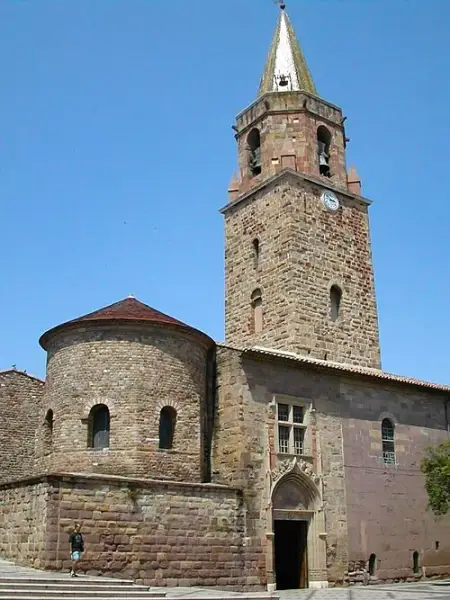
The final decades of Leontius's life are veiled by a scholarly dispute. In 445 Pope Leo I quarreled with Hilary, bishop of Arles, and transferred to a Leontius of Fréjus the primatial prerogatives he had stripped from that metropolitan see. Some historians accept that the recipient was our bishop; others argue that Theodore's succession at Fréjus in 433 makes a second, later Leontius more likely, and one tradition even holds that the first Leontius left his see in 432 to preach among the Teutons, returning in 442 and dying in 445 or 448. The weight of evidence favors death in his episcopal town around 443. A tradition that he died a martyr surfaces no earlier than the thirteenth century and has never been credited; the older and better-attested documents style him a confessor, one who suffered for the faith by living it, and that title alone is secure. His memory took permanent root in stone: Fréjus Cathedral, dedicated to him, served as the seat of the bishops of Fréjus from the fifth century until 1957, when the diocese was joined to Toulon and the ancient church became a co-cathedral.
§ Relationship with papacy
Timeline
- 433
A documented succession at Fréjus, in which Theodore was followed by another Theodore, became a key datum in debates over the chronology of Leontius's episcopate.
§ Relationship with papacy
- 443
Died in his episcopal town of Fréjus, according to the better-founded accounts.
§ Leontius of Fréjus
- 445
Pope Leo I bestowed on a bishop of Fréjus named Leontius the prerogatives he had withdrawn from Hilary of Arles.
§ Relationship with papacy
The Record
- Canonization
- Pre-congregation: venerated as a confessor; a later martyr tradition is rejected by historians
Prayer
Bibliography
Show 5 sources
- Clugnet, Léon. "St. Leontius." The Catholic Encyclopedia, Vol. 9. New York: Robert Appleton Company, 1910.
- Goyau, Georges. "Fréjus." The Catholic Encyclopedia, Vol. 6. New York: Robert Appleton Company, 1909.
- Bennett, S.A. "Leontius (15)." A Dictionary of Christian Biography (Henry Wace, ed.). London: John Murray, 1882.
- "All that Remains of Forum Julii." The Gentleman's Magazine, Vol. 297. Bradbury, Evans, 1904, p. 294.
- Herbermann, Charles, ed. (1913). "St. Leontius." Catholic Encyclopedia. New York: Robert Appleton Company.
Profile text adapted from the Wikipedia article, licensed CC BY-SA 4.0.
Pray with this saint every day
Save St. Leontius of Fréjus to your favorites, read the full profile, and get feast-day reminders in the Saints app.
Get the Saints AppFree on the App Store for iPhone and iPad