
1461 – 1503·Feast July 24
St. Louise of Savoy
Princess, Widow, and Poor Clare Nun
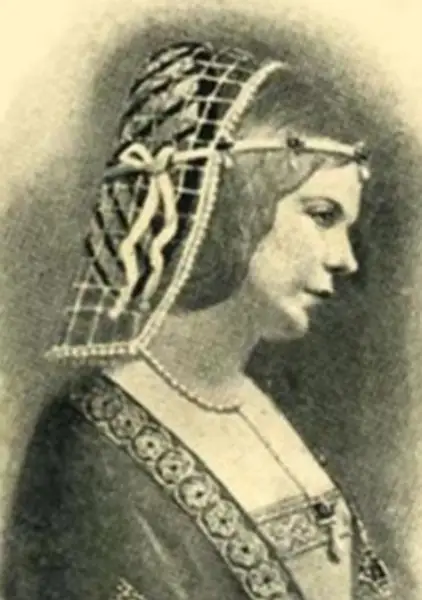
Overview
Louise of Savoy was a princess of the house of Savoy who abandoned a life of royal privilege to become a Poor Clare nun. Born on 28 December 1461, the fifth of ten children of Amadeus IX, Duke of Savoy, and Yolande of Valois, sister of King Louis XI of France, she descended through her mother from St. Elizabeth of Hungary. Her father, a pious and charitable ruler afflicted with epilepsy, left government largely to his wife and was himself beatified in 1677. Louise showed a taste for prayer and penance from childhood, fasting on bread and water on the vigils of Marian feasts while obediently dressing in the finery her station demanded, wearing a hairshirt beneath it. At eighteen her royal uncle arranged her marriage to Hugues de Chalon of the House of Chalon-Arlay, and she accepted the match as the will of God, setting a high moral tone at their court, where foul-mouthed courtiers were fined for the poor. Widowed at twenty-seven and childless, she refused numerous offers of remarriage, gave her vast wealth to the poor, and entered the Poor Clare monastery at Orbe, in what is now Switzerland. There she lived in humility and obedience, hiding her royal origins entirely. She died on 24 July 1503 at forty-two and was beatified by Pope Gregory XVI in 1839.
The Complete Life
A Princess of Savoy
Louise came into the world on 28 December 1461, Holy Innocents' Day, as a daughter of the ducal house of Savoy. Her father was Amadeus IX, Duke of Savoy, and her mother Yolande of Valois, sister of King Louis XI of France, binding the family to the royal house across the Alps. By her mother Louise counted as a collateral descendant of St. Elizabeth of Hungary, the Franciscan queen who died young in charity, a heritage that seemed to foreshadow her own path. She was the fifth of ten children. Her father was a deeply pious ruler who devoted himself to works of charity throughout his duchy; epilepsy and a retiring disposition led him to leave the daily running of government to his wife, and his holiness was formally recognized when he was beatified in 1677. Louise grew up amid the ceremony and luxury of a princely court, but from her earliest years she showed an inclination to the spiritual life. As a child she was discovered fasting on nothing but bread and water on the vigils of the major feasts of the Blessed Virgin Mary. Court life swirled around her, yet she was drawn to prayer and solitude, and her penances were hidden beneath perfect obedience: when her mother insisted she dress splendidly as her rank required, she complied without complaint, wearing a hairshirt under her lovely garments.
§ Life
Obedience in the World
Naturally drawn as she grew older to enter a monastery, Louise instead found her path directed by obedience. Her uncle, King Louis XI, arranged her marriage to Hugues de Chalon, a prince of the House of Chalon-Arlay, and the wedding took place on 24 August 1479, when she was seventeen. She was agreeable to the match, seeing in her uncle's arrangement the hand of God, as in everything. Providence rewarded her trust: Hugues proved a pious young man who actively backed his wife's striving after faith and self-denial amid all their luxury. Louise set the moral tone of their court beginning with her own attendants, and she imposed a characteristically practical penance on the household: any man caught cursing had to pay a fine to the poor. The couple held the usual court festivities, dances and the rest, but took no part in the revels that accompanied them. Their marriage was childless, but it was happy in faith, a shared life of luxury disciplined by charity. It lasted a little more than a decade before being cut short, and in those years Louise demonstrated the conviction that would define her sanctity: that holiness does not require the cloister, only the complete offering of whatever station God assigns.
§ Life
Widow and Poor Clare
Louise's life of happiness ended abruptly when her husband died on 3 July 1490, leaving her a widow at twenty-seven. As the couple had no children, nothing bound her to the world, and she immediately resolved to follow the religious calling she had felt since childhood, refusing the many offers of marriage that a wealthy princess of her rank inevitably received. She put her vast fortune to work for the poor, meeting many needs with the resources her widowhood freed, and then made the decision her whole life had been preparing: she entered the monastery of the Poor Clare nuns at Orbe, a town that now lies within modern Switzerland. In the cloister the princess disappeared entirely. Her sisters in religion found in her a model of humility and obedience, and she preserved nothing of her royal origins, concealing them so completely that her former rank left no trace in her convent life. She lived as a Poor Clare for thirteen years and died at Orbe on 24 July 1503, at the age of forty-two. Her holiness was long remembered in Franciscan circles, and the Poor Clares keep her feast each year on the day she died.
§ Life
Blessed of the Church
Louise's cause moved through the Roman Catholic Church slowly, as befits a life hidden in a provincial Poor Clare house, but her cult was eventually recognized at the highest level: in 1839 Pope Gregory XVI proclaimed her beatification. She is honored as Blessed Louise of Savoy among the Franciscan saints and blesseds, and the Poor Clares keep her feast on 24 July, the date of her death. Her beatification placed her beside her father, Amadeus IX, beatified in 1677, making the ducal house of Savoy one of the rare families to number two blesseds among its members. Her memory belongs particularly to the Franciscan family, into which she was received as a Poor Clare of the Second Order, and her life is retold as an example of the evangelical path from privilege to poverty: a descendant of St. Elizabeth of Hungary who imitated her ancestor's renunciation, a princess who ruled a court by moral example and then surrendered everything for the quiet discipline of the cloister.
§ Life
Timeline
- 28 Dec 1461
Born in the Duchy of Savoy, fifth of the ten children of Duke Amadeus IX and Yolande of Valois.
§ Life
- 24 Aug 1479
Married Hugues de Chalon of the House of Chalon-Arlay in a marriage arranged by her uncle, King Louis XI of France.
§ Life
- 3 Jul 1490
Her husband Hugues de Chalon died, leaving her a widow at twenty-seven.
§ Life
- 1490
Refusing many offers of marriage, gave her wealth to the poor and entered the Poor Clare monastery at Orbe.
§ Life
- 24 Jul 1503
Died at Orbe at the age of forty-two.
§ Life
- 1677
Her father, Amadeus IX, Duke of Savoy, was beatified.
§ Life
- 1839
Beatified by Pope Gregory XVI.
§ Louise of Savoy (nun)
The Record
- Patron of
- Poor Clares
- Symbols
- Poor Clare habit·widow's veil
- Canonization
- Beatified 1839 by Pope Gregory XVI; venerated as Blessed (pre-congregation-style cause)
Prayer
Bibliography
Show 2 sources
- "Bl. Louise of Savoy", Franciscan Saints and Blesseds, Irish Franciscans OFM
- Foley O.F.M., Leonard. "Blessed Louise of Savoy", Saint of the Day, revised by Pat McCloskey O.F.M., Franciscan Media
Profile text adapted from the Wikipedia article, licensed CC BY-SA 4.0.
Pray with this saint every day
Save St. Louise of Savoy to your favorites, read the full profile, and get feast-day reminders in the Saints app.
Get the Saints AppFree on the App Store for iPhone and iPad