
1877 – 1961·Feast June 11
St. Luke Voyno-Yasenetsky
Surgeon, bishop of Crimea, confessor under the Soviets
Overview
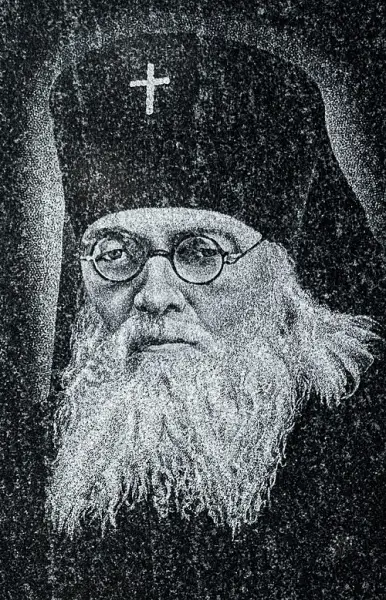
Valentin Felixovich Voyno-Yasenetsky, known in religion as Luke of Simferopol, Saint Luke the Blessed Surgeon, or Saint Luke of Crimea, united in one life the two callings of surgeon and bishop. Born in Kerch in 1877 and trained at the medical faculty of Kiev University, he became a pioneering regional anesthesiologist and the author of Sketches of Purulent Surgery, a textbook that remained a manual for surgeons long after its publication in 1934. After the death of his wife Anna in 1919 he was ordained a priest in 1921, taking the religious name Luke, and in 1923 he was consecrated bishop of Tashkent and Turkestan. His double loyalty to science and the church brought repeated political repression: he spent eleven years in internal exile, while continuing to operate and to invent new operations, including work at the military hospital in Krasnoyarsk during the war years. In 1946 he was awarded the Stalin Prize in medicine and became archbishop of Simferopol and Crimea, the see he held until his death. Blind in his last years, he died in Simferopol on 11 June 1961. The Russian Orthodox Church canonized him on 25 May 1996; his relics, exhumed that spring with his heart found incorrupt, rest in the Holy Trinity Cathedral in Simferopol, and in 2019 the Ecumenical Patriarchate added him to its own list of saints.
The Complete Life
From Kerch to the Dissecting Room
The man who would become Bishop Luke was born Valentin Felixovich Voyno-Yasenetsky at Kerch on 27 April 1877, in a family of mixed Christian inheritance — his mother Russian Orthodox, his father Roman Catholic — that gave him, by his own account, no religious upbringing at all. As he finished his schooling, the headmaster presented him with a copy of the New Testament, and by patient study of that book, he later remembered, he first came to grasp the teaching of Christ. In 1889 the family moved to Kiev, where he completed the gymnasium and studied at art school before entering the medical faculty of Kiev University. Medicine, not the church, was his first vocation. He rose quickly in the young specialty of regional anesthesia: his first monograph, on the subject, appeared in Petrograd in 1915, and in 1916 he defended a doctoral thesis devoted to numbing the second branch of the trigeminal nerve, and he was the first to describe anesthesia of that nerve through the injection of ethanol into its branches and into the trigeminal ganglion.
§ Medical career
Surgeon, Husband, Widower, Priest
While establishing himself as a surgeon, Valentin married Anna Vasilyevna Lanskaya, a sister of mercy, and with her raised two children. In 1917 Anna contracted tuberculosis, and the family moved to Tashkent in hope of relief; two years later she died, leaving the surgeon a widower. Grief turned his feet toward the altar. In 1921 he was ordained a priest and took the religious name Luke, and in 1923 he accepted consecration as bishop of Tashkent and Turkestan, beginning a double life in which the operating theater and the altar shared the same days. His scientific work did not pause. At the first scientific meeting of the doctors of Turkestan, held from 23 to 28 October 1922, he presented four reports on the surgical treatment of tuberculosis and of purulent processes of the knee joints, the tendons of the hand, and the costal cartilages; together with the bacteriologist Guselnikov he ran experiments probing how purulent processes arise in the costal cartilages in the wake of typhus. In 1934 appeared the book on which his medical fame chiefly rests, Sketches of Purulent Surgery, which has remained a reference work and manual for surgeons ever since.
§ Personal life
A Bishop Under Surveillance
A conspicuous religious figure in an officially atheist state, Luke paid for his prominence with political repression, passing eleven years of his life in internal exile. Yet the exile years were among his most medically productive. At the military hospital in Krasnoyarsk, where he worked while archbishop of Krasnoyarsk and Yenisei from 1942 to 1944, he devised new operations, among them a procedure of joint rejection used to treat osteomyelitis of the large joints. He operated on diseases of the gall bladder, the stomach, and the other abdominal organs, and labored in neurosurgery and orthopedics as well. He never ceased to argue for the methods he had pioneered: in the attachment to his Essays of purulent surgery he insisted that a great amount of death was due to careless use of chloroform and ether, and that the wide familiarization of doctors with local anesthesia was among the most important conditions for the development of rural surgery. His service in the war years was recognized with the medal awarded for valiant labor in the war of 1941-1945, and in 1946 his scientific standing was crowned with the Stalin Prize in medicine — a state honor granted to a bishop who would not be silent.
§ Medical career
Swimming Against the Current
Luke's faith had been won late and by his own reading, and it was tested through four decades of Soviet power. A man of mixed confessional parentage who found Christ in the pages of the New Testament given him at his leaving of school, he brought to the episcopate a convert's seriousness and a physician's habit of exact observation. His spiritual endurance was measured in the currency of suffering: repressions, interrogations, and eleven years of exile, borne while he continued to heal the sick of the regions to which he was confined. In 1958, when he put pen to paper after Stalin's death, in the days of Nikita Khrushchev's fresh campaign against religion, he looked back over the cost with unflinching honesty, declaring how hard it had been to row against that stormy torrent of godless propaganda, and how much pain it had brought him then and was still bringing him. The confession is the measure of the man: no triumphalism, only the plain accounting of a wound that had not closed. The church would come to rank him among the hieroconfessors, those bishops who confessed the faith under persecution without shedding their blood, and among the wonderworkers of the Russian church.
§ Religious life
Blindness and the Quiet End
In 1946, at the close of the war, Luke was translated to the archbishopric of Simferopol and Crimea, the See he would hold for the rest of his life. By then the surgeon's hands had saved thousands, but his own body was failing: in 1955 he became completely blind. The man who had once guided needles into the branches of the trigeminal nerve now governed his archdiocese without sight, carried by the church he served. He died at Simferopol on 11 June 1961, at the age of eighty-four, and was buried there. Thirty-five years later the earth of Simferopol gave him back. On 17 March 1996 his remains were disinterred before a crowd of many thousands; it is said that an indescribable aroma rose from the relics, and his heart was found incorrupt. Three days later, on 20 March 1996, the relics were borne in procession to Simferopol's Cathedral of the Holy Trinity, which has remained the heart of his cult ever since; and on 25 May of that same year the Holy Synod of the Russian Orthodox Church, meeting at Sarov Monastery, enrolled him in the calendar of the saints.
§ Canonization
Canonized at Sarov
The canonization of Luke of Simferopol came a generation after his death, in the years when the Russian church, emerging from Soviet rule, raised up its confessors of the twentieth century. On 25 May 1996 the Holy Synod of the Russian Orthodox Church canonized him at Sarov Monastery, honoring him as archbishop, hieroconfessor, wonderworker, and surgeon — a unique combination of titles that records the two halves of his life. His feast is kept on 29 May by the Julian calendar, corresponding to 11 June on the Revised Julian calendar, the anniversary of his death. The veneration of the new saint spread with remarkable speed beyond Russia. On 13 June 2019 the Ecumenical Patriarchate of Constantinople likewise ranked Archbishop Luke in the list of the saints of the church, extending his commemoration through the wider Orthodox world. Portion of his relics are found in Greece, at the Sagmata Monastery in Boeotia near Thebes and Ypato, at the Dovra Monastery, and at the All Saints Antiochian Orthodox Church in Raleigh, North Carolina, among other churches; in Serbia, the Military Medical Academy in Belgrade keeps him as its patron, celebrating his feast each year.
§ Veneration
The Saint Whom Surgeons Invoke
Luke's legacy lives on two boards: the operating theater and the icon screen. In medicine, his Sketches of Purulent Surgery has never wholly left the surgeon's shelf, and his contributions to anesthesiology — the first description of trigeminal anesthesia by ethanol injection, the insistence on regional methods for rural surgery — secured him a place in the history of Russian surgery, recognized late by the Stalin Prize of 1946 and in modern retrospective studies of his work. In the church, he stands as the patron saint of the healing professions: physicians, surgeons, nurses, pharmacies, and scientists invoke him, together with the land of Crimea that he served as archbishop. The Medical Radiological Research Center at Obninsk has built a church in his name, and the Military Medical Academy of Serbia numbers him among its heavenly protectors. Pilgrims stream to the Holy Trinity Cathedral in Simferopol, where his relics repose, and the accounts of the incorruption of his heart, discovered at the exhumation of 1996, have made his tomb one of the celebrated shrines of the Russian church. For believers and unbelievers alike he remains a singular figure of the twentieth century: the bishop who operated, the surgeon who prayed, and the confessor who outlasted the persecutors of both his callings.
§ Veneration
Timeline
- 27 Apr 1877
Born Valentin Felixovich Voyno-Yasenetsky at Kerch, in the Russian Empire.
§ Personal life
- 1889
His family moved to Kiev, where he later graduated from the gymnasium and art school before entering Kiev University's medical faculty.
§ Personal life
- 1915
Petrograd saw the publication of his first monograph, a work on regional anesthesiology.
§ Medical career
- 1916
Defended his doctoral thesis on numbing the second branch of the trigeminal nerve.
§ Medical career
- 1917
Tuberculosis struck his wife Anna, and the household relocated to Tashkent.
§ Personal life
- 1919
His wife Anna Voyno-Yasenetskaya died.
§ Personal life
- 1921
Ordained a priest, taking the religious name Luke.
§ Personal life
- 23 Oct 1922
Presented four reports at the first scientific meeting of doctors in Turkestan, on surgical treatment of tuberculosis and purulent processes.
§ Medical career
- 1923
Consecrated bishop of Tashkent and Turkestan, a see he held until 1927.
§ Eastern Orthodox Church titles
- 1934
Published his most important medical work, Sketches of Purulent Surgery.
§ Medical career
- 1942
Became archbishop of Krasnoyarsk and Yenisei while working in the military hospital there.
§ Eastern Orthodox Church titles
- 1944
Translated to the archbishopric of Tambov and Michurinsk.
§ Eastern Orthodox Church titles
- 1946
Awarded the Stalin Prize in medicine and elevated to archbishop of Simferopol and Crimea.
§ Personal life
- 1955
Became completely blind.
§ Personal life
- 1958
Under Khrushchev's renewed anti-religious campaign, wrote of the suffering that swimming against the current of anti-religious propaganda had cost him.
§ Religious life
- 11 Jun 1961
Died in Simferopol at the age of eighty-four.
§ Personal life
- 17 Mar 1996
His remains were disinterred before many thousands of people, with his heart found incorrupt and a fragrant aroma reported from the relics.
§ Canonization
- 20 Mar 1996
His relics were carried to the Holy Trinity Cathedral of Simferopol.
§ Canonization
- 25 May 1996
Canonized by the Holy Synod of the Russian Orthodox Church at Sarov Monastery.
§ Canonization
- 13 Jun 2019
The Ecumenical Patriarchate of Constantinople ranked Archbishop Luke among the saints of the church.
§ Canonization
In Their Own Words
A great amount of death is due to unskillful or careless use of chloroform and ether. [...] That's why these methods of local anaesthesia which help doctors pay attention only to the operation have a great importance. In my opinion, one of the most important conditions in the development of the rural surgery is the wide familiarisation of doctors with these methods...
How arduous it has been to swim against the stormy current of antireligious propaganda, and how many sufferings it caused me, and continues to cause me to this day.
The Record
- Major works
- Sketches of Purulent Surgery (1934)·Regional anesthesiology (1915)·Thesis on regional anesthesiology of the second branch of the trigeminal nerve (1916)
- Patron of
- patron of Crimea·patron of nurses·patron of pharmacies·patron of physicians·patron of surgeons·patron of scientists·patron of the Military Medical Academy of Serbia
- Symbols
- bishop's vestments·pectoral cross and engolpion·mitre and crozier
- Canonization
- Canonized 25 May 1996 by the Holy Synod of the Russian Orthodox Church at Sarov Monastery
Prayer
Bibliography
Show 8 sources
- "Slava Vojnomedicinske akademije (VMA) u Beogradu—Sveti Luka Simferopoljski". Ministry of Justice of Serbia. 9 June 2017. Retrieved 4 May 2023
- Article of Archpriest Viktor Potapov with title ""One Who Came to Love Suffering:" On the Life of St. Luke of Simferopol"
- "Врач, который "полюбил страдание". О хирурге и священнике Луке Войно-Ясенецком - ТАСС". TASS (in Russian). Retrieved 8 October 2024
- Andreev, A. A., & Ostroushko, A. P., "To Valentin Felixovich Voyno-Yasenetsky, on his 140th Birthday", Journal of Experimental and Clinical Surgery, Vol 10, No 2, 2017
- Лисичкин, Владимир (2009). Лука, врач возлюбленный (in Russian). p. 367
- Ανακοινωθέν Αγίας και Ιεράς Συνόδου (13 Ιουνίου 2019). Οικουμενικό Πατριαρχείο (Ecumenical Patriarchate). Retrieved April 22, 2026
- Archdeacon Vasiliy Marushchak, The Blessed Surgeon: The Life of Saint Luke of Simferopol, Divine Ascent Press, 2002
- Archmandrite Nektarios Antonopoulos, Saint Luke of Simferopol and Crimea I Embraced Martyrdom: An Autobiography, Porphyra Publications, 2013 (in Greek)
Profile text adapted from the Wikipedia article, licensed CC BY-SA 4.0.
Pray with this saint every day
Save St. Luke Voyno-Yasenetsky to your favorites, read the full profile, and get feast-day reminders in the Saints app.
Get the Saints AppFree on the App Store for iPhone and iPad