
1774 – 1835·Feast April 10
St. Magdalene of Canossa
Foundress of the Canossian Daughters and Sons of Charity
Overview
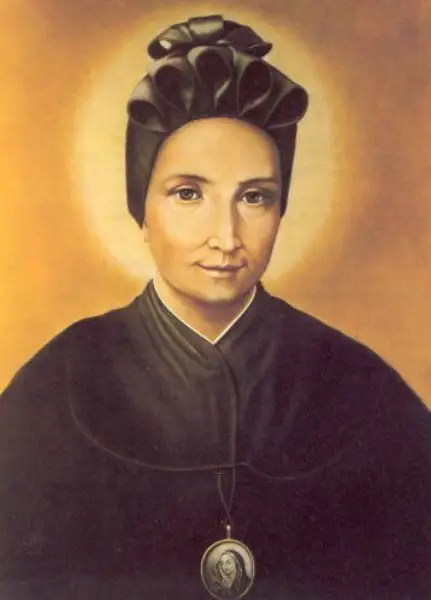
Magdalene of Canossa was born in Verona on 1 March 1774 to the Marquis Ottavio di Canossa and the Hungarian countess Teresa Szluha, a family that counted the great Countess Matilda of Canossa among its ancestors. Orphaned of her father in 1779 and effectively of her mother in 1781, she was raised under the guardianship of her uncle Girolamo. Twice she attempted life among the Carmelites before discerning that God asked something different of her, and she took up the management of the family estate instead. The revolutionary and Napoleonic wars that swept over northern Italy showed her the misery of Verona's poor, and in 1808 she left her ancestral palace to care for abandoned girls in a derelict convent, gathering companions around her who became the Canossian Daughters of Charity. Communities spread to Venice, Milan, Bergamo, and Trent, and in 1828 Pope Leo XII approved her Rule. She also opened the way for a men's congregation, the future Canossian Sons. After years of deteriorating health she died in Verona on 10 April 1835, and in 1988 Pope John Paul II enrolled her among the saints.
The Complete Life
A Daughter of the Canossa
Magdalena Gabriella di Canossa was born at Verona on 1 March 1774, baptized the following day, and christened with the name of the city's great apostle of charity's counterpart in the Gospels. Her father, the Marquis Ottavio di Canossa, descended from the line of the Countess Matilda of Canossa, the eleventh-century ally of Pope Gregory VII who helped arrange the humiliation of Emperor Henry IV; her mother, Teresa Szluha, was a Hungarian countess. The household was marked early by loss. Her eldest brother died soon after birth, her father perished in an accident at a vacation villa in Grezzano in 1779, and in 1781 her mother, remarrying the widower Marquis Odoardo Zanetti of Mantua, left the palace forever. Guardianship of the orphaned family passed to their uncle Girolamo, who brought up the motherless brood. Magdalene grew up thus as a noblewoman without parents, trained by the Carmelites in Trent and later at Conegliano, and early acquainted both with privilege and with the transience of human securities — a schooling that would dispose her heart toward the poorest children of her native city.
§ Childhood and obligations
Discernment Through Doors Closed
At seventeen Magdalene tried to give herself to God in the strictest cloister she knew, seeking entry among the Carmelites in 1791. Twice she attempted it, and twice the way closed: she came to see that Carmel was not the vocation for which she was made. Returning home, she shouldered the management of the family's large estate, an unexpected apprenticeship in administration that would later serve her congregation well. History soon broke in upon her responsibilities. Napoleon was her guest at the Canossa palace in 1797 and returned twice more, in 1805 and 1807, while French and Austrian armies fought over the Venetian lands and Verona changed hands. What she saw in those years — the destitution of families, the neglect of children, the sickness left in the wake of invasion — kindled the resolve that a palace and an inheritance could no longer contain. Collaborators such as Leopoldina Naudet and Antonio Rosmini would later share her concern for remaking religious life to meet these new miseries, but the first movement was hers: a noblewoman resolving to spend herself, and her goods, upon the poor.
§ Childhood and obligations
The House of the Poor
On 1 April 1808 Magdalene was given the use of a derelict convent, and there she welcomed two impoverished girls of the San Zeno quarter's slums, intending to feed, teach, and form them. On 8 May of that same spring she quit her ancestral palace for good, taking up residence in what came to be called the Saint Joseph Convent; other women joined her, and from that household grew the Canossian Daughters of Charity. Using her inheritance, she extended the work to hospitals and private homes, to the sick, and to delinquent and abandoned girls whom no one else would claim. Requests for foundations followed the fame of the work: Venice received a convent in 1812, Milan in 1816, Bergamo in 1820, and Trent in 1824, and at Rovato she collaborated briefly with Annunciata Astoria Cocchetti. Nor did she forget boys. She drew the priest Francesco Luzzi to open a chapel-house beside the sisters' convent of Santa Lucia in Venice on 23 May 1831, the seed of a men's congregation that laymen Giuseppe Carsana and Benedetto Belloni carried forward and that received its habit in 1860 and its Rule in 1897.
§ Foundation and recognition
A New Form of Religious Life
Magdalene believed that the Church needed a form of consecrated life shaped by the miseries of her age, and she was willing to labor for decades to have that conviction confirmed. Wanting the pope himself to legitimize her work, she sought out Pius VII at Piacenza in May 1815; twice brought before him, she lost her courage and came away with only the instruction to send her Rule through the usual channels — a disappointment that wounded her deeply. The death of Pius VII in 1823 stalled the process, and in September 1828 she set out for Rome to plead her cause with Leo XII, pausing at Coriano to visit Maria Elisabetta Renzi and at Loreto before arriving in November. The pope asked for a shorter version of the Rule and named a commission under Cardinal Carlo Odescalchi to examine it, and just before Christmas 1828 the brief Si Nobis granted pontifical approval. With Leopoldina Naudet she kept mutual esteem despite diverging methods until their partnership dissolved around 1816; with Antonio Rosmini, whom she met in February 1820, she shared the same aim of renewal, and his sister Margherita, her close friend, entered her congregation on 2 October 1824.
§ Foundation and recognition
The Last Journeys
Magdalene's final year was one of ceaseless movement despite failing strength. In 1834 she arranged the Spiritual Exercises for her congregation at Verona, journeyed afterward to Venice, and came back to Verona in May. When autumn came she traveled to Bergamo and on to Milan, overseeing the houses of a congregation that now stretched across the cities of the north. By January 1835 she knew that her life was drawing to its close, and in March she made her way back from Milan to Verona to die in the city of her birth and of her first foundation. She died there on 10 April 1835, aged sixty-one. Her family's story continued to intertwine with the Church: her nephew Luigi di Canossa would become Bishop of Verona and a cardinal. The mourners who buried her included sisters whose congregations would carry her charism far beyond the Venetian lands, though she herself could not have foreseen how far — only trusted, as she had trusted through every setback, that God would gather what she had sown in tears. She had spent her final months visiting the houses of the religious family she had founded.
§ Declining health and death
From Servant of God to Saint
The Church moved slowly but surely toward honoring Magdalene. The cause opened under Pope Pius IX on 15 February 1877, giving her the title Servant of God, and the confirmation of her heroic virtue allowed Pope Pius XI to declare her Venerable on 6 January 1927. Pope Pius XII beatified her in Saint Peter's Basilica on 7 December 1941. The miracle required for canonization proved a longer road: its examination ran from 13 January until 6 March 1955, and Rome validated the informative process on 25 November of that year, yet the cause then lay dormant as the reform of 1983 changed how miracles were assessed. The process stirred again on 1 July 1987, when a medical board gave its approval of the healing; the theologians gave their assent on 16 October, and the cardinals and bishops of the dicastery followed on 17 November. On 11 December 1987 Pope John Paul II signed the necessary decree, and less than a year afterward, on 2 October 1988, he raised her to the altars in Saint Peter's Square before a crowd that numbered Canossians from every continent. The canonization closed a cause that had crossed four pontificates and more than a century of patient labor.
§ Canonization
Charism Without Borders
The two congregations Magdalene founded have outlived every border of her age. The Canossian Daughters of Charity, born in a derelict Veronese convent in 1808, and the congregation of men that grew from Francesco Luzzi's Venice house of 1831 now serve on every continent, the brothers working in places such as India and Brazil. Her insistence that religious life should answer concrete misery — abandoned girls, the sick in hospitals and homes, delinquent children no one else would touch — anticipated the social apostolates of the nineteenth century and placed her beside contemporaries like Leopoldina Naudet and Antonio Rosmini as a renewer of consecrated life. The collaboration she sought with these kindred spirits, even when it ended in disagreement, testified to her conviction that the Spirit was raising up many hands for the same work. Canonized in 1988, she is commemorated on 10 April, with additional observances among her spiritual family and in Bergamo, Milan, and elsewhere in the Italian Church. In Verona a monument recalls the noblewoman who exchanged a marquisate's comforts for the service of the least. Her charism endures wherever education, charity, and patience serve the neglected young.
§ Canonization
Timeline
- 1 Mar 1774
Born in Verona to the Marquis Ottavio di Canossa and Teresa Szluha; baptized the next day
§ Childhood and obligations
- 1779
Her father died in an accident at a villa in Grezzano
§ Childhood and obligations
- 1781
Her mother remarried and left; the children passed under the guardianship of their uncle Girolamo
§ Childhood and obligations
- 1791
Tried twice to join the Carmelites, then returned home to run the family estate
§ Childhood and obligations
- 1797
Received Napoleon as a guest at the Canossa palace; French and Austrian armies brought upheaval to Verona
§ Childhood and obligations
- 1 Apr 1808
Received an abandoned convent and took in two poor girls from the San Zeno slum
§ Foundation and recognition
- 8 May 1808
Left her ancestral palace for the Saint Joseph Convent, where the Canossian Daughters took shape
§ Foundation and recognition
- 1812
Established a convent of the congregation in Venice
§ Foundation and recognition
- 23 May 1815
Audience with Pope Pius VII at Piacenza seeking approval of her congregation
§ Foundation and recognition
- 1816
A convent opened in Milan; her partnership with Leopoldina Naudet was dissolved
§ Foundation and recognition
- 1820
A convent founded in Bergamo; first met Antonio Rosmini in February
§ Foundation and recognition
- 1824
A convent founded in Trent; travelled to Rovato, collaborating briefly with Annunciata Astoria Cocchetti
§ Foundation and recognition
- 23 Dec 1828
Pope Leo XII approved her Rule in the papal brief Si Nobis
§ Foundation and recognition
- 23 May 1831
Francesco Luzzi opened the house in Venice that became the seed of the men's congregation
§ Foundation and recognition
- 10 Apr 1835
Died in Verona after a long decline, having returned from Milan in March
§ Declining health and death
- 15 Feb 1877
Cause of canonization opened under Pope Pius IX; named a Servant of God
§ Canonization
- 6 Jan 1927
Declared Venerable by Pope Pius XI
§ Canonization
- 7 Dec 1941
Beatified in Saint Peter's Basilica by Pope Pius XII
§ Canonization
- 2 Oct 1988
Canonized in Saint Peter's Square by Pope John Paul II
§ Canonization
The Record
- Major works
- Canossian Daughters of Charity·Canossian Sons of Charity·Rule of the Canossian congregations, approved in the brief Si Nobis (1828)
- Canonization
- Canonized by Pope John Paul II in Saint Peter's Square on 2 October 1988
Prayer
Bibliography
Show 6 sources
- "Santa Magdalena di Canossa". Santi e Beati. Retrieved 20 July 2017.
- "Saint Maddalena of Canossa". Saints SQPN. 10 April 2017. Retrieved 20 July 2017.
- "Magdalena of Canossa (1774-1835)". Holy See. Retrieved 20 July 2017.
- "St. Magdalene of Canossa". FaithND.
- "St. Magdalene of Canossa, Foundress". Canossian Daughters of Charity.
- "Saint Magdalen of Canossa". Franciscan Media. Archived from the original on 2017-04-16. Retrieved 2017-07-20.
Profile text adapted from the Wikipedia article, licensed CC BY-SA 4.0.
Pray with this saint every day
Save St. Magdalene of Canossa to your favorites, read the full profile, and get feast-day reminders in the Saints app.
Get the Saints AppFree on the App Store for iPhone and iPad