
c. 906 – 994·Feast May 11
St. Maiolus of Cluny
Fourth abbot of Cluny and reformer of monasteries
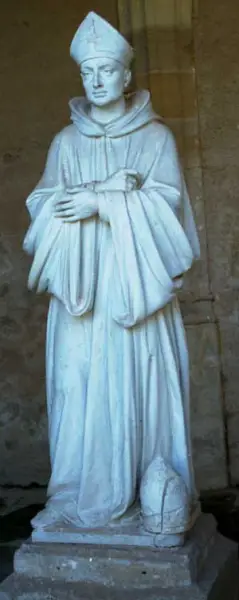
Overview
Maiolus of Cluny, also written Majolus or Mayeul, was the fourth abbot of Cluny and one of the most influential churchmen of the tenth century. Born around 906 at Avignon to a wealthy provincial family, he lost his parents young, studied the liberal arts at Lyon, and served as canon and later archdeacon of Mâcon, where his holiness was already so evident that the people of Besançon tried to make him their bishop. He refused and entered Cluny instead, serving Aymard as armarius and librarian before becoming coadjutor around 948 and abbot about 954. His abbacy transformed Western monasticism: at first he reformed communities one by one at the request of emperors and nobles, but he increasingly affiliated foundations to Cluny itself, creating the network of dependent priories that his successors Odilo and Hugh would extend across Europe. He was trusted by Emperor Otto I, the empress Adelaide, and Otto II, who summoned him to Italy in 974 to make him pope — an honor he again declined. Captured by Arab raiders from Fraxinet in 972 and ransomed by his monks, he inspired the Christian offensive that secured the Alpine passes. He died on May 11, 994 at Souvigny, on his way to reform Saint-Denis, and his tomb there became a great pilgrimage site.
The Complete Life
A Son of Avignon in an Age of War
Maiolus was born around 906 at Avignon, though some traditions give Valensole as his birthplace. His father Fulcher belonged to a wealthy provincial family of the city, and his mother was named Raimodis; the couple had two sons, Maiolus and Cynricus, and since the custom of noble houses gave estates to the elder sons and the Church to the younger, Maiolus's eventual monastic profession has led most writers to judge him the younger of the two. His childhood was darkened by the feudal wars that ravaged the Rhone country in the generations before the peace movements took hold: around 916 the boy fled with his family's households from their estates near Rietz to take refuge with relatives at Mâcon in Burgundy. Both his parents died while he was still young, leaving the orphan to make his own way in the world of the tenth-century church. His talents pointed him toward learning, and he went to study the liberal arts at Lyon, one of the intellectual centers of the Rhone valley. From there his path led to Mâcon, where he would first make his name, first among the clergy and then among the people, as a scholar of unusual purity of life. The refugee boy of Avignon was already becoming the holy man whom all Burgundy would one day consult.
§ Life
Canon of Mâcon, Monk of Cluny
At Mâcon Maiolus became a canon, was ordained priest, and rose to be archdeacon of the church, teaching a large body of clerks without payment and building a small oratory across the river where he could retire to prayer. His character drew everyone's notice: kind in personal habit, incapable of lies, detraction, or flattery, severe with sinners only when their repentance required it. When the see of Besançon fell vacant the people called upon him to become their bishop, and he refused. In the same period a famine gripped the region, and as he prayed for the hungry, seven gold solidi appeared before him; fearing a device of the devil, he would not touch them until he found the money was real and unclaimed, and then bought food for the starving. Turning his back on every advancement, he entered the abbey of Cluny, which he had visited before, then governed by Aymard. The abbot made him armarius, keeper of books and master of ceremonies, and later librarian. He had read Virgil's poems but judged monks should not, holding the Bible alone sufficient for them, and he applied a harsh discipline to novices. Sent to Rome with a sick companion, he kept three days' anxious vigil, and a dream of an elder invoking the letter of James led him to anoint the dying man, whose recovery made his name at Cluny.
§ Lyons and Macon
The Abbot Among Emperors and Raiders
Made coadjutor to the blind Aymard around 948 and abbot about 954 after a dream in which St. Benedict himself handed him the Rule, Maiolus directed Cluny for four decades of astonishing activity. Emperors and kings summoned him: he reformed many German monasteries at Otto the Great's request, took charge of Sant'Apollinare in Classe in 972, of Saint-Germain d'Auxerre for Duke Henry I of Burgundy in the 980s, and reformed Parma in 982 and the canons of Monte Celio in 987. He was intermediary and counselor to the imperial house, reconciling Otto II and the empress Adelaide at Pavia around 980, predicting the deaths of both emperors, and refusing the papal tiara they offered him in 974. The most dramatic chapter came in 972, when, returning from Pavia through the Alpine passes, he was seized by Arab raiders from the stronghold of Fraxinet. His monks raised his ransom at once, but the outrage they could not forgive: the faithful of Provence, peasants and nobles together, implored Count William to act, and the feudal host he raised from Provence, the lower Dauphiné, and Nice destroyed the raiders at the Battle of Tourtour, securing the mountain passes for Christendom. The abduction of one abbot had redrawn the map of the Provençal frontier.
§ Captivity
The Character of a Holy Abbot
Contemporaries revered Maiolus as a saint, and the portrait drawn of him is one of the most attractive to survive from the tenth century. He gave long hours to prayer and solitude, rebuked sinners when rebuke was needed, disliked public praise and high honors, and preferred doing good in secret, far from the public eye. On every journey an open book rode in his hand, a spiritual or philosophical work that he read as he traveled. His knowledge of Scripture and of other subjects was great, yet he never displayed it, speaking only when asked his opinion, and then briefly. His asceticism was measured rather than extreme: seated at the tables of the rich and powerful he ate what they ate, wore clothes neither shabby nor expensive, and drank a little wine — a moderation that made holiness plausible to the great. The vitae attribute to him a harvest of miracles worked both in life and at his tomb: cures of the sick, sight restored to the blind, healings of those bitten by serpents, dogs, or wolves, rescues from drowning and fire. When a monastery's larder lacked fish for his visit, the brethren who called on his name drew an enormous salmon from the river; a blind beggar whose jar of water he blessed washed his eyes and saw; pilgrims who invoked him at the Loire saw the ferry cross to them unrowed, and a dead child laid overnight before his altar at Souvigny woke and called for his mother.
§ Character
The Road to Souvigny
Maiolus lived to the age of eighty-four, governing Cluny until his strength failed. Two years before his death he followed the example Aymard had set with him long before: he gave up the abbacy and appointed Odilo, the man who would succeed him as the fifth abbot, as his coadjutor. Retiring from the government of the great abbey he had served so long, he took refuge in a modest Cluniac community, spending what strength remained to him in instructing, correcting, and inspiring the brothers — the old abbot now simply a father among monks. Idleness never found him, and even in extreme old age he kept working for the reform of the Church. His final undertaking was the reformation of Saint-Denis in Paris, the royal abbey; he set out on that mission but did not get far. He stopped at Souvigny Priory, one of the Cluniac houses of the Bourbonnais, and there he died on May 11, 994. The monks of Cluny wanted to bring their father's body home to the motherhouse, but the community of Souvigny protested and insisted that he remain with them, and there he was buried — soon to be joined by his successor Odilo — in what became one of the great pilgrimage shrines of France.
§ Death
Veneration at the Tomb
Maiolus was never formally canonized; he belongs to the age when sanctity was affirmed by the voice of the faithful and ratified by liturgical use. He is venerated as a confessor in the Roman Catholic Church and the Eastern Orthodox Church, his feast kept on May 11, the day of his death, and April 29 joins him with four other early Cluniac superiors in the feast of the Holy Abbots. Two lives of the saint circulated: one written by Syrius, a monk of Cluny, and another by Odilo, his successor, who had known him intimately and received the abbacy from his hands. His tomb at Souvigny quickly became the goal of pilgrims, and its fame was such that Hugh Capet, King of France, came there in 994 itself, the year of the abbot's death. Miracles multiplied at the shrine — the restoration of a dead child before the altar was among the stories told — and the water in which he had washed his hands was treasured as a channel of healing. Through the vitae and the pilgrimage, the memory of the fourth abbot remained vital at Cluny throughout the abbacy of his successors, and he is remembered today in the long line of confessors who made the tenth-century monastery a school of holiness for the whole Latin Church.
§ Veneration
The Making of Cluny's Empire
Maiolus's greatest monument was institutional. Until his day Benedictine houses were autonomous, and the reforms carried out in the names of earlier abbots had bound communities to the man rather than the monastery; when an abbot died, the monks simply elected a successor and the tie dissolved. Maiolus, finding this personal reform prone to relapse, increasingly affiliated foundations to Cluny itself, and under him the network of monasteries dependent on the motherhouse's leadership took shape — Payerne placed under Cluny by Empress Adelaide in 965, Paray-le-Monial founded as a Cluniac house in 973, St. Benignus of Dijon resettled with Cluniac monks in 989, Saint-Maur-des-Fossés supported, and William of Volpiano sent to Toulouse — a structure that Odilo and Hugh would expand into the greatest monastic federation in the West. The construction of Cluny II between about 955 and 981, begun after the Hungarian raids, gave Burgundy its tendency toward stone vaulting, and the relics of Peter and Paul brought from Rome during his abbacy announced the abbey's new dignity. Cluny was not noted for severe discipline or asceticism, but its abbots championed the revival of the papacy, and the popes in turn placed excommunication upon any who usurped Cluny's rights — an alliance of monastery and papacy that shaped the eleventh-century reform. Modern historians, from Lucy Smith to Scott Bruce, continue to study his captivity, his cult, and his world.
§ Monastic Reform
Timeline
- 906
Born at Avignon, son of Fulcher and Raimodis of a wealthy provincial family.
§ Life
- 916
Left the family lands near Rietz for the protection of kin at Mâcon as feudal war swept the region.
§ Life
- 948
Became coadjutor to Abbot Aymard of Cluny, whom blindness was forcing toward resignation.
§ Abbot of Cluny
- 953
Destructive Hungarian raids prompted the building of the new abbey church of Cluny II.
§ Abbot of Cluny
- 954
After a dream of St. Benedict commanded him to accept, he became abbot of Cluny.
§ Abbot of Cluny
- 965
Empress Adelaide placed Payerne Priory under Cluny Abbey.
§ Monastic Reform
- 971
Founded the Monastery of San Salvatore in Lombardy with the support of Empress Adelaide.
§ Political life
- 972
Appointed by Emperor Otto to be abbot of Sant'Apollinare in Classe near Ravenna.
§ Monastic Reform
- 972
Returning from the imperial court at Pavia through the Alps, he was captured by Arabs from Fraxinet and quickly ransomed by his monks.
§ Captivity
- 972
Count William of Provence, roused by the abbot's treatment, defeated the Muslims at the Battle of Tourtour, securing the mountain passes.
§ Captivity
- 973
Lambert of Chalon and Adelaide of Chalon founded the Priory of Paray-le-Monial as a house of Cluny.
§ Monastic Reform
- 974
Adelheid and her son Otto II summoned him to Italy to make him Pope; he refused.
§ Political life
- 980
Helped reconcile Emperor Otto II with his mother, the dowager empress Adelaide, at Pavia.
§ Political life
- 981
Cluny II's new abbey church was consecrated, after the relics of Peter and Paul had reached the abbey from Rome under his rule.
§ Abbot of Cluny
- 982
Reformed San Giovanni Evangelista in Parma.
§ Monastic Reform
- 983
Advised Emperor Otto II against his Italian campaign, warning he would die; the Emperor died that year.
§ Political life
- 987
Reformed the canons at Monte Celio in Pavia.
§ Monastic Reform
- 989
Bishop Bruno of Roucy asked him to send monks to resettle the decadent Abbey of St. Benignus in Dijon as a Cluniac house.
§ Monastic Reform
- 992
Two years before his death, resigned the abbacy and made Odilo his coadjutor, retiring to a smaller Cluniac house.
§ Death
- 994
Died on May 11 at Souvigny Priory on the journey to reform Saint-Denis in Paris, and was buried there.
§ Death
In Their Own Words
Now in Him who is able to smooth over rough places, to raise up heavy burdens, and to overthrow the adversary, I place my hope, and submit myself to your unchanged command.
Why art thou cast down in idle grief? Hast thou forgotten what my brother James orders for the sick?
The Record
- Major works
- Monastery of San Salvatore in Lombardy (founded 971)·The Cluniac affiliation of Payerne Priory (965) and Paray-le-Monial (973)·Reform of Sant'Apollinare in Classe (972), San Giovanni Evangelista in Parma (982), and the canons of Monte Celio in Pavia (987)·Reform of the Abbey of Saint-Germain d'Auxerre at the request of Duke Henry I of Burgundy·Resettlement of the Abbey of St. Benignus in Dijon with Cluniac monks (989)·Direction of William of Volpiano's mission to reform the Abbey of Saint-Sernin at Toulouse
- Canonization
- Pre-congregation; venerated as a confessor in the Roman Catholic Church and the Eastern Orthodox Church, with a feast on May 11 and a shared commemoration on April 29 with the Holy Abbots of Cluny.
Prayer
Bibliography
Show 9 sources
- Smith, Lucy Margaret (1920). The Early History of the Monastery of Cluny. Oxford University Press.
- Duckett, Eleanor Shipley. Death and Life in the Tenth Century, University of Michigan Press, 1967, p. 207. ISBN 9780472061723.
- Goyau, Georges. "Moulins." The Catholic Encyclopedia Vol. 10. New York: Robert Appleton Company, 1911.
- Krueger, Hilmar C., "The Italian Cities and the Arabs before 1095", in A History of the Crusades: The First Hundred Years, Vol. I, ed. Kenneth Meyer Setton, Marshall W. Baldwin, University of Pennsylvania Press, 1955, p. 51.
- Blumenthal, Uta-Renate. The Investiture Controversy: Church and Monarchy from the Ninth to the Twelfth Century, University of Pennsylvania Press, 2010, p. 13. ISBN 9780812200164.
- Iogna-Prat, Dominique. Order & Exclusion: Cluny and Christendom Face Heresy, Judaism, and Islam, 1000-1150, Cornell University Press, 2002, p. 55. ISBN 9780801437083.
- Bouchard, Constance Brittain (1987). Sword, Miter, and Cloister: Nobility and Church in Burgundy, 980-1198. Cornell University Press, p. 308.
- Conant, Kenneth John. "Cluny II and St. Bénigne at Dijon", Archaeologia, vol. 99, 1965, pp. 179-194. doi: 10.1017/S0261340900011152.
- Bruce, Scott G. (2015). Cluny and the Muslims of La Garde-Freinet: Hagiography and the Problem of Islam in Medieval Europe. Ithaca: Cornell University Press.
Profile text adapted from the Wikipedia article, licensed CC BY-SA 4.0.
Pray with this saint every day
Save St. Maiolus of Cluny to your favorites, read the full profile, and get feast-day reminders in the Saints app.
Get the Saints AppFree on the App Store for iPhone and iPad