
1899-1927·Feast November 12
St. Margarito Flores García
Priest and Martyr
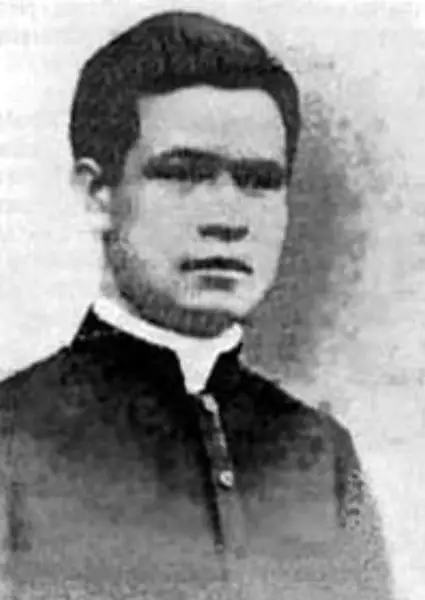
Overview
Margarito Flores García was born on 22 February 1899 at Taxco de Alarcón in Guerrero, to Germán Flores and Merced García, and as a child laboured in the fields to help his impoverished family. He entered the seminary at fifteen and was ordained by Bishop José Guadalupe Ortiz on 5 April 1924, singing his first Mass in his home parish of Santa Prisca y San Sebastián on 20 April. He ministered as vicar in the seminary at Chilopie, working to check the spread of breakaway sects. When the Calles-era decrees of 1926 drove priests from parish ministry into the monitored cities, he stayed near his people, encouraged by the example of David Uribe Velasco, who had chosen to minister clandestinely where the Church was most endangered. In June 1927 he was seized alongside men belonging to the League that defended religious liberty, he was freed through the intervention of General Roberto Cruz's family. In November he was sent as pastor to Atenango del Río — a town whose other priests had already been killed — and was seized almost on arrival, dragged by rope before the general at Tulimán, and shot by federal forces on 12 November 1927. His cause opened in 1933; he was beatified in 1992 and canonized in 2000.
The Complete Life
Early Life
Margarito Flores García was born on 22 February 1899 at Taxco de Alarcón in the Mexican state of Guerrero, the son of Germán Flores and Merced García. The family was poverty-stricken, and from a young age he labored in the fields to help support it — an ordinary childhood in the rural sierra of Guerrero. At fifteen he began seminary studies, a path his family's poverty made uncertain and his persistence made real. Bishop José Guadalupe Ortiz ordained him on 5 April 1924, and on 20 April of that same year, aged twenty-five, he offered his first Mass in the Santa Prisca y San Sebastián church of his native Taxco, the pride of his village.
§ Biography
Ministry in Guerrero
Ministering as vicar in the seminary at Chilopie, Flores worked to check the spread of breakaway sects in the diocese — the very work that made priests obnoxious to the revolutionary state, which saw the Church as a rival institution and its new religious movements as allies. When the Calles-era decrees of 1926 drove priests from parish ministry into the monitored cities, he stayed near his people, ministering in the country as best he could, encouraged by the example of David Uribe Velasco, who had chosen to work clandestinely where the Church was most endangered rather than take refuge in the tolerated city parishes. In June 1927 he was seized alongside men belonging to the League for the Defense of Religious Liberty; he was freed through the intervention of the family of General Roberto Cruz — a reprieve that lasted five months.
§ Biography
Martyrdom
In November 1927 Flores was sent as pastor to Atenango del Río, a town whose previous priests had already been killed — a posting that was in effect a sentence. He was seized almost on arrival, dragged by rope before the general at Tulimán, and shot there on 12 November 1927. He was twenty-eight years old. The manner of his death — dragged by lariat through the mountains to a summary execution — made him one of the most vivid of the Cristero-era martyrs of Guerrero, whose diocesan investigation opened in 1933 while memories were fresh.
§ Biography
Canonization
Flores was beatified by Pope John Paul II at Saint Peter's Basilica on 22 November 1992, in the great group beatification of the Mexican martyrs, and canonized by the same pope in Saint Peter's Square on 21 May 2000, among the twenty-five Saints of the Cristero War led by Cristóbal Magallanes Jara. His feast is kept on 12 November, and his principal shrine is at his native Taxco de Alarcón.
§ Biography
Legacy
Margarito Flores belongs to the youngest cohort of the Cristero martyrs: ordained in 1924, dead in 1927, three years a priest. His life compresses the whole predicament of the Mexican clergy of the 1920s — the seminarian from an impoverished village, the curate countering the sects, the pastor forbidden to pastor, and finally the posting to a parish whose priests had already been shot. In Guerrero, where the Church's memory of those years is strongest, his cult is deeply rooted, and his shrine at Taxco draws pilgrims from the diocese each November.
§ Biography
Timeline
- 22 Feb 1899
Born at Taxco de Alarcón, Guerrero, to Germán Flores and García Merced.
§ Biography
- 1914
At fifteen he begins studies at the seminary of Chilopie.
§ Biography
- 5 Apr 1924
Ordained a priest by Bishop José Guadalupe Ortiz.
§ Biography
- 20 Apr 1924
Says his maiden Mass in Taxco's church of Santa Prisca y San Sebastian.
§ Biography
- 1925
The article dates the translation of his relics to a chapel in his native Taxco parish.
§ Biography
- 1926
Calles's decree forces priests from parish ministry, and the clergy are relocated from Chilpancingo to Tecapulco.
§ Biography
- Jun 1927
Seized in June and jailed alongside members of the League for the Defense of Religious Liberty, then freed through General Roberto Cruz's family.
§ Biography
- Nov 1927
Sent in November as pastor of Atenango del Río, a village where every other priest had already been killed.
§ Biography
- 12 Nov 1927
Shortly after arriving, he is arrested, dragged before the general at Tulimán, and shot by government forces.
§ Biography
- 1933
Diocesan investigation into his heroic sanctity opens.
§ Biography
- 1988
The diocesian inquiry into his life and martyrdom is completed.
§ Biography
- 22 Nov 1992
Beatified by Pope John Paul II in St. Peter's Basilica.
§ Biography
- 21 May 2000
Canonized by John Paul II in St. Peter's Square alongside Cristóbal Magallanes Jara and companions.
§ Biography
The Record
- Canonization
- Beatified by Pope John Paul II on 22 November 1992; canonized with St. Cristóbal Magallanes Jara and companions by Pope John Paul II on 21 May 2000
Prayer
Bibliography
Show 10 sources
- ↑ Henry Fros; Francis Sowa (2007). Book of names and saints . Vol. 6. Krakow: WAM. p. 452. ISBN 978-83-7318-736-8 .
- 1 2 3 4 Henry Fros; Francis Sowa (2007). Book of names and saints . Vol. 6. Krakow: WAM. p. 457. ISBN 978-83-7318-736-8 .
- ↑ Mario Agnes ; Czeslaw stick (eds.). "Twenty-five Mexican martyrs". L'Osservatore Romano . 1/1993. L'Osservatore Romano: 15.
- 1 2 3 4 Gianpiero Pettiti (2008-12-29). "San Margarito Flores Garcia Sacerdote e martire" (in Italian) . Retrieved 2013-05-17 .
- 1 2 3 4 5 6 7 "San Margarito Flores García" (in Spanish). Diocesan Commission canonization. The Archdiocese of Guadalajara. Mexico. Archived from the original on 2009-03-31 . Retrieved 2013-05-17 .
- 1 2 3 4 5 6 Henry Fros ; Francis Sowa (2007). Book of names and saints . Vol. 6. Krakow: WAM. p. 458. ISBN 978-83-7318-736-8 .
- 1 2 "Margarito Flores García" (in Spanish) . Retrieved 2013-05-17 .
- ↑ Henry Fros ; Francis Sowa (2007). Book of names and saints . Vol. 6. Krakow: WAM. p. 451. ISBN 978-83-7318-736-8 .
- ↑ "San Margarito Flores, sacerdote" (in Spanish) . Retrieved 2013-05-17 .
- ↑ Henry Fros ; Francis Sowa (2007). Book of names and saints . Vol. 6. Krakow: WAM. p. 459. ISBN 978-83-7318-736-8 .
Profile text adapted from the Wikipedia article, licensed CC BY-SA 4.0.
Pray with this saint every day
Save St. Margarito Flores García to your favorites, read the full profile, and get feast-day reminders in the Saints app.
Get the Saints AppFree on the App Store for iPhone and iPad