
1682 – 1744·Feast April 5
St. Maria Crescentia Höss
Franciscan tertiary and mystic of Kaufbeuren
Overview
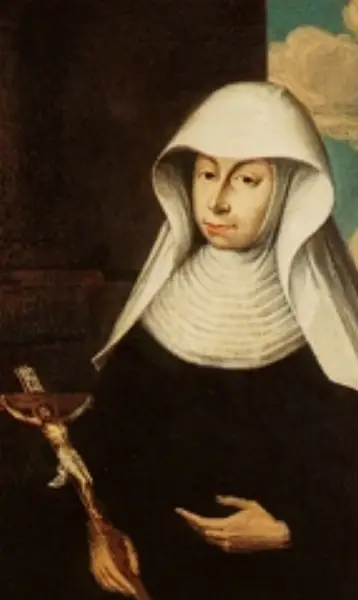
Maria Crescentia Höss, a sister of the Third Order Regular of St. Francis, turned a hostile welcome inside her own convent into the foundation of a life of wide spiritual influence. Born Anna Höss at Kaufbeuren in Bavaria in 1682, the sixth of eight children of a poor weaver, she was refused entry to the local Franciscan tertiary convent because her father could not pay the customary dowry. She was admitted only in 1703, after the Protestant mayor of the town donated a tavern to the sisters on condition that she be accepted. Treated for years as an unwelcome dependent, she was finally able to profess vows and serve in the kitchen and the weaving room. Chosen portress in 1707 and mistress of novices in 1717, she became a prolific correspondent whose letters of counsel reached people in every social station. Elected mother superior in 1741 despite failing health, she led a renewal of the community's life before dying on Easter Sunday, 5 April 1744. Leo XIII beatified her in 1900, and John Paul II canonized her on 25 November 2001.
The Complete Life
A Weaver's Daughter in Kaufbeuren
Anna Höss came into the world at Kaufbeuren in Bavaria on 20 October 1682, daughter of Matthias Höss and his wife Lucia Hoermann. Of the couple's eight children only three would reach adulthood, and Anna was the sixth born — a childhood shadowed by the mortality of the age. Her family earned its living by the loom, and Anna herself became a weaver, trained in the trade that would one day serve the convent she longed to enter. Her deepest ambition, however, was not the workshop but the cloister: the local convent of the Tertiary Franciscans occupied the old Meierhof of the town, and in its chapel Anna often prayed. Entry required the customary dowry expected of a candidate, and her father, a poor weaver, did not have the money to pay it. For that reason alone she was not admitted. The disappointment fixed the pattern of her early religious life: a genuine vocation blocked by poverty, and a girl who kept praying in the chapel of the community that would not take her in. The loom gave her a trade, and the convent chapel gave her a place to weigh the future taking shape before her, for it was there that she most often prayed over the desire that would not leave her.
§ Early life
Admitted Through a Tavern
The obstacle of the dowry was removed not by Anna's family but by an improbable act of civic generosity. In 1703 the Mayor of Kaufbeuren, a Protestant, bought a tavern standing next to the convent, a building whose noise had often disturbed the quiet of the cloister, and donated it to the sisters. He refused any compensation and asked only one thing in return: that Anna be accepted as a candidate. The superior felt bound by the mayor's condition, and Anna entered the convent in June 1703. Gratitude did not soften the superior's feeling toward the newcomer, whom she regarded as having been imposed upon the community and called a parasite, since she brought nothing to its support. Once clothed in the habit and given the name Maria Crescentia, she endured a prolonged persecution from the superior and some of the older sisters. She was assigned the most menial tasks like a servant; the cell she had been given was taken from her and handed to a novice who arrived with the customary dowry; she had to beg a corner of other sisters' cells for a place to sleep, and when a room was finally restored to her it was a dark and damp cubbyhole. She was nevertheless allowed to profess vows, and she served the community in the kitchen and at the weaving.
§ Life in the monastery
Portress, Novice Mistress, Letter Writer
Change came in 1707, when the community elected a superior more sympathetic to Crescentia, and her fortunes turned. She was entrusted with the office of portress, the sister who received visitors at the door, then, in 1717, came appointment as mistress of novices, charged with forming the community's next generation. From this period dates her principal work: a vast correspondence. A tireless letter writer, Crescentia left behind many letters to correspondents drawn from every social station, offering them advice and comfort in their worries. Her teaching, preserved in those letters and in her direction of the community, urged unlimited confidence in Divine Providence, willingness to serve within the shared life, and a love of silence, joined to devotion to the Crucified Jesus, to the Blessed Sacrament, and to his Blessed Mother. The Gospels, she told the sisters, were to be the school of their inner spiritual life. She was equally known for being selective about whom she would admit as candidates, and when her choices were questioned she replied that God desired a monastery wealthy in virtue rather than in passing goods — a principle that echoed her own reception, once bought with a building and now weighed by her against holiness.
§ Life in the monastery
Mother Superior of Kaufbeuren
By the time her community chose her for its highest office, Crescentia's health was already failing; she suffered from poor health and even paralysis. In 1741 she was elected mother superior of the monastery, and she held the office until her death. Her tenure was brief, but it defined the community's future: she led a renewal of the sisters' way of life, grounding it in the counsels she had long practiced — confidence in Providence, service within the common life, silence, and devotion to Christ crucified, the Blessed Sacrament, and his Mother. The woman once called a parasite and made to sleep in the corners of other sisters' cells now governed the house that had rejected her, and governed it, by all accounts, with a spirit of renewal rather than reprisal. Her death came on 5 April 1744, which that year was Easter Sunday — a date her admirers found fitting for a life that had moved from humiliation to resurrection. She died at Kaufbeuren, in the same convent whose chapel she had prayed in as a girl kept waiting at its door.
§ Life in the monastery
A Cause Besieged by History
The church moved slowly toward recognizing Crescentia, and history itself obstructed the path. Her cause opened in 1775, within a generation of her death, but the secularization of monasteries during the Revolutionary upheavals of the late eighteenth century interrupted it, and in the nineteenth century the Kulturkampf's anti-Catholic policies of the German state stopped the monastic community from taking the cause any further. For well over a century the Kaufbeuren sisters guarded the memory of their superior without being able to advance her cause through a hostile age. The delay ended in 1900, when Pope Leo XIII beatified her. More than a century later, on 25 November 2001, Pope John Paul II canonized her in company with three others, raising the weaver's daughter of Kaufbeuren to the altars of the universal church. The long interval between her death and her canonization — two hundred and fifty-seven years — is itself a measure of the obstacles her cause survived: revolution, confiscation, and cultural war, none of which extinguished the local devotion that kept it alive. With the raising to the altars complete, the community took her name for its own house, and the sister once dismissed as a parasite entered the calendar of the universal church.
§ Veneration
The Convent That Bears Her Name
Crescentia's lasting monument is the community she served and renewed. After her canonization, the monastery at Kaufbeuren was renamed St. Crescentia Monastery in her honor, and it remains known as the Crescentiakloster, the house where a poor weaver's daughter was once refused a place and later ruled as mother superior. Her letters continue her influence beyond the cloister wall that confined her: written originally to correspondents in many social positions, they carry the same counsel of trust in Providence, love of silence, and devotion to the crucified Christ that shaped her community's renewal. Within the Franciscan tradition she stands as an example of the Third Order Regular, the branch of penitent women who pursued the contemplative life in urban monasteries dependent on local clergy and patrons — a fragile institutional setting that she nonetheless filled with durable holiness. For those who suffer mistreatment inside the very communities they serve, her early years at Kaufbeuren offer a specific companionship: she was hated without cause, demoted without redress, and slept in a damp cubbyhole, and she answered none of it with resentment.
§ Veneration
Timeline
- 20 Oct 1682
Born Anna Höss at Kaufbeuren, in Bavaria, sixth of the eight children of Matthias Höss and Lucia Hoermann.
§ Early life
- Jun 1703
Admitted to the Tertiary Franciscan convent at Kaufbeuren after the mayor's gift of a tavern; received the habit and the name Maria Crescentia.
§ Life in the monastery
- 1707
A new superior was elected, and Crescentia was entrusted with the office of portress.
§ Life in the monastery
- 1717
Appointed mistress of novices of the Kaufbeuren community.
§ Life in the monastery
- 1741
Elected mother superior of the monastery despite suffering from poor health and paralysis.
§ Life in the monastery
- 5 Apr 1744
Died at Kaufbeuren on Easter Sunday, after three years as mother superior.
§ Life in the monastery
- 1775
The process for her canonization was begun.
§ Veneration
- 1900
Beatified by Pope Leo XIII after the cause had been long delayed by secularization and the Kulturkampf.
§ Veneration
- 25 Nov 2001
Canonized by Pope John Paul II, together with three others.
§ Veneration
In Their Own Words
God wants the monastery rich in virtue, not in temporal goods
The Record
- Major works
- Letters of spiritual counsel to people in every social station·Renewal of the monastic life of the Kaufbeuren convent
- Canonization
- Beatified by Pope Leo XIII in 1900; canonized by Pope John Paul II on 25 November 2001
Prayer
Bibliography
Show 5 sources
- "Maria Crescentia Hoss (1682-1744): biography". www.vatican.va.
- "Saint Crescentia Hoess". Franciscan Media. 2016-04-06.
- Jeiler, Ignatius; Deymann, Clementine (1886). Life of the Ven. Mary Crescentia Höss, of the Third order of St. Francis. Drawn from the Acts of her beatification, and other reliable sources. New York, Cincinnati: Benziger Brothers.
- McNamara, Robert F. "St. Crescentia". Saints Alive. Irondequoit Catholic Communities.
- Homily of John Paul II at the canonization of Maria Crescentia Höss. Vatican website.
Profile text adapted from the Wikipedia article, licensed CC BY-SA 4.0.
Pray with this saint every day
Save St. Maria Crescentia Höss to your favorites, read the full profile, and get feast-day reminders in the Saints app.
Get the Saints AppFree on the App Store for iPhone and iPad