
1878 – 1963·Feast June 24
St. María Guadalupe García Zavala
Co-founder of the Handmaids of Santa Margherita Maria and of the Poor
Overview
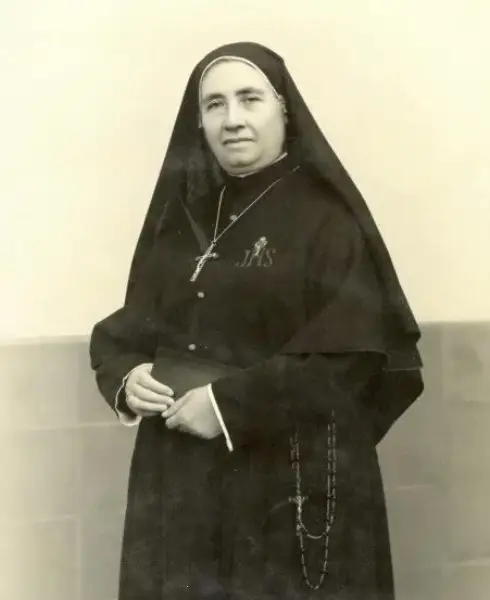
María Guadalupe García Zavala, known affectionately as Mother Lupita, was a Mexican religious sister who co-founded the Handmaids of Santa Margherita Maria and of the Poor and gave her life to the care of the sick. Born in Zapopan, Jalisco, in 1878 to a religious goods merchant whose shop stood before the basilica, she grew up visiting that shrine and showing an altruism that those who knew her as a child remembered well. Though she hoped to marry Gustavo Arreola, she broke off their engagement in 1901, feeling a call too strong to resist, and that same October she and her spiritual director Cipriano Iñiguez Martín del Campo founded a new congregation devoted to the poor and the ill. As a nurse she served patients regardless of their poverty, and as Superior General she led the young community, at times begging in the streets to keep the hospital's doors open. During the Mexican Revolution and the persecution of the faith that followed, she risked her life hiding priests and the Archbishop of Guadalajara within her hospital. She bore her own long illness with patience until her death in Guadalajara on 24 June 1963. Beatified by Pope John Paul II in 2004, she was canonized by Pope Francis in Saint Peter's Square on 12 May 2013.
The Complete Life
Child of the Basilica at Zapopan
Anastasia Guadalupe García Zavala was born on 27 April 1878 at Zapopan in Jalisco, Mexico, to the merchant Fortino García and his wife Refugio Zavala. Her father earned his living selling religious goods, and his shop stood directly in front of the basilica of Zapopan, the great Marian shrine that his daughter came to visit frequently as a girl. She was baptized in the parish church of Saint Peter the Apostle, and she grew up in the shadow of the sanctuary where she would later make her First Communion on 8 September 1887. The neighbors and relatives who knew her best as a child remembered a girl who was nice and likeable, and above all altruistic, always ready to help, however she could, those who needed it most. That early instinct toward charity matured into a serious faith, and by young womanhood she carried two desires in her heart at once: the natural hope of marriage and the growing conviction that God was asking something more of her. The resolution of that tension would shape not only her own destiny but the lives of the poor and the sick of Guadalajara for generations.
§ Life
Breaking the Engagement
Zavala had planned to wed Gustavo Arreola, and marriage was a strong desire of hers; yet in 1901 she broke off the engagement because a call to the consecrated life had taken hold of her, for she believed heaven was asking her to devote herself to the poor and the sick. She later described her call as a sudden turn of the heart that she recognized she must obey. The decisive turn came quickly. On 13 October 1901, in the same year as her broken engagement, she and her spiritual director, Cipriano Iñiguez Martín del Campo, a future Servant of God, co-founded a new religious congregation under the title of the Handmaids of Santa Margherita Maria and of the Poor. The young founder threw herself into the congregation's work, laboring as a nurse among the sick of the city. Whether her patients were poor or possessed nothing at all in the way of material goods, she was compassionate and caring toward their needs, treating each one with the dignity of a child of God. Her companions recognized the gift of leadership in her, and she was named Superior General of the new order, the office from which she would guide its growth through revolution, persecution, and eventual canonical recognition.
§ Life
Begging for the Hospital
The mission of the Handmaids was the corporal work of mercy carried to its extreme: the care of the ill who had no one else. In times of dire need, when the hospital's resources ran dry, Zavala sought her spiritual director's leave to beg through the streets to collect the funds needed to keep it open. She undertook this humble labor with her fellow religious, gathering alms until every need of the hospital and its patients was satisfied, and asking for no more than was needed, a discipline of holy moderation that marked her whole administration. The great trial of her mission came with history itself. The Mexican Revolution broke out in 1911, and its effects lasted until 1936, years in which the political-religious situation in Mexico grew tense and the Catholic faith underwent severe persecution. In those dangerous times Zavala put her own life at risk, hiding priests in her hospital and sheltering the Archbishop of Guadalajara himself within its walls, turning a house of healing for bodies into a refuge for the persecuted church. Her perseverance was rewarded when the archdiocese granted the order diocesan approval on 24 May 1935, securing the congregation's future.
§ Life
Compassion Without Calculation
The spirituality of Mother Lupita was forged in the hospital ward and tested in the street. She was noted for her compassion and her faith, virtues that those who wrote of her life place at the center of her character. Her charity made no distinctions: however destitute and stripped of material goods her patients might be, she was compassionate and caring toward the needs of the ill, seeing in every sufferer the person of Christ. Yet her compassion was joined to a striking poverty of means. She begged for her hospital, but only until the need was met, never seeking a coin beyond what was required, an austerity that reflected a heart convinced that God provides and that surplus belongs to the poor. Her faith did not waver when faith itself was costly: through the years of revolutionary persecution she risked death to conceal priests and the Archbishop of Guadalajara, an act that required both daring and deep trust in Providence. Even her great personal trial she received as within the divine will, for when severe illness began to consume her own strength in 1961, she bore it as she had borne every hardship, in quiet fidelity, until God called her home.
§ Life
Illness and Quiet Passing
The woman who had spent her life healing others entered her own long passion in 1961, when she began to suffer from a severe illness. For two years the disease sapped the strength of the foundress, who had crossed her eighty-fifth year and could no longer walk the wards or beg in the streets as she once had. She bore the decline in the same spirit that had marked her service, patient and unmurmuring, surrounded by the congregation she had raised from nothing. She died from her illness on 24 June 1963 in Guadalajara, the city where her hospital had stood and her sisters still served, closing an earthly life of eighty-five years that had spanned the Porfiriato, the Revolution, the Cristero persecution, and the birth of modern Mexico. Her passing did not end her work: the order she co-founded with Father Iñiguez continued to expand beyond her homeland, and in time it worked in countries including Greece, Italy, Iceland, and Peru. In 2005 the congregation counted 147 religious in 24 houses, and though its numbers later declined, with 112 women in 22 houses in 2015, the Handmaids of Santa Margherita Maria and of the Poor remained living witnesses to the charity of their founding mother.
§ Life
From Servant of God to Saint
The road to the altars began formally when a diocesan process for her beatification opened in the Archdiocese of Guadalajara on 29 June 1984 and closed on 11 June 1986; in Rome the Congregation for the Causes of Saints gave its validation to the cause on 15 March 1991, received the Positio from the postulation in 1992, and after the theological experts approved the cause on 7 January 2000, and the congregation itself on 21 March 2000, Pope John Paul II, confirming her heroic virtue, named her Venerable on 1 July 2000. The healing miracle for her beatification, one that science could not explain, passed through diocesan investigation, validation on 11 January 2002, approval by a board of medical specialists on 13 March 2003, and assent from theologians on 17 June 2003 and the congregation on 11 November 2003. John Paul II approved the miracle on 20 December 2003 and raised her to the altars in Saint Peter's Square on 25 April 2004. A second miracle followed the same rigorous path, approved by Benedict XVI on 20 December 2012 and formalized at the consistory of 11 February 2013, just before the pope announced his resignation. Pope Francis canonized her on 12 May 2013, with Mgr. Oscar Sánchez Barba serving as postulator.
§ Sainthood
Mother Lupita's Enduring Work
The legacy of María Guadalupe García Zavala lives above all in the congregation she co-founded, the Handmaids of Santa Margherita Maria and of the Poor, which carries her charism of compassionate nursing care far beyond the Jalisco hospital of its birth. From Guadalajara the order has spread to lands including Greece, Italy, Iceland, and Peru, serving the sick and the poor on three continents. Its members continue the practices she taught: care for patients regardless of their poverty, and trust in divine providence rather than in wealth. The church has honored her memory in the liturgy, assigning her feast to 24 June, the day of her death, and naming her a patron of nurses and of her own Handmaids of Santa Margherita Maria and of the Poor. Among the saints of Mexico she holds a distinctive place, for her canonization in 2013 by Pope Francis joined her to the company of the martyrs and confessors of the Mexican church, while her life testified to a different form of heroism: the quiet, persistent mercy of a woman who begged for her hospital, hid the persecuted, and washed the wounds of the forgotten poor for more than sixty years.
§ Sainthood
Timeline
- 27 Apr 1878
Born Anastasia Guadalupe García Zavala at Zapopan, Jalisco, to Fortino García and Refugio Zavala de García.
§ Life
- 8 Sep 1887
Received her First Communion at the Zapopan basilica.
§ Life
- 1901
Broke off her engagement to Gustavo Arreola, convinced of her call to the religious life and to the service of the poor and sick.
§ Life
- 13 Oct 1901
Co-founded the Handmaids of Santa Margherita Maria and of the Poor with her spiritual director Cipriano Iñiguez Martín del Campo, and was named Superior General.
§ Life
- 1911
The Mexican Revolution began; through the persecution that followed she risked her life by sheltering priests and the Archbishop of Guadalajara within her hospital.
§ Life
- 24 May 1935
The Archdiocese of Guadalajara granted diocesan approval to her order.
§ Life
- 1961
Began to suffer from the severe illness that would accompany her final years.
§ Life
- 24 Jun 1963
Died in Guadalajara at the age of eighty-five.
§ Life
- 29 Jun 1984
The diocesan process for her beatification opened in the Archdiocese of Guadalajara.
§ Sainthood
- 11 Jun 1986
The diocesan inquiry into her life and virtues was closed.
§ Sainthood
- 15 Mar 1991
The Congregation for the Causes of Saints gave its validation to her cause in Rome.
§ Sainthood
- 1 Jul 2000
Pope John Paul II, confirming her heroic virtue, declared her Venerable.
§ Sainthood
- 25 Apr 2004
Beatified by Pope John Paul II in Saint Peter's Square after the approval of a healing miracle.
§ Sainthood
- 12 May 2013
Canonized a saint by Pope Francis in Saint Peter's Square.
§ Sainthood
In Their Own Words
A sudden change of heart
The Record
- Major works
- Co-founding of the Handmaids of Santa Margherita Maria and of the Poor (1901)·Hospital service and nursing care for the poor of Guadalajara·Sheltering persecuted priests and the Archbishop of Guadalajara during the Revolution
- Patron of
- Nurses·Handmaids of Santa Margherita Maria and of the Poor
- Symbols
- Religious habit
- Canonization
- Beatified 25 April 2004 in Saint Peter's Square by Pope John Paul II; canonized 12 May 2013 in Saint Peter's Square by Pope Francis.
Prayer
Bibliography
Show 6 sources
- "Saint Anastasia Guadalupe García Zavala". Saints SQPN. 12 February 2013. Retrieved 18 February 2013.
- "Santa María Guadalupe García Zavala, June 24". Institute Id of Christ the Redeemer. Retrieved 20 August 2026.
- "St. María Guadalupe García Zavala: Nurse Hero of Guadalajara, Mexico". Mission Priest. 1 July 2022. Retrieved 10 August 2026.
- "María Guadalupe García Zavala (1878–1963)". Holy See. Retrieved 14 February 2017.
- "Saint María Guadalupe (Anastasia Guadalupe García Zavala)". Santi e Beati. Retrieved 14 February 2017.
- "Blessed María de Guadalupe García Zavala". Archbishopric from Granada. 24 June 2021. Retrieved 10 August 2026.
Profile text adapted from the Wikipedia article, licensed CC BY-SA 4.0.
Pray with this saint every day
Save St. María Guadalupe García Zavala to your favorites, read the full profile, and get feast-day reminders in the Saints app.
Get the Saints AppFree on the App Store for iPhone and iPad