
1809 – 1865·Feast August 25
St. Maria Micaela Desmaisieres
Foundress who rescued Madrid's fallen women
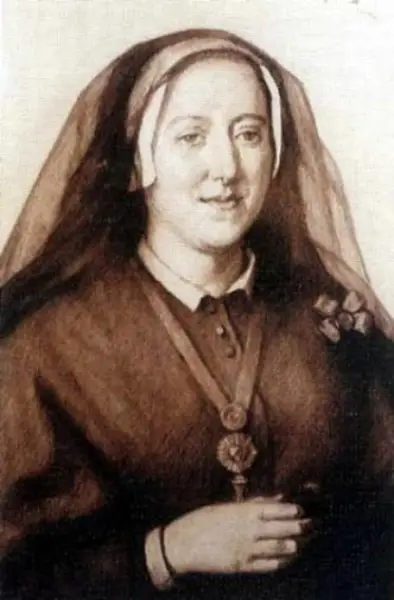
Overview
Micaela Desmaisières López de Dicastillo was born in Madrid on 1 January 1809, during the War of Independence, to Miguel Desmaisières Flores, who held senior military rank, and Bernarda López de Dicastillo Olmeda, a lady of the household of Queen Maria Luisa de Parma. Educated by the Ursulines and introduced through her brother Diego, a diplomat, to the royal courts of France, Spain, and Belgium, she moved as a young woman among dances, social gatherings, and riding parties, holding the title of Viscountess of Jorbalán. Compassion gave that glittering life another direction. She nursed the sick during a cholera epidemic in 1834, and in February 1844, visiting Madrid's Saint John of God Hospital, she met a banker's only daughter who had been drawn into prostitution through deception. Convinced that something had to be done for such women, she opened a shelter on 21 April 1845 and gathered companions into the Handmaids of the Blessed Sacrament, a congregation devoted to their rescue; it received diocesan approval in 1858 and papal approval from Pius IX in 1860. She died of cholera in Valencia on 24 August 1865, having caught the infection while tending infected women and sisters. Beatified in 1925, she was canonized by Pope Pius XI in 1934.
The Complete Life
Born Amid War, Raised Among Courts
Micaela Desmaisières López de Dicastillo entered the world in 1809, in a Madrid convulsed by the War of Independence. Her father, Miguel Desmaisières Flores, held senior military rank; her mother, Bernarda López de Dicastillo Olmeda, was a lady of the household of Queen Maria Luisa de Parma. Her brother Diego, born in 1806, would become the Spanish ambassador to Europe's royal houses and the companion of her youth. Her mother died while Micaela was still a child, and her brother's daughter Maria Diega would later be part of the family circle.
The Ursulines oversaw her education, and her social connections brought her cordial acquaintance with the French, Spanish, and Belgian monarchs. She spent most of her childhood at Diego's side as he moved between the courts of Europe. Dances and all manner of social gatherings, together with horse riding, formed the ordinary rhythm of her days, and she received the title of Viscountess of Jorbalán. It was a life of privilege, yet one in which the deaths, dangers, and miseries of a turbulent century were never far beneath the surface.
§ Life
Seeking a Direction
It was in these years of courtly routine that Micaela began to search for the direction her life should take. From her father she had inherited a warrior's temperament, a quality that readied her for hard battles ahead, together with a generous nature; her heart was sensitive and compassionate, and her mother had guided her toward charitable works for the poor and the sick. For a long while she alternated between that apostolate and the social life her class demanded.
The cholera epidemic of 1834 gave the first clear answer: she tended to the ill in Madrid while the disease cut through the city. Deeper still ran her love for Jesus Christ in the Blessed Sacrament, before which she loved to spend long hours, and it was this devotion that would shape the whole future of her work. A Jesuit confessor, José Eduardo Rodríguez, guided her from 1847; after his death, Antonio María Claret took up that role from 1857 and remained her spiritual director until she died. Her vocation, born in adoration, was preparing to become an enterprise of rescue.
§ Life
A Shelter for the Dishonored
On 6 February 1844 Micaela visited the Saint John of God Hospital in Madrid and met a girl, the sole daughter of a banker, who had been lured into prostitution through deception and now faced marginalization and economic hardship. The encounter, and others like it, made the necessity of action impossible for her to ignore. She turned her formidable social connections to the task and set about establishing a shelter where such women could come for help.
Its doors opened on 21 April 1845, and women and girls arrived in numbers beyond counting, asking for help. What she found there showed her how vast the need was, and on that very day she gathered companions into the Handmaids of the Blessed Sacrament, a congregation set apart for this work of rescue. From 1847 to 1848 she traveled in France and Belgium and considered entering the Vincentian Sisters in Paris, but her confessor's opposition held her back for the path she had already begun. The diocese gave its approval on 25 April 1858, and on 15 September 1860 Pius IX granted the congregation his own, securing her mission's future.
§ Life
The Last Battle in Valencia
In her final years Micaela led a congregation that had won the approval of both the diocese of Madrid and the pope himself. Her confessor from 1857, the great missionary Antonio María Claret, sustained her spirit as the Handmaids of the Blessed Sacrament grew and their houses multiplied. The warrior's temperament she had inherited from her father now served a campaign fought not with weapons but with shelter, patience, and prayer for the women no one else would claim.
When cholera broke out in Valencia, she went where the danger was. She attended to the women and to her own fellow sisters who had fallen ill in the infected district, and in doing so she contracted the disease herself. She died in Valencia on 24 August 1865, at fifty-six, a victim of the same epidemic she had served against. Her death in the act of mercy closed the account of a life that had moved from the salons of Europe's monarchs to the bedside of the abandoned, and it sealed the congregation's memory of its foundress as a woman who spent herself without reserve.
§ Life
From Servant of God to Saint
The Church's formal inquiry into Micaela's life began a generation after her death. Pope Leo XIII opened the sainthood process on 19 August 1902, giving her the title Servant of God. Once her heroic virtue had been confirmed, Pius XI proclaimed her Venerable on 11 June 1922.
That pontiff presided over the two great public acts that followed. After confirming two miracles worked through her intercession, he beatified her on 7 June 1925 in Saint Peter's Basilica; the confirmation of two more miracles opened the way to her canonization, which he celebrated on 4 March 1934, also in Saint Peter's Basilica. In the space of nine years she had passed from Venerable to the altars of the universal Church, a sign of how evident her sanctity appeared to those who examined her cause. For the Handmaids of the Blessed Sacrament, the canonization of their foundress confirmed in Rome what the shelter in Madrid had revealed from the beginning: that adoration of the Blessed Sacrament and love of the most abandoned women were, in her life, a single act.
§ Sainthood
A Congregation That Crossed the World
The work Micaela began in a single Madrid shelter outlived her by generations. The Handmaids of the Blessed Sacrament spread from Spain to countries as distant as the United Kingdom and Japan, and by 2011 the congregation counted 1,119 religious living in 158 houses worldwide. Her remains, translated in 1891 to the motherhouse of the order she founded, rest there as the center of the congregation's memory and devotion.
Her image endures in the visual life of the Spanish Church, notably in stained glass at Almudena Cathedral in Madrid, where the aristocrat who abandoned the court for the streets is shown in the habit she finally took. Pilgrims and sisters alike find in that image the whole of her conversion: rank traded for the towel and basin of service. Her feast is kept on 25 August, the day after the cholera that ended her life at Valencia. She remains a reference point for every Catholic effort to rescue women from exploitation: a foundress who proved that Eucharistic adoration, taken seriously, must end at the door of the brothel and the hospital ward, with the willingness to die, if need be, of the sufferings of the poor.
§ Life
Timeline
- 1 Jan 1809
Born in Madrid during the War of Independence to Miguel Desmaisières Flores and Bernarda López de Dicastillo Olmeda.
§ Life
- 1834
Tended to the sick during a cholera epidemic in Madrid.
§ Life
- 6 Feb 1844
Paid her first visit to the Saint John of God Hospital in Madrid and met a young woman forced into prostitution.
§ Life
- 21 Apr 1845
Opened her shelter for endangered women and founded the Handmaids of the Blessed Sacrament.
§ Life
- 1847
Traveled in France and Belgium and considered joining the Vincentian Sisters in Paris before her confessor's opposition ended the plan.
§ Life
- 1857
Antonio María Claret became her confessor, a role he held until her death.
§ Life
- 25 Apr 1858
Her young congregation received diocesan approval.
§ Life
- 15 Sep 1860
Pope Pius IX granted papal approval to the Handmaids of the Blessed Sacrament.
§ Life
- 24 Aug 1865
Died of cholera in Valencia, infected while nursing women and fellow sisters during the epidemic.
§ Life
- 1891
Her remains were relocated to the motherhouse of her congregation.
§ Life
- 19 Aug 1902
Pope Leo XIII opened her sainthood cause, titling her a Servant of God.
§ Sainthood
- 11 Jun 1922
Pope Pius XI declared her Venerable upon confirmation of her heroic virtue.
§ Sainthood
- 7 Jun 1925
Beatified by Pope Pius XI in Saint Peter's Basilica after confirmation of two miracles.
§ Sainthood
- 4 Mar 1934
Canonized by Pope Pius XI in Saint Peter's Basilica after two further miracles were confirmed.
§ Sainthood
The Record
- Major works
- Handmaids of the Blessed Sacrament
- Patron of
- Handmaids of the Blessed Sacrament
- Symbols
- religious habit
- Canonization
- Canonized 4 March 1934 by Pope Pius XI in Saint Peter's Basilica
Prayer
Bibliography
Show 3 sources
- "Saint María Micaela of the Blessed Sacrament". Saints SQPN. 24 August 2016. Retrieved 10 November 2016.
- "Saint Maria Michela del SS. Sacramento". Santi e Beati. Retrieved 10 November 2016.
- McNeil, Betty (1 March 2008). "Revisiting The Vincentian Family Tree". Vincentian Heritage Journal. 27 (2): 78. ISSN 0277-2205.
Profile text adapted from the Wikipedia article, licensed CC BY-SA 4.0.
Pray with this saint every day
Save St. Maria Micaela Desmaisieres to your favorites, read the full profile, and get feast-day reminders in the Saints app.
Get the Saints AppFree on the App Store for iPhone and iPad