
1891 – 1945·Feast July 20
St. Maria Skobtsova
Nun of Paris who sheltered Jews from the Nazis
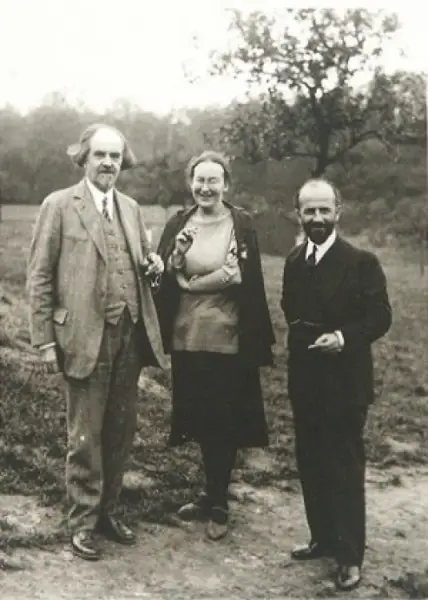
Overview
Maria Skobtsova, born Elizaveta Yurievna Pilenko on 20 December 1891 in Riga, was a Russian aristocrat, poet, and nun who joined the French Resistance in the Second World War. After an atheist youth in the radical and literary circles of Saint Petersburg — a first marriage to a Bolshevik, a book of poems, and a term as mayor of Anapa during the revolution — she fled Russia and reached Paris in 1923. There her marriage to Daniil Skobtsov collapsed, and in 1932 she took monastic vows, taking the name Maria. She refused the cloister. Her convent was an ordinary rented house on the Rue de Lourmel, its door never shut to refugees, the destitute, or the solitary, its table a place where theology and service to the poor were a single labor. After the fall of France in 1940 she and her chaplain, Fr. Dmitri Klepinin, sheltered Jews and provided baptismal certificates to those who asked, helping many flee the country. Arrested by the Gestapo, she was sent to Ravensbrück, where on 31 March 1945, Holy Saturday, she was put to death in the gas chamber. The Ecumenical Patriarchate glorified her in 2004. Yad Vashem has honored her as Righteous among the Nations.
The Complete Life
Poet of the Revolution
Elizaveta Pilenko was born into an aristocratic family in Riga on 20 December 1891. Her father died while she was a teenager, and atheism became her answer. In 1906 her mother brought the family to Saint Petersburg, where, still in her mid-teens, she plunged into radical intellectual circles.
Literature claimed her first. She moved in literary circles and wrote a great deal of poetry, publishing a first collection, Scythian Shards, drawn from those years. In 1910 she married a Bolshevik, Dmitriy Kuz'min-Karavaev; the marriage was over by 1913, and he would afterward enter the Catholic Church and be ordained a priest. Alone now with little Gaiana, Elizaveta went south into Russia, and her religious longing grew.
Politics was never far away. Furious with Leon Trotsky for closing the Congress of the Socialist-Revolutionary Party, she plotted his assassination and was dissuaded only by colleagues who sent her away to Anapa. There, in 1918, after the Bolshevik Revolution, the townspeople elected her deputy mayor; when the anti-communist White Army seized the town, its mayor fled and she took his place — and was promptly tried as a Bolshevik before a judge who had once been her teacher, Daniil Skobtsov. Acquitted, she married him.
§ Life
Exile and the Monastic Name
The turning of the political tide forced the family to flee. Elizaveta, by then pregnant with her second child, left Russia with Daniil, her daughter Gaiana, and her mother Sophia. Her son Yuri was born in Georgia and her daughter Anastasia in Yugoslavia, and at last the family reached Paris in 1923.
The capital became the crucible of her vocation. She gave herself to theological studies and social work, but grief and strain followed: Anastasia died of influenza in 1926, Gaiana was sent away to boarding school in Belgium, and the marriage with Daniil disintegrated. Yuri went to live with his father, and Elizaveta took lodgings in central Paris, close to the people who needed her most.
Her bishop urged her toward the monastic life. She consented only on one condition — that she would never be confined to a monastery, shut away from the world she intended to serve. In 1932, with Daniil's permission, the Church dissolved her marriage, and she professed vows under the name Maria. Her confessor was Fr. Sergei Bulgakov, and later Fr. Dmitri Klepinin was sent to serve as chaplain of her house. Thus the monastery she founded had walls, but no lock on its door.
§ Life
A Convent with an Open Door
Mother Maria's convent was a house rented in Paris, its door never locked against refugees, the needy, or the lonely, and it grew in time into a center of intellectual and theological discussion. In her, the two elements were inseparable: service to the poor and theology were one work. She had returned to Christianity by looking at the humanity of Christ — the Christ who sweated blood and was struck in the face — and she met that same suffering humanity every day at her own threshold.
After the fall of France in 1940, the mission turned mortal. Jews began coming to the house asking for baptismal certificates, and Fr. Dimitri provided them; many came to stay, and the household sheltered them and helped many flee the country. When the order compelled Jews to wear the yellow star in July 1942, she answered with a poem, "Israel", declaring the star the shield of King David and Israel's election rather than its shame. In the end the house itself was shut. The Gestapo arrested Mother Maria, Fr. Dimitri, Yuri, and her mother Sophia.
§ Death
Ravensbrück
The arrests scattered the little community to the camps. Fr. Dimitri and Yuri both perished at the Dora concentration camp, father and son united in martyrdom as they had been united in the rescue work of the Rue de Lourmel. Mother Maria was sent to Ravensbrück, the women's camp north of Berlin, where the years of her imprisonment are recorded only in the poems and memoirs she left behind, later published in Paris.
Her end came at Easter. On 31 March 1945 — Holy Saturday, the day the Church keeps silence at the tomb before the feast of the resurrection — she was sent to the gas chamber and killed by poison gas. She was fifty-three years old. The timing of her death, on the threshold of Easter, has struck her commemorators ever since: the woman who had spent her life standing between the condemned and their executioners passed through the door of death herself at the very moment when Christians await the breaking of the tomb. Weeks later the war in Europe ended, and the accounts of her final act of mercy among the prisoners of Ravensbrück began to reach the world she had served.
§ Death
Glorification in Paris
Orthodoxy moved to honor her within a lifetime of her death. The Holy Synod of the Ecumenical Patriarchate acted on 16 January 2004 to glorify Mother Maria, and the glorification itself was celebrated with the martyrs who died at her side: Fr. Dimitri, her son Yuri, and Ilya Fondaminsky. Paris's Cathedral of Saint Alexander Nevsky hosted the rites on 1 and 2 May 2004, in the city where her convent door had stood open and in the cathedral diocese whose exiles had known her in life. Their common feast day is 20 July.
Other churches soon followed. The American Episcopal Church keeps her memory with a Lesser Feast on July 21, and the Anglican Church of Canada and the Anglican Church of Australia commemorate her as well. Few modern causes have crossed confessional borders so easily. Beyond the churches, the State of Israel inscribed her among the Righteous among the Nations at Yad Vashem, honoring the woman who hid the hunted and gave her life for them. Few modern saints have been received so widely across confessional and national lines.
§ Veneration
A Saint for the Persecuted
Mother Maria's legacy rests on an idea as much as on her deeds: that a convent can be a rented room with the door unlocked, and that theology that does not feed the hungry is idle. Her writings carry that conviction — studies of Khomyakov, Dostoyevsky, and Vladimir Solovyov published in Paris in 1929, her collected poems and the memoirs of her arrest and of Ravensbrück printed in 1947, and, for English readers, the Essential Writings translated by Richard Pevear and Larissa Volokhonsky in 2003. Biographers from G.W. Target to Michael Plekon have told her story as one of the most startling vocations of the twentieth century.
Her memory has been marked in the places that formed her. On 24 June 2020 a memorial plaque was unveiled in her honor at the cemetery of Sainte-Geneviève-des-Bois, on the ground of the Russian necropolis where Parisian exiles lie. For Christians facing regimes that persecute, and for anyone weighing the claims of safety against the claims of the hunted, she remains a commanding witness: the aristocrat, revolutionary, and nun who died for strangers and was claimed by East and West alike as a saint.
§ Legacy
Timeline
- 20 Dec 1891
Born Elizaveta Yurievna Pilenko to an aristocratic family in Riga, Russian Empire.
§ Life
- 1906
After her father's death, her mother moved the family to Saint Petersburg, where she joined radical intellectual circles.
§ Life
- 1910
Married the Bolshevik Dmitriy Kuz'min-Karavaev while active in literary circles and writing poetry.
§ Life
- 1913
Her first marriage ended; her former husband later became a Catholic priest.
§ Life
- 1918
Elected deputy mayor of Anapa, and became mayor when the White Army drove the incumbent to flee.
§ Life
- 1923
After exile through Georgia and Yugoslavia, she arrived in Paris with her family.
§ Life
- 1926
Her daughter Anastasia died of influenza, and her marriage began to fall apart.
§ Life
- 1932
Her marriage dissolved by Church authority with Daniil's consent, she professed monastic vows and received the name Maria.
§ Life
- 1940
After the fall of France, her house began sheltering Jews and providing baptismal certificates through Fr. Dmitri Klepinin.
§ Death
- Jul 1942
Wrote the poem "Israel" when Jews were ordered to wear the yellow star.
§ Example of poetry
- 31 Mar 1945
Put to death in the gas chamber at Ravensbrück concentration camp on Holy Saturday.
§ Death
- 16 Jan 2004
The Holy Synod of the Ecumenical Patriarchate acted to glorify her as a saint.
§ Veneration
- 1 May 2004
Her glorification, with Fr. Dimitri, Yuri, and Ilya Fondaminsky, was celebrated at the Cathedral of Saint Alexander Nevsky in Paris.
§ Veneration
- 24 Jun 2020
A memorial plaque to her was unveiled at the Russian necropolis of the Sainte Genevieve de Bois cemetery.
§ Legacy
In Their Own Words
This is election, not offense. The great path and not an evil.
The Record
- Major works
- Scythian Shards (poetry collection)·A. Khomyakov (1929)·Dostoyevsky and Modernity (1929)·The World-Concept of Vl. Solov'ev (1929)·Poems, narrative poems, mysteries, memoirs of the arrest and camp in Ravensbrück (1947)
- Patron of
- victims of Nazi persecution·those who shelter the persecuted
- Symbols
- yellow star·monastic habit
- Canonization
- Glorified 1–2 May 2004 by the Ecumenical Patriarchate of Constantinople at the Cathedral of Saint Alexander Nevsky, Paris
Prayer
Bibliography
Show 7 sources
- Koulomzin, Sophie. "Mother Mary" (PDF). Upbeat. 12 (1).
- Paldiel, Mordechai (2000). Saving the Jews: amazing stories of men and women who defied the "Final Solution. Rockville, Maryland: Scribner. ISBN 978-1-887563-55-0.
- Plekon, Michael (2009). Hidden Holiness. University of Notre Dame Press. ISBN 978-0-268-03893-9.
- Target, G.W. (1974). The Nun in the Concentration Camp: The Story of Mother Maria [Elizabeth Pilenko]. Religious Education Press. ISBN 978-0-08-017610-9.
- Smith, T. Stratton. The Rebel Nun. London: Souvenir Press.
- Hackel, Fr. Sergei. Pearl of Great Price.
- Men', Fr Aleksandr (2015). "Mother Maria (Skobtsova)". Russian Religious Philosophy: 1989-1990 Lectures. frsj Publications. ISBN 9780996399227.
Profile text adapted from the Wikipedia article, licensed CC BY-SA 4.0.
Pray with this saint every day
Save St. Maria Skobtsova to your favorites, read the full profile, and get feast-day reminders in the Saints app.
Get the Saints AppFree on the App Store for iPhone and iPad