
527 – 601·Feast October 24
St. Martin of Vertou
Hermit, abbot, and apostle of the Herbauges
Overview
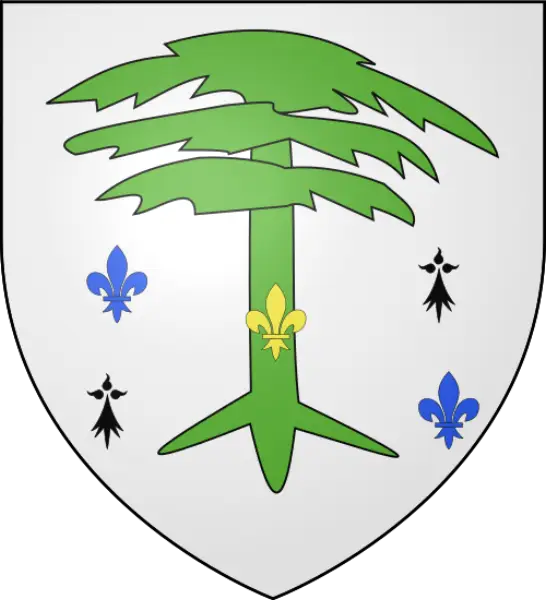
Martin of Vertou was a hermit and abbot of the sixth century, remembered as the evangelist of the country around Nantes in the Frankish kingdom and sometimes called the Apostle of the Herbauges. Distinguished by virtue, learning, and talent, Bishop Felix of Nantes ordained him, gave him the archdeaconry of the cathedral, and laid on him the task of bringing the city and the country round about to the Christian faith. Around 577 he withdrew into solitude on wasteland beside the right bank of the Sèvre Nantaise. His sanctity drew disciples and neighbors, and in time he raised a church and enlarged his hermitage into the community that became Vertou Abbey. He established other religious houses as well, among them Durieu Abbey, the house where his life ended in 601 when he was seventy-four. A beloved legend relates that he fixed his pilgrim's staff in the earth of the abbey courtyard at Vertou, and how it rooted there and grew into a yew tree, which the commune of Vertou still bears on its coat of arms. His feast is kept on October 24.
The Complete Life
Archdeacon of Nantes
Martin first appears in the record as a man marked out by virtue, learning, and talent for service in the church of Nantes. Bishop Felix ordained him and set him over the cathedral church as archdeacon, an office that put him at the bishop's right hand in governing the diocese. With the dignity came an evangelistic mandate: the young man was to labor for the conversion of the people of Nantes itself and of the villages beyond it, a task of continuing urgency in a region where paganism lingered in the villages and hamlets of the Loire estuary. Martin carried out this commission as a preacher and pastor in the world before he embraced the solitary life, and the memory of his diligence survived among the people he served. In later tradition he is honored under the title of Apostle of the Herbauges, the district south of the Loire where his labors left their deepest mark, and his name is occasionally given in the form Mark of Vertou. The record of his early years is sparse, but the offices he held show a church in sixth-century Francia that was consolidating its hold on the lower Loire through capable and educated clergy, and it chose Martin to carry its preaching beyond the walls of the cathedral city into the villages of a still half-pagan countryside.
§ Life
The Hermit of the Sèvre and Founder of Vertou
About 577 Martin abandoned his position for solitude, settling on a tract of wasteland along the right bank of the Sèvre Nantaise. His reputation for holiness did not allow the solitude to last. Drawn by his example, people gathered around him, and he responded by building a church and enlarging his hermitage to receive them; the settlement grew into Vertou Abbey, the community for which he is chiefly remembered. He went on to found other religious houses in the region, among them Durieu Abbey, where he eventually died. A later tradition also attributes to him the founding of the abbey of Saint-Jouin de Marnes, though that house appears to have been an older, abandoned foundation which the monks of Vertou occupied in 843 after Norman invasions drove them from their home. The most cherished story of his time at Vertou tells how he drove his pilgrim's staff into the soil of the abbey courtyard, where it took root and grew into a great yew tree; the tree remains the emblem of the commune of Vertou, blazoned on its arms in memory of its founder.
§ Life
Death and Remembering
Martin breathed his last at Durieu Abbey in 601, an old man of seventy-four, closing a life that had spanned the conversion of the Nantais country from ordination in the world to sanctity in the wilderness. His memory took firm root in the church of western Francia alongside the abbey he had founded at Vertou, which kept his feast each year on October 24 and preserved his cult through the disruptions of the Norman raids that eventually forced its monks into exile at Saint-Jouin de Marnes. The yew of the abbey courtyard, whether the original tree or its descendants, became the sign by which the commune still recalls him, and a chapel in the cathedral of Nantes is dedicated to his memory. Medieval calendars of the region rank him among the confessors of the age of the Frankish church, the hermit whose staff flowered into a tree and whose hermitage flowered into a monastery that shaped the spiritual geography of the lower Loire for centuries after his death. He belongs to that generation of sixth-century evangelists who carried the Christian faith from the episcopal cities into the remotest districts of Francia, and whose foundations outlasted the invasions that twice scattered the communities they left behind. For the people of Vertou his name has never ceased to mark the place where they live: the saint, the staff, and the yew are one story, told in stone and heraldry on the arms of the commune.
§ Life
Timeline
- 527
Born into the sixth century in the region around Nantes in Francia.
§ Life
- 577
Withdrew into solitude on wasteland beside the right bank of the Sèvre Nantaise.
§ Life
- 601
Died at Durieu Abbey at the age of seventy-four.
§ Life
The Record
- Major works
- Vertou Abbey (foundation)·Durieu Abbey (foundation)·Evangelization of the region around Nantes
- Patron of
- Patron of Vertou, whose arms bear his yew tree
- Symbols
- Pilgrim's staff·Yew tree
- Canonization
- Pre-congregation; venerated from the early medieval period as founder and evangelist of Vertou.
Prayer
Bibliography
Show 1 sources
- Monks of Ramsgate. "Martin of Vertou". Book of Saints, 1921. CatholicSaints.Info, 25 November 2014.
Profile text adapted from the Wikipedia article, licensed CC BY-SA 4.0.
Pray with this saint every day
Save St. Martin of Vertou to your favorites, read the full profile, and get feast-day reminders in the Saints app.
Get the Saints AppFree on the App Store for iPhone and iPad