
died 880·Feast February 2
The Martyrs of Ebsdorf
Saxon soldiers slain at Lüneburg Heath
Overview
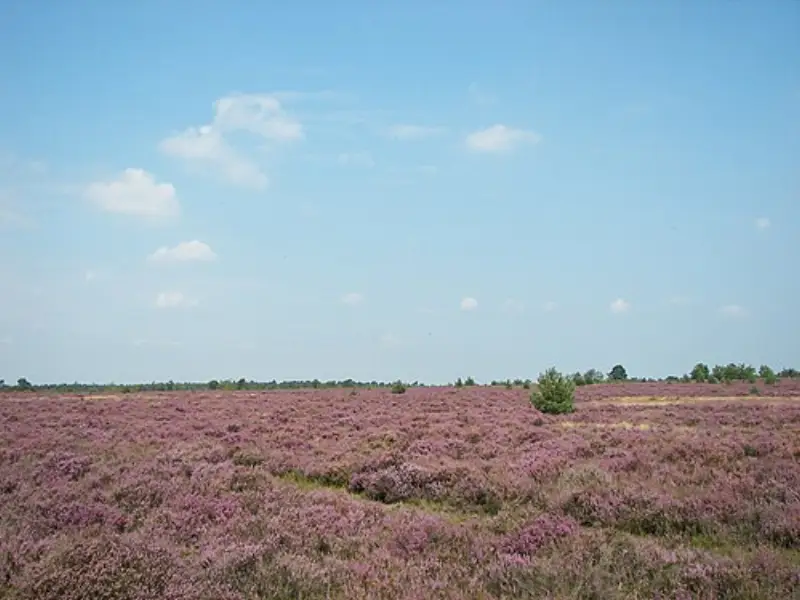
The Martyrs of Ebsdorf were Saxon fighting men who fell in the winter of 880 at the Battle of Lüneburg Heath, fought near Ebstorf in what is now Lower Saxony. Their opponents were Norse warriors of the Great Heathen Army, the same Viking force that had lately been driven out of England following its defeat at Edington. The Saxon host was led by men of the highest rank: it counted four bishops among its number, eleven noblemen, and a large body of ordinary foot soldiers whose names were never recorded. The most prominent of the fallen were Bruno, Duke of Saxony, together with Marquard, bishop of Hildesheim, and Theodorich, bishop of Minden. Because they died in defence of their Christian homeland against a pagan invader, the church subsequently declared them martyrs, and their memory was fixed to 2 February. Some medieval synaxariums preserve a catalogue of thirty-two saints from this battle, naming bishops, knights, and noblemen side by side as companions in a single witness.
The Complete Life
Martyrs by the Church's Verdict
The men who died on the Lüneburg Heath were soldiers, yet the church received them as martyrs, judging that they had shed their blood in witness to Christ against a pagan army. No formal canonization process existed in the ninth century in the form later ages would know; recognition came instead through the verdict of the local church, which assigned their memory a fixed place in the liturgical year on 2 February. Lists of the fallen circulated among the faithful, and some synaxariums preserved a roll of thirty-two saints drawn from this one engagement. The names record the breadth of Saxon society that answered the summons: four bishops — Marquard of Hildesheim, Gobbert of Osnabrück, Erlulf of Verden, and Dietrich of Minden — stand at the head of the catalogue, followed by knights such as Wigmann, Bardo, Thioterik, Gerrich, Liudolf, Folkward, and Avan, and then by noblemen including Liuthar, Count of Stade, and Duke Bruno himself. That clergy and laymen were commemorated together as a single company shows how the early medieval church understood their common death: each had died for the same Lord.
§ Recognised martyrs
Memory of the Fallen Host
The battle in which the Ebsdorf martyrs perished belonged to the last great age of the Viking assaults on the Continent. The Norse army they faced was the Great Heathen Army, the force that had campaigned for years in England until it was repelled at the Battle of Edington; driven from that kingdom, its warriors turned their attention to the Carolingian lands across the sea. The Saxons who met them near Ebstorf paid with their lives, among them Duke Bruno of Saxony, whose name medieval chroniclers such as the Annales Fuldenses and the Gesta Francorum associated with the defence of the Saxon lands. Alongside him the sources single out Marquard of Hildesheim and Theodorich of Minden, shepherds who fell in the field beside their flock. The many unnamed foot soldiers who died with them were not forgotten either: the church's verdict embraced the whole host, known and unknown. Later devotional compilations, from Catholic calendars to Dutch hagiographic collections, continued to list the companions of Ebsdorf, keeping alive the remembrance of a winter day when the nobility and commons of Saxony together won the crown of martyrdom.
§ Recognised martyrs
The Record
- Canonization
- Declared martyrs by the church after their deaths in battle in 880; a pre-congregation cult anciently observed on 2 February.
Prayer
Bibliography
Show 6 sources
- "Martyrs of Ebsdorf". Traditional Catholic. 2022.
- Annales Fuldenses.
- The Gesta Francorum.
- "CatholicSaints.Info » Blog Archive » Martyrs of Ebsdorf". Retrieved 15 August 2024.
- "Martelaren van Ebstorf". www.heiligen.net.
- "Martyrs of Ebsdorf - Saints & Angels". Catholic Online. Retrieved 15 August 2024.
Profile text adapted from the Wikipedia article, licensed CC BY-SA 4.0.
Pray with this saint every day
Save The Martyrs of Ebsdorf to your favorites, read the full profile, and get feast-day reminders in the Saints app.
Get the Saints AppFree on the App Store for iPhone and iPad