
died 1942–1943·Feast September 2
The Martyrs of New Guinea
Church workers killed in the Japanese occupation
Overview
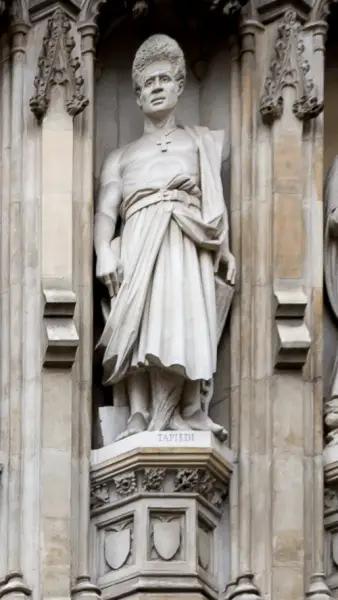
The Martyrs of New Guinea were 333 church workers — clergy, religious sisters, teachers, medical staff, and evangelists — who were killed during the Japanese invasion and occupation of New Guinea in 1942 and 1943. They included Papuans and visiting missionaries of many communions: Roman Catholics, Anglicans, Methodists, Lutherans, Salvationists, Seventh Day Adventists, and members of the Evangelical Church of Manus. When war reached the Pacific in December 1941, civilians were evacuated from Australia's island territories, but no order ever required the missionaries to leave, and many chose freely to stay with their people. The Anglican bishop Philip Strong told his clergy and staff to remain faithfully at their posts, telling them that if they did not forsake Christ in his Church, he would not forsake them. As Japanese forces overran the Territories of New Guinea and Papua in 1942, hundreds of Christians perished at the hands of the occupiers and of collaborating Papuans. Among the Anglican victims were priests such as John Barge and Vivian Redlich and the Papuan teacher Lucian Tapiedi, whose statue stands on the west front of Westminster Abbey. Their memory is kept each 2 September, and their witness moved even one of Tapiedi's killers to conversion.
The Complete Life
A Mission Planted Among the Islands
Christian mission in New Guinea was a work of generations before the war tested it. Anglican missionaries had first reached the island in 1891, and in 1898 the Anglican Diocese of Papua New Guinea was erected as a missionary diocese of the Church of England in Australia. By the middle of the twentieth century the island's church workers formed a remarkable fellowship of communions: Roman Catholics, Anglicans, Methodists, Lutherans, Salvation Army officers, Seventh Day Adventists, and members of the Evangelical Church of Manus, alongside Papuan and islander catechists, teachers, and nurses. War reached the Pacific on 7 December 1941 with the entry of the British Empire, and civilians throughout Australia's island territories began to be evacuated, since Europeans and the islanders and Papuans who served beside them were judged to be in special peril. Yet no order was ever issued for the evacuation of the missionaries. That silence left the choice with each worker, and hundreds of Christians chose to stay, continuing their teaching, healing, and preaching although the danger of a Japanese advance grew by the week. It was to such a church that Bishop Philip Strong addressed his summons to remain, and it was answered.
§ Anglicans
Remain at Your Posts
In January 1942, as the Japanese military advanced on the island, the Anglican Bishop of New Guinea, Philip Strong, called upon his clergy and staff not to flee but to hold their stations. He could promise them nothing except the presence of Christ, telling them that if they did not forsake Christ in Papua, in his Body the Church, he would not forsake them, but would uphold, strengthen, guide, and keep them through the days ahead. To abandon their stations, he warned, would wound the Church for years to come; yet if they stayed — even if staying cost every life among them — the Church would endure, its foundations deepened by their faithfulness unto death. The New Guinea campaign of the Pacific War ran from January 1942 until the war's end in August 1945. In its first phase Japan invaded the Territory of New Guinea on 23 January, began overrunning Dutch New Guinea on 29 March, and invaded the Territory of Papua on 21 July. Under the occupation, Christian workers who had chosen to stay paid in full the price their bishop had named as possible.
§ Japanese invasion
The Cost of Remaining
The number of church workers killed in the Japanese occupation stands at 333, and research followed by the Anglican Board of Mission from the University of Papua New Guinea gives the reckoning by communion: 197 Roman Catholics, 77 of the United Church, 22 Salvationists, 16 Lutherans, 12 Anglicans, 10 Methodists, 5 of the Evangelical Church of Manus, and 4 Seventh Day Adventists. Among the Anglicans were the Revd John Barge, Bernard Moore, Henry Matthews, and Vivian Redlich, priests sent from England, Queensland, New South Wales, and South Africa; nursing sisters Margery Brenchley and May Hayman; the builder John Duffill; teachers Lilla Lashmar and Mavis Parkinson; and the Papuan evangelists Leslie Gariardi and Lucian Tapiedi. On Rabaul, Australians and Europeans who had not been evacuated found shelter at the Vunapope mission on Rabaul until 1942, when the Japanese seized the island and took them captive. Bishop Leo Scharmach, a Pole, persuaded the occupiers that he was German and won a reprieve for the internees, while indigenous Daughters of Mary Immaculate refused to abandon their faith or the prisoners, growing food and hauling it over punishing distances for three and a half years; some of the sisters were tortured and later testified at war crimes trials.
§ Martyrs
Remembered by the Churches
The churches that sent the martyrs never let their memory lapse. The calendars of many communions carry memorial days for the New Guinea martyrs; for the Anglican Communion their remembrance falls on 2 September. The lists of names — twelve Anglicans, ten Methodist ministers and laymen, and the hundreds of Catholic, Lutheran, Salvationist, and Adventist workers recorded by the research of the University of Papua New Guinea — are read as a single roll of honour for a church that did not abandon its people in the hour of invasion. Their witness belongs to no one denomination: Papuans and visiting missionaries, clergy and nurses, builders and teachers, were killed alike, and the churches commemorate them together as a company who remained with Christ's flock when the cost of staying was known. In the Anglican tradition especially, the deaths of priests such as John Barge and Vivian Redlich and of the young Papuan evangelist Lucian Tapiedi are told each September alongside the story of the sisters of Vunapope, so that the whole church remembers what faithfulness unto death accomplished for the foundations of the Church in Melanesia.
§ Veneration
Reconciliation and a Statue in the Abbey
The aftermath of the martyrdoms bore unexpected fruit of reconciliation. In 1950 the Right Revd Dr Light Maekawa, Anglican Bishop of South Tokyo, dispatched a bamboo cross to every parish that had lost a martyr, an offering of repentance that sought reconciliation as well. The most striking fruit came from within Papua itself: the man who killed Lucian Tapiedi later converted to Christianity and took the name Hivijapa Lucian, building a church in memory of his victim that grew into a diocesan centre. The first church at Higatury perished when Mount Lamington burst forth on 21 January 1951 — amid a diocesan gathering, at the price of many lives — so the parish and centre were raised anew at Popondetta. A further church honouring him as patron, St Lucian's, serves the Six Mile settlement of Port Moresby by the international airport. His memory reaches furthest in stone: a statue of Tapiedi stands among the niches of twentieth-century Christian martyrs above the west door of Westminster Abbey in London, placing the Papuan evangelist beside the century's great confessors, and telling every pilgrim who enters that the faith he died for conquered even his own killer's heart.
§ Legacy
Timeline
- 1891
Anglican missionaries first reach New Guinea.
§ Anglicans
- 1898
The Anglican Diocese of Papua New Guinea is established as a missionary diocese of the Church of England in Australia.
§ Anglicans
- 7 Dec 1941
The British Empire enters the war in the Pacific; civilians are evacuated from Australia's island territories, but missionaries receive no evacuation order.
§ Japanese invasion
- Jan 1942
Anglican Bishop Philip Strong advises his clergy and staff to remain faithfully at their work in New Guinea.
§ Japanese invasion
- 23 Jan 1942
Japan invades the Territory of New Guinea, opening the New Guinea campaign.
§ Japanese invasion
- 29 Mar 1942
Japanese forces begin overrunning Dutch New Guinea, part of the Netherlands East Indies.
§ Japanese invasion
- 21 Jul 1942
Japan invades the Territory of Papua as the campaign spreads across the island.
§ Japanese invasion
- 1942
The Japanese overwhelm Rabaul and take the internees sheltering at the Vunapope Catholic Mission prisoner; indigenous FMI Sisters begin sustaining them for three and a half years.
§ Catholics
- 1943
The executions of church workers continue through 1942 and 1943, claiming 333 men and women of many denominations.
§ Martyrs
- 1950
A bamboo cross dispatched by Bishop Maekawa of South Tokyo reaches every martyr's parish in a gesture of repentance.
§ Legacy
- 21 Jan 1951
Mount Lamington erupts during a diocesan meeting, destroying the original church at Higaturu; it is later rebuilt at Popondetta.
§ Legacy
In Their Own Words
One thing only I can guarantee is that if we do not forsake Christ here in Papua in His Body, the Church, He will not forsake us. He will uphold us; He will strengthen us and He will guide us and keep us though the days that lie ahead.
The Record
- Canonization
- Commemorated as martyrs on the calendars of many churches, including the Anglican Communion, with a memorial on 2 September.
Prayer
Bibliography
Show 13 sources
- Bell, Padre Arthur (1946). Among the Ruins: The Story of the New Guinea Martyrs. Australian Board of Mission.
- Wetherell, David, ed. (1981). The New Guinea Diaries of Philip Strong, 1936-1945. p. 223.
- Aerts, Theo (1994). The Martyrs of Papua New Guinea. University of Papua New Guinea Press. Pages 36-7.
- "Martyrs of New Guinea", The Episcopal Church.
- Kiefer, James E., "The Martyrs of New Guinea", Biographical sketches of memorable Christians of the past.
- Smith, Geoff. "The New Guinea Martyrs are more than a sentimental memory", Guardian, Anglican Diocese of Adelaide.
- "Renegade Natives Hanged for Murder of Missionaries". Canberra Times. 1943-05-25. Retrieved 2024-01-03.
- "New Guinea Tragedy". Inverell Times. 1945-11-19. Retrieved 2024-01-03.
- "Places - Memorials - Martyrs' Plaque". Lost Lives. Retrieved 10 March 2026.
- "'It was a real labour of love' | Australian War Memorial". www.awm.gov.au. Retrieved 2024-01-03.
- "New Guinea Martyr: The Rev'd John Barge".
- Michie, Trevor. "Service Times of the Anglican Diocese of Port Moresby, Papua New Guinea". Retrieved 8 March 2017.
- Lesser Feasts and Fasts 2018. Church Publishing, Inc. 2019-12-17. ISBN 978-1-64065-235-4.
Profile text adapted from the Wikipedia article, licensed CC BY-SA 4.0.
Pray with this saint every day
Save The Martyrs of New Guinea to your favorites, read the full profile, and get feast-day reminders in the Saints app.
Get the Saints AppFree on the App Store for iPhone and iPad