
1866-1927·Feast May 21
St. Mateo Correa Magallanes
Priest and Martyr
Overview
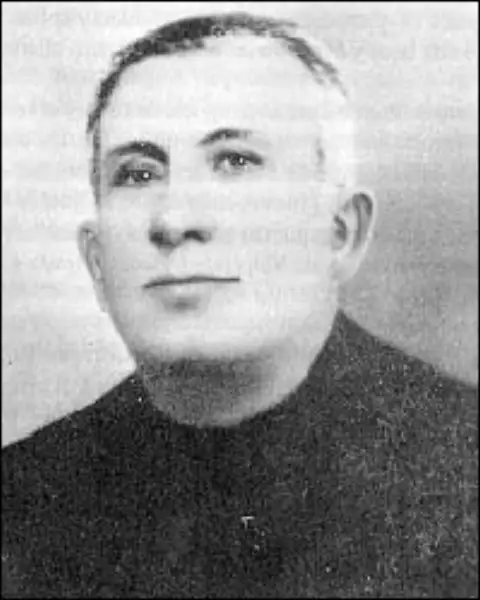
Mateo Correa Magallanes was born on 23 July 1866 at Tepechitlán in Zacatecas, Mexico, and entered the Zacatecas seminary on scholarship in 1881. Ordained in 1893 at twenty-seven, he gave first communion to the boy who would become the martyr Miguel Pro, and served as parish priest at Concepción del Oro from 1898 and Colotlán from 1908. When the government's repression of the church began in 1910 he went into hiding to continue his ministry, and in 1926 he was assigned to Valparaíso. Arrested in 1927 by soldiers while carrying Viaticum to a bedridden woman, he was accused of complicity with the armed Cristero defense and moved from the jail at Zacatecas to Durango. There General Eulogio Ortiz asked him to hear the confessions of condemned Cristero prisoners; Correa agreed, and when the general then demanded to know what the men had confessed, he refused. A pistol was held to his head and the demand repeated; he still refused. At dawn on 6 February 1927 he was taken to the cemetery outside Durango and shot through the head.
The Complete Life
Early Life
Mateo Correa Magallanes was born on 23 July 1866 at Tepechitlán, a town in the state of Zacatecas, Mexico. He entered the seminary at Zacatecas in 1881 on a scholarship — the standard route for a poor boy with a vocation — and was ordained priest in 1893 at twenty-seven. Among his first pastoral acts was giving first communion to a boy named Miguel Agustín Pro, who would himself become a Jesuit priest and, in 1927, the most famous of the Mexican martyrs; that the two men's names are linked at the communion rail and then again at the calendar of saints is one of the accidents that the Mexican persecution has preserved. Correa was given the parish of Concepción del Oro in 1898 and that of Colotlán in 1908, and served the ordinary round of a Zacatecas pastor for the first decade of his priesthood. Zacatecas in the late nineteenth century was a mining state with a strong Catholic peasantry and an anticlerical liberal elite, and a priest formed there was formed for a quarrel he could not yet foresee.
§ Introduction
Conversion and Vocation
Nothing in Correa's record before 1910 suggests anything but a diligent country pastor. The government's repression of the Church, beginning that year and culminating in the Calles Laws, made him something else without changing his office: from 1910 he went into hiding to continue his ministry, saying Mass in private houses, moving between towns, and in 1926 he was assigned to Valparaíso. He was also a Knight of Columbus, membership in which was treated by the regime as evidence of sedition. His vocation in the last years was simply the priesthood exercised under prohibition — the same office he had held since 1893, now carrying a prison sentence. He was sixty when the persecution that made him a martyr finally closed on him, and by every account he was an unremarkable, hardworking pastor whom hiding inconvenienced without intimidating. Between 1910 and 1926, in other words, he was a hunted man whose crime was the Mass, and the communities he served learned to protect him as a matter of course.
§ Introduction
Mission and Ministry
Correa's ministry in his final years was the hidden one common to all Mexican priests of the period: clandestine Masses, secret confessions, Viaticum carried to the dying by roundabout routes. In 1927, carrying the Blessed Sacrament to an invalid woman, he was arrested by soldiers. The charge was complicity in the armed Cristero defense, of which his possession of Viaticum was taken as proof; he was jailed first at Zacatecas and then transferred to Durango. He was sixty years old, and had been a priest for thirty-four. The arrest was not the result of investigation but of encounter: soldiers found a priest with the Blessed Sacrament on his person, which was itself the offense the law had created. He was not tortured, as far as the record shows, and his imprisonment at Zacatecas and Durango was short. For a man of sixty, held on a capital charge, his conduct in custody was, by every account, entirely composed.
§ Martyrdom
Trial and Final Years
The decisive scene occurred on 5 February 1927. General Eulogio Ortiz, commanding at Durango, asked Correa to hear the confessions of a group of imprisoned Cristeros under sentence of death. Correa agreed and administered the sacrament. The general then demanded to know what the condemned men had confessed. Correa refused; a pistol was put to his head and the demand repeated; he refused again. At dawn on 6 February 1927 he was taken to the cemetery outside Durango and shot through the head. His death was, in the strict sense, a martyrdom of the seal of confession: he was killed for refusing to break the sacramental secret, a ground for canonization that hardly any other modern cause has had to rely on so cleanly. His last night, in other words, was spent doing the work he had been arrested for — absolving the dying — and his death followed from the same work. The Church's jurists have noted that no other cause in the Mexican group rests on so precise a violation of the seal, and it is the reason he is the one Cristero martyr most often cited in manuals of moral theology.
§ Martyrdom
Canonization
Correa was beatified with the Mexican martyrs in 1992 and canonized by Pope John Paul II on 21 May 2000 in Saint Peter's Square, among the twenty-five Martyrs of the Cristero War, in a ceremony attended by thousands of pilgrims from Mexico. In his homily John Paul praised him for his witness of faith and love and for giving his life for the Gospel, and presented the group as models of Christian witness in ordinary life. His individual feast is 6 February, the day of his death at Durango; the group's is 21 May. The Mexican group of 21 May 2000 was the largest canonization of Mexican saints in history and was received in Mexico as a national event; among the twenty-five, Correa was one of the oldest and one of the few killed for a sacramental secret rather than for the bare fact of priesthood. The long interval between his death and his beatification measures the political sensitivity of the Mexican causes rather than any doubt about the facts.
§ Introduction
Legacy
Correa's memory rests on the specific ground of his death: he is the standing modern example of a priest killed rather than violate the seal of confession, and canon lawyers and homilists cite him for exactly that. The Knights of Columbus, of which he was a member, claim him as their martyr and have done much to spread his cult in North America. In Zacatecas and Durango he is honored among the Cristero martyrs, and the pairing of his name with Miguel Pro's — the priest who gave that boy his first communion and died for the same Church a few weeks before him in the same year — is the detail that Mexican devotion most often repeats. In the Diocese of Zacatecas his cult is local and strong, attached to the parishes he served and to the cemetery at Durango where he died; the Knights of Columbus have placed his name on councils and assemblies across Mexico and the United States, and he is invoked by priests facing pressure to disclose what they have heard in confession.
§ Introduction
Timeline
- 23 Jul 1866
Born at Tepechitlán in Zacatecas, Mexico
§ Introduction
- 1881
Entered the seminary at Zacatecas on a scholarship
§ Introduction
- 1893
Ordained a priest at the age of twenty-seven
§ Introduction
- 1898
Assigned as parish priest to Concepción del Oro
§ Introduction
- 1908
Assigned as parish priest to Colotlán
§ Introduction
- 1910
Went into hiding when government repression of the Catholic Church began
§ Introduction
- 1926
Assigned to Valparaíso during the continuing persecution
§ Introduction
- 1927
Arrested by soldiers while carrying Viaticum to an invalid woman, accused of aiding the Cristeros, and jailed
§ Martyrdom
- 5 Feb 1927
Heard the confessions of condemned Cristero prisoners for General Eulogio Ortiz at Durango
§ Martyrdom
- 6 Feb 1927
Shot through the head at dawn in a Durango cemetery after refusing to reveal the confessions
§ Martyrdom
- 22 Nov 1992
Beatified by Pope John Paul II
§ Introduction
- 21 May 2000
Canonized by Pope John Paul II in St. Peter's Square before thousands of pilgrims
§ Canonization
The Record
- Symbols
- Priest's stole·The seal of confession·Martyr's palm
- Canonization
- Canonized by Pope John Paul II in St. Peter's Square on 21 May 2000, among the martyrs of the Mexican persecution
Prayer
Bibliography
Show 3 sources
- ↑ "History of the Knights of Columbus Mexican Martyrs" . Knights of Columbus. September 26, 2005 . Retrieved December 27, 2007 .
- ↑ "St. Mateo Correa Magallanes" . Catholic Online. 2006 . Retrieved December 27, 2007 .
- ↑ "MATEO CORREA MEGALLANES" . Homily of His Holiness Pope John Paul II: Canonisation of 27 New Saints . The Vatican. May 21, 2000 . Retrieved December 27, 2007 .
Profile text adapted from the Wikipedia article, licensed CC BY-SA 4.0.
Pray with this saint every day
Save St. Mateo Correa Magallanes to your favorites, read the full profile, and get feast-day reminders in the Saints app.
Get the Saints AppFree on the App Store for iPhone and iPad