
died 1900·Feast July 9
St. Matthew Feng De
Layman and Martyr
Overview
Matthew Feng De was a Chinese layman and a neophyte — a newly baptized convert — counted among the Secular Franciscans of the Franciscan mission at Taiyuan in Shanxi. His Christian life was brief: the Boxer uprising that engulfed Shanxi in 1900, spreading from Shandong through the northern provinces between May 1900 and September 1901, reached him hardly later than the baptismal font. Feng De was killed on 9 July 1900 in the massacre at Taiyuan, dying with bishops, friars, sisters, seminarians and fellow laypeople of the mission. John Paul II canonized him on 1 October 2000 among the 120 Martyr Saints of China.
The Complete Life
Early Life
Matthew Feng De was a Chinese layman and a neophyte — a newly baptized convert — counted among the Secular Franciscans of the Taiyuan mission in Shanxi. That he is recorded as a neophyte means his Christian life was short: he was received into the Church shortly before the catastrophe of 1900, and had barely begun it when the Boxer uprising swept the province. The mission at Taiyuan gathered around the Franciscan friars a full Christian society — Italian and French religious, Chinese seminarians, catechists, orphan girls, servants and farming families — and the newest members stood in it beside the oldest. Nothing else of his personal history survives in the record.
Trial and Final Years
When the Boxer rising reached Shanxi in the summer of 1900, the killing made no distinction between the foreign missionaries and the Chinese Christians who worked and worshipped alongside them; across the north of China the rebellion left more than twenty thousand Chinese Christians dead. Feng De was killed on 9 July 1900 in the massacre at Taiyuan, dying with Bishops Gregory Grassi and Francis Fogolla, the friars and seminarians of the mission, the seven Franciscan Missionaries of Mary, and the lay faithful of the city, after summary condemnations ordered under the provincial authorities who had given the Boxers their backing.
Canonization
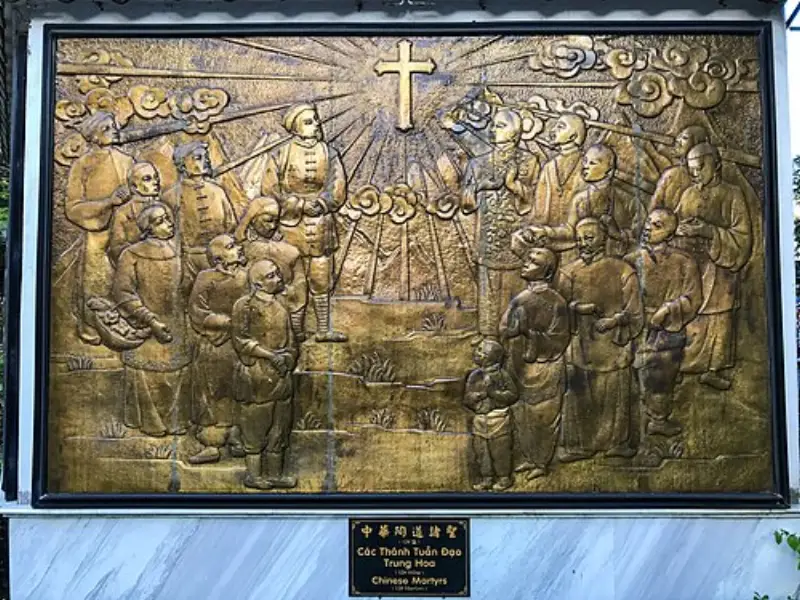
The martyrs of Taiyuan were beatified by Pope Pius XII on 24 November 1946, in the largest group of China's martyrs raised to the altars before the great canonization. Matthew Feng De was canonized by John Paul II on 1 October 2000 among the 120 Martyr Saints of China, whose deaths span the years 1648 to 1930. He is one of the Secular Franciscans of the Taiyuan community named in the group's record, and his feast is kept with the China martyrs on 9 July, the anniversary of the massacre in which he died.
Legacy
A neophyte's martyrdom is its own argument: Feng De had known the faith for only a short time and gave his life for it within sight of the baptismal font. In the canonization of 2000 he represents the newest members of the Chinese church, received into it in the very years it cost most to belong. His title in the martyrology — layman and neophyte — is the whole of what is known of him, and it is the reason he is invoked: for converts, for the newly baptized, and for every Christian whose instruction was cut short by history and completed by death.
Timeline
- 9 Jul 1900
Killed in the Taiyuan massacre in Shanxi during the Boxer Rebellion, as a newly baptized layman of the Franciscan mission
§ Martyrs of the Boxer Rebellion
- 24 Nov 1946
Beatified by Pope Pius XII, one of 29 Chinese martyrs beatified together that day
§ Introduction
- 1 Oct 2000
Canonized by Pope John Paul II among the 120 Martyr Saints of China
§ Introduction
The Record
- Canonization
- Canonized by Pope John Paul II on 1 October 2000, among the 120 Martyr Saints of China
Prayer
Profile text adapted from the Wikipedia article, licensed CC BY-SA 4.0.
Pray with this saint every day
Save St. Matthew Feng De to your favorites, read the full profile, and get feast-day reminders in the Saints app.
Get the Saints AppFree on the App Store for iPhone and iPad