
c. 361 – 440·Feast February 17
St. Mesrop Mashtots
Inventor of the Armenian alphabet and enlightener
Overview
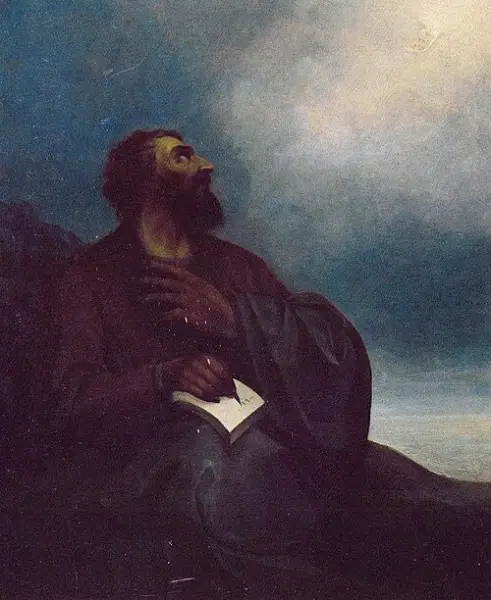
Mesrop Mashtots was an Armenian monk, linguist, composer, theologian, and hymnologist best known as the inventor of the Armenian alphabet around the year 405, the step that made an independent Armenian Christian literature possible. Born about 361 at Hatsekats, a village of the Taron canton, he received a Greek education, knew Greek, Persian, and Syriac, and began his career at the court of the Arsacid kings in Vagharshapat, drafting royal decrees in Persian and Greek. Around 394 he abandoned the court for the monastery, was ordained a monk at Goghtn, and became an ascetic hermit before gathering some forty disciples for missionary work among Armenians still attached to paganism. Confronted with a people whose spoken language had no adequate script, he devised an alphabet of thirty-six letters, aided by the catholicos Sahak Partev and King Vramshapuh; the first sentence written in the new letters was the opening of the Book of Proverbs. Schools multiplied across the country, disciples were sent to the great centres of learning, and with Sahak the Scriptures were rendered from the Greek, a version completed about 434 that remains in use in the Armenian Church. Mashtots also composed hymns of repentance. He died on 17 February 440 at Vagharshapat and was buried at Oshakan, where pilgrims honour him still.
The Complete Life
A Son of Taron
The man whom Armenia would call its greatest teacher began life obscurely. His birthplace was Hatsekats, a village of the Taron canton in Greater Armenia — a place some forty kilometres east of Mush, known to local Armenians as Hatsik and today renamed Güven in Turkey. His birth cannot be fixed with certainty: the dating most recent scholarship accepts is 361, with 361 to 364 given as the likely span, while other authorities placed it as early as 353. His father was named Vardan, a man whom some scholars take to have been a priest or nobleman, perhaps of the Mamikonian dynasty whose feudal domain Taron was; others make him a member of the lesser nobility, and one historian called him a peasant. Whatever his rank, he secured for his son a Hellenic education in the Greek language, possibly at the prominent Surb Karapet Monastery not far from the family home, and possibly through study at Antioch. Mashtots grew up commanding, besides his native Armenian, Greek, Middle Persian, and Syriac — four languages of the four empires and Churches that pressed upon Armenia, and the working tools of the career he first pursued at court and afterwards in the service of the Church.
§ Background and early life
From the King's Chancery to the Monastery
In the late 380s Mashtots moved to Vagharshapat, the capital, and entered the service of King Khosrov III. Khorenatsi records that he worked as a royal secretary, while Koriun and Parpetsi assign him military duties as well: he began as royal chancellor, keeper of the king's decrees and edicts written in Persian and Greek, and then, after training, served in the army. For a gifted young nobleman the court was a path to wealth and power, and Mashtots walked it only to renounce it. Around 394 he became a clergyman, was ordained a monk, and went to live in the monastery at Goghtn. He did not stop at the cloister: he became an ascetic hermit, dwelling in the mountains and uninhabited places after the pattern of the desert fathers. Yet withdrawal hardened into apostolate rather than ending in silence. Out of the hermit's solitude he gathered a company of forty disciples, and with them he turned to the evangelization of his own people — a mission that would soon demand everything he had learned in the king's chancery, and something no chancery could supply: letters for a tongue that had none.
§ Background and early life
Letters for a Nation, Schools for the Gospel
Mashtots began his first mission at Goghtn around 395, preaching the gospel with the blessing of Sahak Partev and the support of Prince Shampith, and he succeeded in spreading Christianity through a district where many were still pagan. But Armenia, having lost its independence in 387 and been divided between Byzantium and Persia, prayed in scripts not its own: Greek, Persian, and Syriac, none suited to the sounds of Armenian, so that the Scriptures and the liturgy were unintelligible without interpreters. With the help of Sahak and King Vramshapuh, and after taking counsel from Daniel, bishop of Mesopotamia, and from Rufinus, a Samosata monk, Mashtots produced an alphabet of thirty-six letters around 405. The first sentence written in it was the opening verse of the Book of Proverbs: to know wisdom and instruction. Encouraged by patriarch and king, he founded schools across the country in which the young were taught the new letters, teaching himself at the Amaras monastery in Artsakh. Bearing the Catholicos' letters of introduction he travelled to Constantinople, where the emperor Theodosius the Younger granted him licence to preach and teach throughout the imperial Armenian territories, and he sent disciples to Edessa, Constantinople, Athens, Antioch, and Alexandria to master Greek learning and carry its masterpieces home.
§ Alphabet
The Penitent's Voice
The inventor of a nation's letters was also one of the first voices of its sacred music. Mashtots composed a number of liturgical pieces, and the works attributed to him are hymns of repentance: "I have sinned against you, Lord," "Have mercy on me, God," "I kneel before you," and the Miserere. The choice of theme is telling. The man who spent his life arming the Armenian Church with the instruments of learning fashioned, for his own part, not triumphal chant but the contrite speech of a sinner before God, and these penitential compositions became part of the Church's permanent treasury of prayer. His whole manner of life belonged to the same school. He had left the court for the monastery, the monastery for the mountains, and even amid the busiest literary labours he returned to the districts he had evangelized in his early years, visiting again the people of Goghtn whom he had first brought to the gospel. His spirituality joined three loyalties — to learning, to penance, and to the souls committed to his charge — and the Armenian Church came to see in him its first great vardapet, the model of the teaching monk who prays with the mind as with the voice.
§ Music
The Last Labours and Oshakan
The closing years of Mashtots' life were given to the great collaborative work of his old age: the Armenian Bible. A first version, translated from the Syriac by Sahak around 411, had been judged imperfect; disciples despatched to Edessa and Constantinople returned carrying authoritative Greek exemplars, and with further copies secured from Alexandria, the Scriptures were rendered anew from the Septuagint and Origen's Hexapla, a version completed about 434 that the Armenian Church uses still. The decrees of the first three ecumenical councils, the national liturgy, and many works of the Greek Fathers passed into Armenian in the same great movement, preserving texts whose Greek originals have since perished. In the midst of these labours Mashtots revisited the districts of his early evangelization, and when Sahak — Isaac — died in 439, he assumed care for the spiritual administration of the patriarchate, outliving Sahak by a bare half-year. He died on 17 February 440 at Vagharshapat, in his seventy-ninth year by the traditional reckoning. He was buried at a chapel in the village of Oshakan, some eight kilometres southwest of Ashtarak, where his grave remains a place of pilgrimage to this day.
§ Life
The Holy Translator
The Church of Armenia reckoned Mashtots among its saints without delay or ceremony of any modern kind: he is a saint of both the Armenian Apostolic and the Armenian Catholic churches, and the Roman Catholic Church likewise lists him officially in the Roman Martyrology, with his feast on 17 February; the Armenian Church keeps his memory on 19 February. Two great feasts belong to him in the Armenian calendar. First comes the feast of the Holy Translators, falling each year on the second Saturday of October, dedicated to Mashtots together with Yeghishe, Movses Khorenatsi, David the Invincible, Gregory of Narek, and Nerses Shnorhali — a commemoration established, according to Acharian, no earlier than the twelfth century and declared a national holiday in 2001, on which pilgrims still go up to his grave at Oshakan. The second is the Feast of Sahak and Mashtots, kept on Thursdays, the thirty-third day after Pentecost, between 11 June and 16 July, the continuation of his original feast and for centuries the occasion of pilgrimage to Oshakan. Churchmen call him the Saint of Oshakan, chants and canticles are sung in his honour, and churches across Armenia and the diaspora bear his name or that of the Holy Translators.
§ Veneration
The Second Illuminator
Modern Armenian memory has given Mashtots a place no other figure of its history quite holds. Scholarship hails him as the father of Armenian letters and schooling, the supreme enlightener and first instructor of the nation; he has been called the culture-hero of Armenian civilization, and historians have compared him to Gregory the Illuminator himself, styling him the second illuminator of the nation. Koriun, his disciple and biographer, dared liken the homecoming that followed the alphabet's invention to Moses coming down from Sinai, and ranked his work with Sahak alongside that of the Four Evangelists. The comparison with Moses held for centuries: poets from Nalbandian to Siamanto and Tumanyan set him beside the lawgiver, and Paruyr Sevak praised the statesman who won a bloodless victory beyond any general's. His name governs the institutions of Armenian culture: the Matenadaran, the great repository of manuscripts in Yerevan, is named for him, guarded since 1962 by a statue of the saint with Koriun; the Order of St. Mesrop Mashtots, founded in 1993, rewards achievement in science, education, and culture; his face appeared on the thousand-dram banknote; and chairs, schools, and churches from Harvard to Kapan carry the name of the monk who gave Armenia its letters.
§ Legacy and recognition
Timeline
- 361
Born at Hatsekats in the canton of Taron, the birth date most recent scholarship accepts
§ Background and early life
- 394
Left the royal court, entered the clergy, and was ordained a monk at Goghtn
§ Background and early life
- 395
Opened his first mission at Goghtn, spreading Christianity where pagan practice still held sway
§ Background and early life
- 405
Devised the thirty-six-letter Armenian alphabet, assisted by Sahak Partev and King Vramshapuh
§ Alphabet
- 411
Sahak Partev issued a first Armenian Bible rendered from Syriac, a version soon judged imperfect
§ Life
- 434
The Armenian Bible was completed from the Greek Septuagint, the version still used by the Armenian Church
§ Life
- 439
On Sahak's death, Mashtots took charge of the spiritual administration of the patriarchate
§ Life
- 17 Feb 440
Died at Vagharshapat, six months after Sahak, whose patriarchal cares he had assumed
§ Life
In Their Own Words
The history of our culture has given many outstanding figures, but of all these figures, the Armenian people owe the most to Mashtots.
The Record
- Major works
- Armenian alphabet of thirty-six letters (c. 405)·Caucasian Albanian alphabet (attributed by Armenian tradition)·Armenian translation of the Bible from the Greek, completed c. 434 with Sahak Partev·Hymns of repentance, including "I have sinned against you, Lord" and "Have mercy on me, God"
- Patron of
- Armenian literature and education·translators
- Symbols
- the letters of the Armenian alphabet·a halo in manuscript miniatures
- Canonization
- Pre-congregation; venerated as a saint in the Armenian Apostolic and Armenian Catholic churches, and listed in the Roman Martyrology
Prayer
Bibliography
Show 5 sources
- Koriun (2022). The Life of Mashtots' by his Disciple Koriwn: Translated from the Classical Armenian with Introduction and Commentary. Translated by Abraham Terian. Oxford University Press. ISBN 978-0-19-284741-6.
- Hacikyan, Agop Jack; Basmajian, Gabriel; Franchuk, Edward S.; Ouzounian, Nourhan (2000). The Heritage of Armenian Literature: From the Oral Tradition to the Golden Age. Detroit: Wayne State University Press. ISBN 9780814328156.
- Thomson, Robert W. (1996). "The Origins of Caucasian Civilization: The Christian Component". In Suny, Ronald Grigor (ed.). Transcaucasia, Nationalism and Social Change: Essays in the History of Armenia, Azerbaijan, and Georgia (Rev. ed.). Ann Arbor, Mich: University of Michigan Press. pp. 29–33. ISBN 978-0-472-09617-6.
- Rayfield, Donald (2013). Edge of Empires: A History of Georgia. London: Reaktion Books. ISBN 978-1-78023-070-2.
- Grenoble, Lenore A. (2003). Language Policy in the Soviet Union. Dordrecht: Kluwer Academic Publishers. ISBN 1402012985.
Profile text adapted from the Wikipedia article, licensed CC BY-SA 4.0.
Pray with this saint every day
Save St. Mesrop Mashtots to your favorites, read the full profile, and get feast-day reminders in the Saints app.
Get the Saints AppFree on the App Store for iPhone and iPad