
died c. 373·Feast November 19
St. Nerses I the Great
Catholicos of Armenia, reformer and royal challenger
Overview
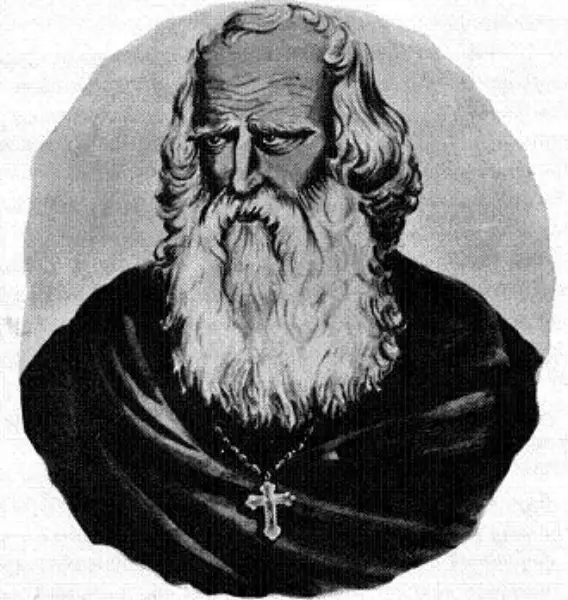
Nerses I the Great, also called Nerses the Parthian, led the Armenian Church as Catholicos from about 353 until his death around 373. A scion of the Arsacid royal house and a descendant of St. Gregory the Illuminator through his grandfather, the Catholicos Husik, Nerses was educated in Hellenistic culture at Caesarea in Cappadocia, where he presumably married. After the death of his wife Sandukht, by whom he had a son, the future Catholicos Sahak, he served King Arshak II as a court official before entering the ecclesiastical state. His election as catholicos in 353, confirmed at Caesarea by tradition, marked a turning point: he detached the Armenian Church from its identification with the royal family and nobility and bound it to the common people. At the Council of Ashtishat he legislated on marriage, fasting, and worship; he founded schools, hospitals, leprosaria, and houses for the poor, and sent monks to preach throughout the land. His courage before two kings cost him nine years of exile and, according to the classical historians, his life, for King Pap was said to have poisoned him at a banquet of pretended reconciliation.
The Complete Life
A Nobleman of the Illuminator's Line
Nerses was born into the highest rank of Christian Armenia: his father was the noble Atanagines, his mother Bambishn, a princess of the Arsacid line. Catholicos Husik stood as his grandfather on the father's side, and through Husik the family traced its descent to St. Gregory the Illuminator, the apostle who had founded the Armenian Church. From Gregory's day the leadership of the Church in Armenia had belonged to the family as a hereditary right, though the succession had been interrupted when Nerses's father and uncle declined the patriarchate in favor of military careers. The chief source for his life, the fifth-century Buzandaran Patmutiwnk traditionally attributed to Faustus of Byzantium, calls his mother a sister of King Tiran, though modern scholars note chronological difficulties and observe that Bambishn was probably a court title borne by royal ladies rather than a personal name. Nerses received a Hellenistic education at Caesarea in Cappadocia and is presumed to have married there. A later vita, drawn from the Buzandaran, names his wife as the Mamikonian princess Sandukht, who died after bearing him a son, Sahak, who would one day succeed him as catholicos.
§ Early life
From the King's Chamber to the Church
Left a widower, Nerses turned to the profession of his fathers and entered the service of the Arsacid king Arshak II as senekapet, an office literally meaning chamberlain and perhaps signifying sword-bearer to the monarch. A few years later he abandoned the court for the ecclesiastical state and was elected catholicos, probably in 353, receiving confirmation at Caesarea as the ancestral custom required, and he proved the final Armenian primate to receive consecration in that Cappadocian city, a fact that marks his tenure as the close of one era and the opening of another. Until his accession the Armenian church had largely been treated as the possession of the crown and its magnates; Nerses deliberately drew it into closer connection with the common people. In this he accomplished quietly what no predecessor had attempted, transforming an aristocratic institution into a national church whose care extended to peasants, lepers, and orphans. The chamberlain of a king became the father of a people, and the change of vocation proved permanent for the Armenian nation.
§ Early life
Reformer of a Nation
Nerses's patriarchate introduced a new epoch in Armenian history. Around 356 he gathered the Council of Ashtishat, which enacted legislation touching matrimony, fasting seasons, and the worship of God. The assembly barred first-cousin marriage among Armenians and outlawed mutilation and other extreme practices of mourning, disciplining both private morals and public grief by Christian law. Beyond legislation, Nerses erected an infrastructure of mercy: schools for instruction, hospitals and leprosaria for the sick, and poor houses for the destitute, while monks were dispatched to every corner of the land to preach the Gospel. His relations with King Arshak II, however, soon soured, for some of the catholicos's reforms displeased the monarch, who was further angered when Nerses condemned his extermination of certain noble houses. Nerses traveled to Constantinople to negotiate the release of royal hostages and to receive Olympias, the king's Roman bride. Arshak's pursuit of a pro-Arian policy deepened the estrangement, and when the monarch had his own nephew Gnel slain despite the prelate's appeals, the catholicos never again showed himself at court.
§ Patriarchate
Exile, Return, and the Poisoned Cup
In 359 or 360 Nerses was sent into exile for some nine years together with other bishops who resisted Arianism. He came back to his see only with the accession of the pro-Arian king Pap around 369 or 370, and he devoted his return to reconstruction, raising up the Armenian churches and monasteries that the Persian occupation had destroyed and laboring to root out Zoroastrian influence in the country. The quarrel with the crown resumed at once. The classical historians depict Pap as dissolute and unworthy, so far estranged from his primate that Nerses would not let the king pass the church doors; other scholars read the quarrel differently, seeing a prelate who tried to direct the youthful ruler through his standing and his alliances with Armenian princes, provoking Pap to dissolve the Church's benevolent institutions and confiscate its holdings. In 373, according to the Buzandaran Patmutiwnk and Movses Khorenatsi, the king invited Nerses to his table under pretense of reconciliation and poisoned him. Another account holds that he died of a lung illness contracted early in life. Pap then appointed a successor without reference to Caesarea, which refused to recognize the new bishop.
§ Patriarchate
Veneration and the Dying Vision
The Church received Nerses among her saints without any formal process, and his cult spread through all the ancient communions: he is venerated today in the Catholic Church, the Eastern Orthodox Church, the Oriental Orthodox Church, and the Anglican Communion, with his feast kept on 19 November. Medieval Armenia added a further layer to his memory in a legend of prophetic vision supposedly granted to him in his dying moments. The vision is absent from the principal classical sources, though the Buzandaran and Ghazar Parpetsi do record that Nerses cursed the Arsacids and so, they say, brought down their kingdom. The tale surfaces first in a life of the saint from the tenth century credited to Mesrop the Priest, preserved in the form redacted between 1099 and 1131, shortly after the First Crusade took Jerusalem. In it the dying prelate announces the ruin of the Arsacid and Gregorid dynasties, Jerusalem's fall to Persian arms, the seizing of the True Cross, and the coming of the archers who would ruin Armenia, and finally the Franks who would defeat the infidel and inaugurate an age of peace until the Antichrist.
§ Nerses's vision
Father of the Armenian Church
Nerses's immediate legacy was dynastic as well as spiritual: his son Sahak succeeded him as catholicos, prolonging the line of Gregory the Illuminator in the leadership of the Armenian Church, even as Pap's irregular appointment of a successor without Caesarea's approval foreshadowed the growing independence of the Armenian see. The institutions he founded set a pattern of Christian social care, and his legislation at Ashtishat shaped Armenian moral life for centuries. His memory also entered the artistic history of his people: The nineteenth-century drama Nerses the Great, Patron of Armenia, staged in 1857 by the Western Armenian man of letters Sargis Vanandetsi, otherwise known as Sargis Mirzayan, counts him among its characters. Among historians he endures as a figure of the fourth-century encounter between church and state, a prince of the Arsacid blood who defied two Arsacid kings, and among the faithful he remains the great shepherd who taught the Armenian Church to belong to the whole nation rather than to its nobility, sealing that teaching with an exile of nine years and, by the ancient account, his blood.
§ In the arts
Timeline
- 353
Elected Catholicos of the Armenian Church and confirmed in office at Caesarea in Cappadocia, the last Armenian patriarch so consecrated.
§ Early life
- 356
Issued canons governing matrimony, fasting seasons, and liturgical practice at the Council of Ashtishat.
§ Patriarchate
- 359
Banished for roughly nine years in the company of other bishops opposed to Arianism after his rupture with King Arshak II.
§ Patriarchate
- 369
Returned to his see upon the accession of King Pap and undertook the rebuilding of churches ruined in the Persian occupation.
§ Patriarchate
- 373
Poisoned at a banquet by King Pap, who had invited him under pretense of reconciliation, according to the classical Armenian historians.
§ Patriarchate
The Record
- Major works
- Legislation of the Council of Ashtishat on marriage, fasting, and worship·Schools, hospitals, leprosaria, and poor houses founded throughout Armenia
- Canonization
- Pre-congregation saint of the undivided Church, venerated in the Catholic, Eastern Orthodox, Oriental Orthodox, and Anglican traditions
Prayer
Bibliography
Show 7 sources
- Attwater, Donald (1965). The Penguin Dictionary of Saints. Harmondsworth: Penguin. OCLC 901716711.
- Garsoian, Nina G. (1969). "Quidam Narseus? A note on the Mission of St. Nerses the Great". Armeniaca. Melanges d'etudes armeniennes: 148-164.
- Garsoian, Nina G. (1989). The Epic Histories Attributed to Pawstos Buzand (Buzandaran Patmutiwnk). Cambridge, Massachusetts: Harvard University Press. ISBN 0-674-25865-7.
- Garsoian, Nina (1997). "The Arsakuni Dynasty". In Hovannisian, Richard G. (ed.). The Armenian People from Ancient to Modern Times. Vol. 1. New York: St. Martin's Press. ISBN 0-312-10169-4.
- Hacikyan, Agop Jack; Basmajian, Gabriel; Franchuk, Edward S.; Ouzounian, Nourhan (2005). The Heritage of Armenian Literature: From the Eighteenth Century to Modern Times. Detroit, Michigan: Wayne State University Press. ISBN 0-8143-3221-8.
- Terian, Abraham (2005). Patriotism and Piety in Armenian Christianity: The Early Panegyrics On Saint Gregory. St Vladimir's Seminary Press. ISBN 9780881412932.
- Lint, Theo van (2018). "Nerses I the Great, S.". The Oxford Dictionary of Late Antiquity. Oxford University Press. ISBN 9780191744457.
Profile text adapted from the Wikipedia article, licensed CC BY-SA 4.0.
Pray with this saint every day
Save St. Nerses I the Great to your favorites, read the full profile, and get feast-day reminders in the Saints app.
Get the Saints AppFree on the App Store for iPhone and iPad