
c. 1102 – 1173·Feast August 13
St. Nerses IV the Gracious
Catholicos, poet, and pioneer of Christian unity
Overview
Nerses IV the Gracious, known in Armenian as Nerses Shnorhali, served as Catholicos of Armenia from 1166 until his death on 13 August 1173. Born around 1102 into the noble Pahlavuni family, which held the catholicosate from 1066 to 1203, he lost his father in childhood and was raised under the guardianship of Catholicos Gregory II the Martyrophile in the Red Monastery of Shughr, where the epithet Shnorhali, gracious or full of grace, came to mark his eloquence and learning. Ordained a celibate priest at seventeen and consecrated a bishop at thirty-five, he assisted his brother Gregory III in governing the catholicosate and undertook delicate missions of mediation among the princes of Cilicia. As Catholicos he moved the see from Sis to Hromkla and devoted his tenure to the dream of reconciling the Armenian Church with the Greek church of Byzantium, corresponding with Emperor Manuel I Komnenos and receiving an imperial delegation at Hromkla in 1171. The negotiations collapsed under the weight of Byzantine demands, yet his irenic vision endured. A theologian, poet, hymn composer, and writer, he is remembered as the Fénelon of Armenia, and his prayers circulate today in dozens of languages.
The Complete Life
An Orphan of the Pahlavuni House
Nerses was born around 1100 into the Pahlavuni, the princely house that monopolized the Armenian primacy between 1066 and 1203. Nerses was the name he took at his ordination to the priesthood; his baptismal name is unknown. His father was Apirat Pahlavuni, and his great-grandfather was the author-prince Grigor Magistros. Some sources set his arrival at the Dzovk stronghold of the Tluk district in Cilicia, beyond Aintab toward the southwest, within the domain of the warlord Gogh Vasil, while others locate it in the family fortress of the same name in the province of Sophene in Armenia, near modern Elazig. On the death of their father in 1111, Nerses and his older brother Gregory, the future Catholicos Gregory III, moved to the Cilician Dzovk, which honored the family's original home. Their maternal granduncle, Catholicos Gregory II the Martyrophile, became their guardian and placed them in the Red Monastery of Shughr in the mountains of southeastern Cilicia, where the monk Stepanos Manouk, a scholar of high repute, became their teacher.
§ Early life
The Graceful Mouth of Shughr
In the Red Monastery Nerses received the formation that gave him his life's name. The epithet Shnorhali, translatable as graceful or full of grace, appears to have been an honorary title bestowed on graduates of Karmir Vank, though others say he earned it by the grace of his person, speech, and writings, or by the irenic quality of his prose. Medieval manuscripts apply to him the phrase gracious mouth, an expression harking back to the mouths of God and of Christ used of Chrysostom, Paul, and Gregory the Theologian, marking a figure endowed for spiritual instruction and the interpretation of Scripture. Ordained a celibate priest by his own brother at the age of seventeen, he was consecrated a bishop at thirty-five. His theological vocabulary stood squarely in the tradition of the Fathers, whose purpose was the exposition and protection of right belief, and he would spend his career as a teacher, exegete, and peacemaker, seeking to heal the doctrinal estrangement of Armenian and Greek Christendom through theological and diplomatic exchange.
§ The Epithet "Shnorhali"
Mediator of Princes and Churches
Nerses's public career joined the service of church unity to the arbitration of earthly quarrels. In 1125 he helped his brother transfer the catholicate to Dzovk near Lake Kharput; in 1138, amid political tensions, the brothers set out for Jerusalem on pilgrimage and paused at a synod in Antioch convened to examine the conduct of Ralph of Domfront, the Latin patriarch, after which Gregory continued to the Holy City with the papal legate Alberic of Ostia and sent Nerses back. In 1165, when armed struggle erupted between Thoros II and Oshin of Lampron, the mightiest lords of Armenian Cilicia, and Nerses was dispatched as peacemaker, succeeding in the task. On the way he stopped at Mamistra, where his conversation with the Byzantine governor Alexios Axouch turned to the breach between the Armenian and Greek churches, declared heretical by the Greeks in 1140. At Axouch's urging he composed an exposition of the Armenian faith for the emperor, arguing that shared acceptance of Ephesus I left the two communions without genuine cause for separation, and pointedly avoiding polemic against Chalcedon.
§ Bishop
Reunion Attempted at Hromkla
As Catholicos, Nerses pursued the vision first sketched at Mamistra. After his brother's death, his letter reached Emperor Manuel I Komnenos, who replied inviting the new primate's cooperation; Nerses proposed that each church present its position in open discussion. In 1171 the emperor dispatched a delegation led by Theorianus, a theologian of Constantinople, and John Atman, an Armenian-born Orthodox abbot of Philippopolis, while the Jacobite patriarch Michael the Syrian sent only an observer. An early agreement took shape that essentially accepted the Greek position, and Nerses drafted a conciliatory profession of faith for review at Constantinople, enclosing a confidential promise to the emperor to strive for reconciliation. In December the delegates returned to Hromkla bearing letters from the emperor and Patriarch Michael III of Constantinople, together with nine points of demand: doctrinal settlement over the councils, above all Chalcedon; liturgical uniformity in unleavened bread and undiluted wine; a common calendar; and imperial authority over future Armenian catholicos appointments. Stung by the severity of these terms and embarrassed when his private letters were produced, Nerses objected courteously, promised a future Armenian council, and gently suggested that Greek traditions might themselves bear review.
§ Catholicos
Settling the Succession
By the close of the failed negotiations Nerses was about seventy years old and began arranging the transfer of his office. Following the custom of his family, he looked among his relatives who had already attained the episcopate and fixed on the younger of two candidates as his own choice. The elder, however, a relative named Gregory, enjoyed the backing of Prince Mleh, and when the election came, Gregory prevailed and took the catholicosate in 1173 as Gregory IV the Young. Nerses did not long survive the settlement: he died on 13 August 1173, seven years after assuming office at Hromkla, the fortress-seat he had raised above Sis. He left behind a catholicosate that had tasted, however briefly, the possibility of communion with Constantinople, a literary corpus of unmatched range, and a reputation for gentleness so pronounced that fourteen centuries later a pope would hold him up as an exemplar of the ecumenism of the saints. The talks had failed, but the peacemaker's work outlived the politics that defeated it.
§ Catholicos
Honored in East and West
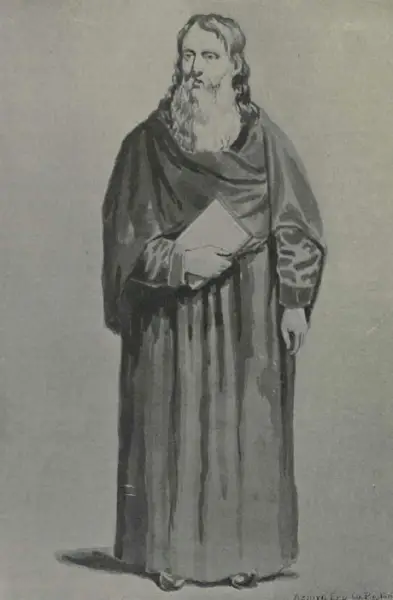
Nerses is venerated in the Armenian Orthodox Church, the Latin Church, and the Armenian Catholic Church. The Armenian Apostolic Church and the Armenian Catholic Church mark his festival in the middle of October, on the Saturday within the fourth week after the Holy Cross, while the Roman Rite commemorates him on 13 August, the day of his death. His recognition by the Holy See received fresh emphasis in modern times: on 18 May 2026 Pope Leo XIV met with Catholicos Aram I and noted the recent insertion of St. Nerses Shnorhali in the Roman Martyrology, describing it as an instance of the ecumenism of the saints. The honor was fitting for a man who had toiled to lead Armenian Christendom from its seclusion, the very quality that earned him the title of the Fénelon of Armenia. A portrait of the saint survives in a breviary of 1269 painted by Stepannos Vahkatsi, and his image appeared again in the 1898 volume Illustrated Armenia and the Armenians, testimony to the unbroken affection in which his memory has been held.
§ Veneration
Poet of Fire and Light
Nerses stands among the most remarkable figures of medieval Armenian letters, a theologian, poet, writer, and composer of hymns. His Vipasanut'iun recast the novel in poetic form, and his Voghb Yedesio mourned the fall of Edessa. Hisus Vordi, translated into English as Jesus Son, rendered the Bible in verse and closed with the drama of the End Times, while Tught' Endhanrakan, his General Letter, taught pastoral theology, the order of the Armenian Church and society, and the conduct of daily Christian life in Cilician Armenia, and has appeared in English and modern Armenian. His Twenty-four Hour Prayers have been translated into thirty-two languages, and the single prayer Havatov Khostovanim, I Confess with Faith, into thirty-six; several of his poems entered the Armenian Hymnal and Divine Liturgy. The scholar James R. Russell noted that Nerses returns persistently to images of flame and radiance, in a key that recalls Hesychasm yet harmonizes with the Zoroastrian substratum beneath Armenian Christian culture. Even his lost Genesis commentary, recounting monks who glimpsed the Garden of Eden ringed in gemstone blossoms, shows the range of a mind that made theology sing.
§ Works
Timeline
- 1111
After their father's death, Nerses and his brother Gregory moved to Dzovk in Cilicia and came under the guardianship of Catholicos Gregory II the Martyrophile.
§ Early life
- 1125
Helped relocate the seat of the catholicosate to Dzovk by Lake Kharput alongside his brother, the reigning Gregory III of Cilicia.
§ Bishop
- 1138
Set out with Gregory on a pilgrimage to Jerusalem and took part in the synod at Antioch examining Latin Patriarch Ralph of Domfront.
§ Bishop
- 1165
Mediated between the princes Thoros II and Oshin of Lampron and met Byzantine governor Alexios Axouch at Mamistra, writing an exposition of the Armenian faith for the emperor.
§ Bishop
- 1166
Succeeded his brother Gregory III as Catholicos of Armenia and moved the see from Sis to Hromkla.
§ Catholicos
- 1171
Received at Hromkla the imperial delegation of Theorianus and John Atman sent by Emperor Manuel I Komnenos to discuss reunion of the Armenian and Greek churches.
§ Catholicos
- Dec 1171
The delegates returned to Hromkla with imperial demands so severe that Nerses objected and the reconciliation effort collapsed.
§ Catholicos
- 1173
Arranged the transfer of the catholicosate to his relative Gregory IV the Young, who took office that year with the support of Prince Mleh.
§ Catholicos
- 13 Aug 1173
Died, ending a seven-year tenure as Catholicos of Armenia.
§ Catholicos
- 18 May 2026
Pope Leo XIV met Catholicos Aram I and noted the recent inclusion of St. Nerses Shnorhali in the Roman Martyrology as an example of the ecumenism of the saints.
§ Veneration
The Record
- Major works
- Vipasanut'iun, a novel written in poetic form·Voghb Yedesio (Lamentation on Edessa), on the fall of Edessa·Hisus Vordi (Jesus Son), the Bible rendered in poetry·Tught' Endhanrakan, a General Letter on pastoral theology and Christian conduct·Twenty-four Hour Prayers, translated into 32 languages·Havatov Khostovanim (I Confess with Faith), available in 36 languages·A commentary on the Book of Genesis, now lost·Musical works, volumes of poetry, and hymns adopted into the Armenian Divine Liturgy
- Canonization
- Recognized as a saint by the Roman Rite of the Catholic Church and by the Armenian Apostolic and Armenian Catholic Churches
Prayer
Bibliography
Show 8 sources
- Attwater, Donald (1965). The Penguin Dictionary of Saints. Harmondsworth: Penguin. p. 248.
- Frazee, Charles A. (June 1976). "The Christian Church in Cilician Armenia: Its Relations with Rome and Constantinople to 1198". Church History. 45 (2). Cambridge University Press on behalf of the American Society of Church History: 166-184. doi:10.2307/3163715.
- Hacikyan, Agop Jack; Basmajian, Gabriel; Franchuk, Edward S. (2002). "Nerses Shnorhali (St. Nerses the Graceful) (c. 1101-1173)". The Heritage of Armenian Literature. Vol. 2. Wayne State University Press. pp. 391-396. ISBN 9780814330234.
- Maksoudian, Krikor H. (1987). "Nerses IV Snorhali". In Strayer, Joseph R. (ed.). Dictionary of the Middle Ages. Vol. 9. New York: Charles Scribner's Sons. pp. 103-104. ISBN 0-684-18275-0.
- Thomson, Robert W. (1991). "Nerses Snorhali". In Kazhdan, Alexander (ed.). The Oxford Dictionary of Byzantium. Oxford University Press. ISBN 9780195046526.
- Buckley, J. M. (2003). "Nerses Gratiosus (Snorhali)". New Catholic Encyclopedia. Vol. 10 (2nd ed.). Detroit: Gale. pp. 251-252.
- Russell, James R. (Spring 2007). "The Shrine beneath the Waves". RES: Anthropology and Aesthetics. 51 (51). Harvard College: 136-156. doi:10.1086/RESv51n1ms20167721.
- "Nerses Shnorhali: Great 'pioneer of ecumenism' in the Christian East". Vatican News. 18 May 2026.
Profile text adapted from the Wikipedia article, licensed CC BY-SA 4.0.
Pray with this saint every day
Save St. Nerses IV the Gracious to your favorites, read the full profile, and get feast-day reminders in the Saints app.
Get the Saints AppFree on the App Store for iPhone and iPad