
died 250·Feast February 25
St. Nestor of Magydos
Hieromartyr Bishop slain in the Decian persecution
Overview
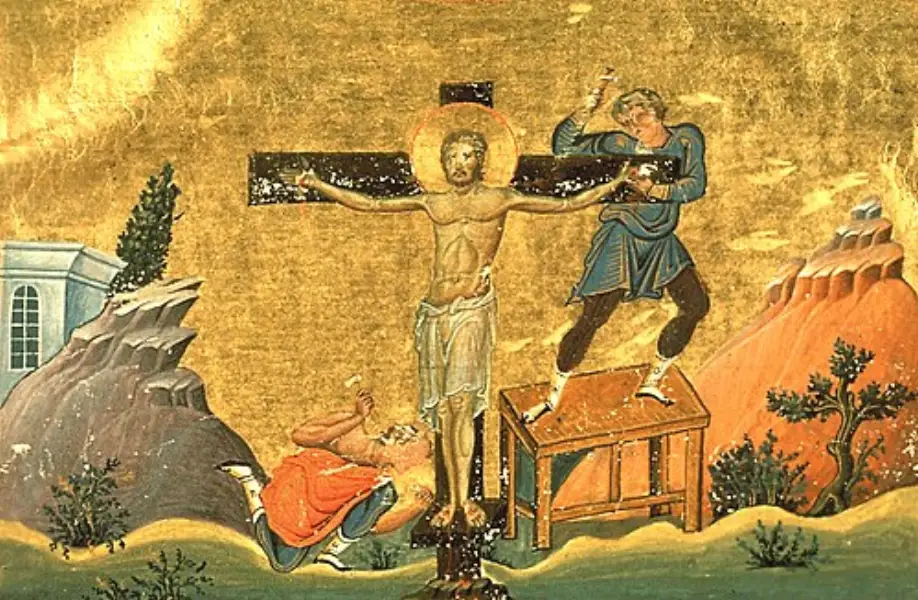
Nestor, honored as the Hieromartyr Nestor of Magydos and sometimes called Nestor of Perge, governed the church of Magydos as bishop in the Roman province of Pamphylia, in what is now Turkey. The surviving record of his life is brief, but it preserves the outline of a pastor whose steadfastness alarmed the authorities of the empire. During the persecution unleashed under Emperor Decius, soldiers arrested Nestor while he was praying in his own house. Hauled before the Roman governor Pollio, also recorded as Epolius of Lycia, he refused the command to sacrifice to the gods of the state, and for that refusal the governor condemned him to death. So formidable was his witness that a Roman magistrate confessed in exasperation that until the bishop was broken, the authorities would remain powerless against the Christians. The church marked his victory by enrolling him among her martyrs, keeping his memory on 25 February in the Roman Catholic Church and on 28 February among the Orthodox. In the Menologion of Basil II he is portrayed vested as a bishop, holding the Gospel Book with his right hand raised in blessing.
The Complete Life
Bishop of a Small See
Nestor shepherded the Christian community of Magydos, a town of Pamphylia on the southern coast of Asia Minor, in the middle years of the third century, when membership in the church carried a rising risk of death. He is also remembered under the name Nestor of Perge, after the neighboring Pamphylian city where he would give his life. Of his origins, his education, and the years of his episcopate, the ancient record is nearly silent; what it preserves instead is the impression he made on friend and enemy alike. His courage and his authority were so conspicuous that even officials of the empire acknowledged them. One Roman magistrate, surveying the struggle between the state and the Christians of the province, admitted that the resistance of the church could not be overcome until its bishop had been broken. The confession reveals the kind of leader Nestor was: not a quiet figure of compromise but the visible head and stay of his people, whose fidelity held the whole community upright when the storm of persecution broke over Pamphylia.
§ Background
Arrest at Prayer, Death at Perge
The persecution of Emperor Decius reached Pamphylia in 250, and Nestor was seized not in flight or in hiding but at prayer in his own home, taken in the very act that had defined his episcopate. Brought before the local Roman governor, recorded as Pollio or Epolius of Lycia, he faced the demand laid on all subjects of the empire: offering incense to the deities of the Roman state. The bishop refused, and the refusal carried the sentence of death. He was put to death at Perge, the chief city of the region, in the year 250. His enemies understood better than most what they were destroying; the magistrate who wished to get the better of the bishop testified to the strength that flowed from him to the Christians of the province. The account leaves the manner of his execution unrecorded, but the essence of his passion is clear: a pastor who would not buy his life with incense, and who sealed with blood the teaching he had preached in Magydos.
§ Background
Remembered on Two Calendars
The Church received Nestor among her martyrs without any formal process, and his cult has endured across the centuries and across the divisions of Christendom. He is venerated in the Catholic Church and in the Eastern Orthodox Church, which keep his memory on different days: 25 February in the Roman Catholic calendar and 28 February in the Orthodox reckoning. Eastern tradition has preserved his image as well as his name; the Menologion of Basil II, the great early eleventh-century cycle of saintly portraits made for the Byzantine court, depicts him vested as a bishop, holding the Gospel Book, his right hand raised in blessing, exactly as a hieromartyr should appear. For the faithful of Pamphylia and for pilgrims of later ages he stands as an example of the bishop-martyr, the shepherd who does not abandon his flock when the wolf comes, and the memory that a single resolute life can hold a whole community together when empires demand its surrender.
§ Background
In Their Own Words
Until we have got the better of the bishop, we shall be powerless against the Christians.
The Record
- Symbols
- Vested as a bishop·Holding a Gospel Book·Right hand raised in blessing
- Canonization
- Pre-congregation martyr venerated since antiquity by the Catholic Church and the Eastern Orthodox Church
Prayer
Bibliography
Show 2 sources
- Englebert, Omer (1994). Lives of the Saints. Barnes & Noble. ISBN 978-1-56619-516-4.
- "Hieromartyr Nestor, Bishop of Magydos in Pamphylia". OCA.
Profile text adapted from the Wikipedia article, licensed CC BY-SA 4.0.
Pray with this saint every day
Save St. Nestor of Magydos to your favorites, read the full profile, and get feast-day reminders in the Saints app.
Get the Saints AppFree on the App Store for iPhone and iPad