
died 824·Feast April 3
St. Nicetas of Medikion
Confessor abbot against Byzantine Iconoclasm
Overview
Nicetas of Medikion, called also Nicetas the Confessor, was a Byzantine monk and abbot who stood against the imperial policy of iconoclasm and suffered imprisonment and exile for the veneration of the holy images. He was born at Bithynian Caesarea to a pious family marked early by sorrow and by the religious life: his mother lived only eight days past his birth, while his father Philaretos forsook the world for the monastic habit, and the orphaned boy's upbringing fell to his grandmother. As a youth he was a constant presence at the church services, and he became a disciple of the hermit Stephen. Drawn to the monastic life, he entered the Medikion Monastery in Bithynia, where Nicephorus served as hegoumenos. After seven years in the community he was ordained presbyter in 790, and when Nicephorus fell ill and afterwards died, the monks chose Nicetas to lead them. His sanctity attracted a stream of new recruits to Medikion. Twice he was imprisoned for his resistance to iconoclasm, and under the emperor Leo V the Armenian, early in the ninth century, he was sent into exile. Freed at Leo's death, he declined to resume rule of his abbey and passed his remaining years in a rigorously observant house outside the capital, dying there in 824, after which his relics were conveyed back to Medikion, and he is commemorated on 3 April as a confessor and wonderworker.
The Complete Life
An Orphan of Bithynian Caesarea
The life of Nicetas began in the town of Bithynian Caesarea, in a household that was pious but almost immediately stricken. His mother survived his birth by only eight days, and the newborn was left without her care. His father Philaretos, bearing the loss in the manner of his faith, withdrew from the world and received the monastic habit, so that the boy knew neither of his parents in his upbringing. It was his grandmother who raised him, and under her keeping he grew into the habits that would shape the rest of his life: from his youth he was a constant attender at the church services, learning the psalms and prayers that formed the breath of Byzantine piety. More than formal devotion, he sought a guide, and found one in the hermit Stephen, whose disciple he became while still young. The path from that discipleship was a natural one for a child of his temperament. With a father in the monastery, a mother in paradise, and a teacher in the desert, the world held little for him; the monastic life was not a flight from his circumstances but the fulfillment of everything his childhood had taught him. In time he left Bithynian Caesarea and presented himself at the gates of the Medikion Monastery, the house in Bithynia whose name he would carry into sainthood.
§ Life
Monk, Priest, and Hegoumenos of Medikion
At Medikion, Nicetas passed under the authority of Nicephorus, the monastery's hegoumenos, and gave seven years to the ordinary probation of Byzantine monasticism before being ordained to the presbyterate in 790. His gifts did not long remain hidden. When Nicephorus was stricken with illness, the abbot entrusted the guidance of the community to his young priest, and on Nicephorus' death the monks confirmed the arrangement by electing Nicetas hegoumenos in his turn. Under his government the house flourished: his evident piety drew many others to join the brotherhood and to follow his rule of life, so that Medikion grew under an abbot who was still in the prime of manhood. It was as abbot of this thriving community that Nicetas faced the great test of his generation. The iconoclast controversy, which had convulsed the empire in the previous century, broke out again under the Isaurian successors, and Nicetas took his stand openly with the venerators of the icons against the imperial heresy. For this he was twice imprisoned. The synaxaria of the Russian and Serbian churches record that his courageous opposition to the iconoclasts brought him exile at the beginning of the ninth century, in the reign of Leo V the Armenian, when the persecution of the holy images resumed in earnest after the council of 815.
§ Life
Exile, Retirement, and Death
The exile that ended Nicetas' rule at Medikion did not break him, and the accession of a new emperor ended it before it could become his grave. Upon the death of Leo V the Armenian the sentence was lifted, and the old confessor was free to return to the abbey he had governed. He declined to do so. Whether from humility, from a desire to lay aside the burdens of administration, or from a wish to end his days in stricter observance, he instead retired to a rigorously observant house outside the capital, and there he lived as a simple monk until his death in 824. The monks of Medikion did not forget him: his remains were conveyed back from Constantinople and laid to rest in the monastery he had served as priest and abbot, which thereby became the shrine of his cult. Devotion to him spread through the Orthodox world in the centuries that followed. References to Saint Nicetas have been found in old manuscripts from the Greek Orthodox Patriarchate of Jerusalem and in the menaia of the Serbian and Russian churches, and on the Greek island of Lefkas a church first built in the eighteenth century was dedicated to his memory, a testimony to how far the confessor of Bithynia had traveled in the affection of the faithful.
§ Life
Remembered by His Disciples and Hymnographers
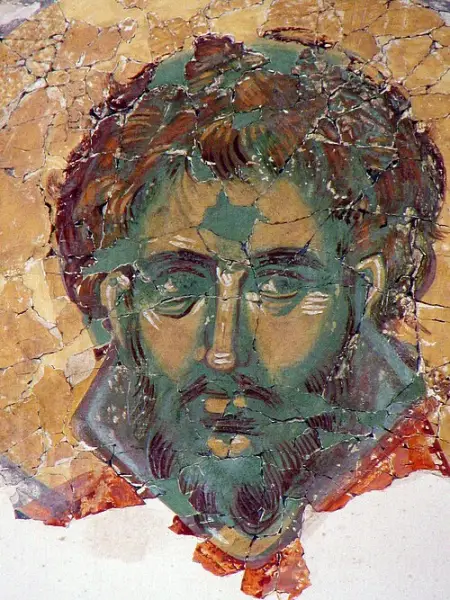
The memory of Nicetas was preserved from the first by those who had known him. Several medieval lives of the saint exist, and the most important of them was written by Theosterictus, who declares himself a disciple of Nicetas and records the master's life from within his own observance of it. Later generations added their witness in poetry: the Constantinopolitan hieromonk Joseph the Hymnographer, one of the greatest of Byzantine sacred poets, composed a canon in his honor, and in it described the life Nicetas had led as ascetic, pleasing to God, and full of charity. The same canon numbers him among the wonderworkers, crediting him with the gift of healing, and it is under this double aspect — confessor of the icons and healer of the sick — that the Church of the East has continued to venerate him. His feast is kept on 3 April in the Eastern Orthodox Church, and his story illustrates a type of sanctity the Byzantine tradition prized hardly less than martyrdom itself: the confessor's crown is won by enduring chains and banishment for the faith, without being called to shed his blood. In the frescoes of the Transfiguration Church at Kovalyovo, painted in 1380, and in the miniature of the Menologion of Basil II, his face has been handed down alongside those of the other doctors and confessors of the undivided Church.
§ Life
Timeline
- 790
After seven years at the Medikion Monastery, he was ordained presbyter.
§ Life
- 824
He died in a monastery near Constantinople; his remains were returned to Medikion.
§ Life
The Record
- Canonization
- Pre-congregation; venerated as a confessor in the Eastern Orthodox Church, commemorated April 3
Prayer
Bibliography
Show 6 sources
- "Lives of all saints commemorated on April 3".
- "Venerable Nicetas the Confessor the Abbot of Medikion", Orthodox Church in America.
- Arduino, Fabio. "San Niceta di Medikion", Santi e Beati. Archived from the original on 2014-08-30. Retrieved 2014-11-29.
- Perdikaris A.G. “Nicetas the confessor, bishop of Chalcedon” in Domus Byzantinus, vol.14, p.131-9 (2004-5).
- Bibliotheca Hagiographica Graeca, 1341.
- "www.anastasis.org.uk". Archived from the original on 2007-02-09. Retrieved 2007-03-16.
Profile text adapted from the Wikipedia article, licensed CC BY-SA 4.0.
Pray with this saint every day
Save St. Nicetas of Medikion to your favorites, read the full profile, and get feast-day reminders in the Saints app.
Get the Saints AppFree on the App Store for iPhone and iPad