
c. 335 – 414·Feast June 22
St. Nicetas of Remesiana
Bishop, hymnwriter, and missionary of Dacia
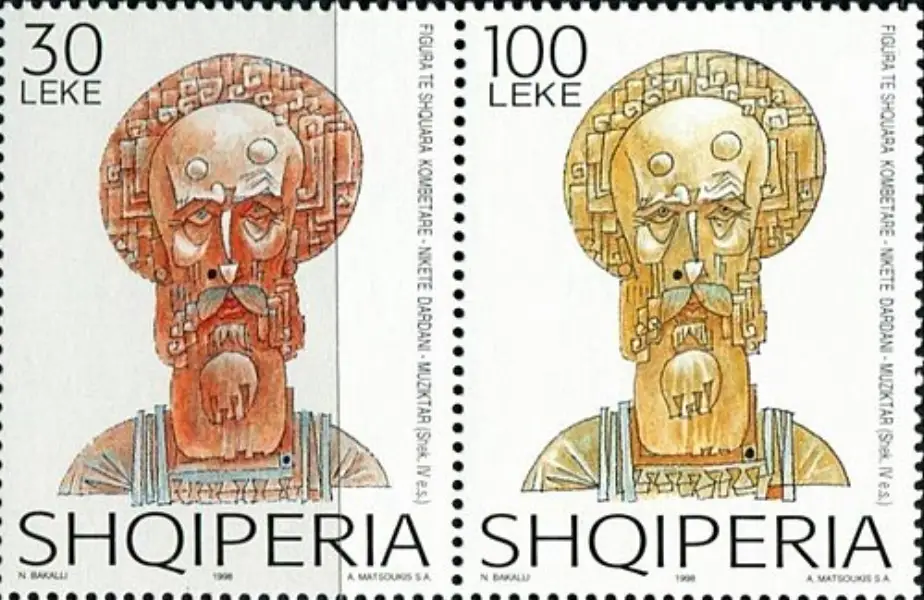
Overview
Nicetas of Remesiana, called the Dardanian, was a saint, writer, and theologian of the early Church who shepherded the see of Remesiana, a town in the Roman province of Dacia Mediterranea that lies within present-day Serbia. Born around the year 335, he belonged to the Dardanians, a paleo-Balkan people of the ancient Balkans commonly classed among the Illyrians, and he said of himself simply, "I am Dardanian." As bishop he became a figure of European importance in a frontier see. He promoted Latin sacred music for the liturgy and is credited with composing a number of liturgical hymns; some scholars of the nineteenth and twentieth centuries assigned to him the Te Deum, the great Latin hymn of praise traditionally ascribed to Ambrose and Augustine, though that attribution is now judged controversial. He is presumed to be the missionary who carried the Gospel to the Bessi, a barbarian Thracian tribe, and his friend Paulinus of Nola celebrated him in verse for turning wolves into sheep and teaching bandits to sing of Christ with a Roman heart. His principal doctrinal work, the six-book Instructions for Candidates for Baptism, survives in lengthy excerpts, defends orthodox Trinitarian doctrine, and contains the earliest known appearance of the phrase "communion of saints." He made a pilgrimage to Nola in 398 and died around 414, commemorated on 22 June.
The Complete Life
A Dardanian of the Balkan Provinces
Nicetas came into the world at a turning point in the history of the Roman Empire. Born around the year 335, within a generation of the conversion of Constantine, he belonged to the Dardanians, a paleo-Balkan people of the ancient Balkans usually reckoned among the Illyrians, whose homeland lay in the mountainous interior of the peninsula. He never forgot who he was: when his origin was in question he answered with the plain words, "I am Dardanian" — Dardanus sum in the Latin in which he wrote and prayed. The city of his episcopate, Remesiana, stood in the province of Dacia Mediterranea, deep in the northern Balkans, on ground that today belongs to Serbia at the town of Bela Palanka. To hold a bishopric in such a region in the late fourth century was to preside over a borderland of peoples and tongues, where the Latin-speaking structures of the empire met populations barely touched by Roman urban life. It was from this Dardanian frontier, and not from one of the great metropolitan sees, that Nicetas exercised an influence on the worship, doctrine, and missionary outreach of the Latin Church that learned men have debated and honored ever since. Little else is recorded of his upbringing or of the date and manner of his ordination; what survives is the work of his mature years.
§ Early life
Missionary to the Bessi and Friend of Paulinus
The fame of Nicetas as a missionary rests chiefly on the testimony of a friend who sang it. Paulinus of Nola, his contemporary and correspondent, praised him in poetry for his work of evangelization: for instructing in the Gospel barbarians whom his teaching reshaped from wolves into creatures of the peaceful flock, and for teaching bandits, who had never been able to do such a thing, to sing of Christ with a Roman heart. Modern scholars have wondered whether the barbarians of Paulinus' verse were real converts or merely a poetical topos, noting that Paulinus wrote in a classical Latin tradition that drew on established authorities — for Dacia, on Ovid, whose banished wilderness had made the region a literary symbol. But the article of tradition remains firm: Nicetas is thought to be the evangelist who carried the Gospel to the Bessi, a Thracian people of the Balkan mountains, and the picture his own writings confirm is of a bishop who carried catechesis and chant to peoples on the edge of the Christian world. To this work he joined a love of liturgical music, promoting Latin sacred song in divine worship and composing hymns of his own. In 398 he crossed the empire to make a pilgrimage to Nola in Campania, visiting the grave of Saint Felix, an act of devotion that bound the Dardanian bishop to the great ascetic circles of the Latin West.
§ Religious activities
Writings, the Te Deum Question, and Commemoration
The theological legacy of Nicetas rests on one substantial work. His Instructions for Candidates for Baptism, in six books, survives in lengthy excerpts, and it shows a bishop concerned above all to hand on the orthodox faith concerning the Trinity, stressing the orthodox position in Trinitarian doctrine at a time when the Nicene settlement was still contested in the Balkans. Within these instructions occurs the expression "communion of saints," describing the mystery that binds the faithful living and departed together in one hope and one love. Nothing in the record shows the phrase in use before him, and from his pen it passed into the central formulations of the Christian creed. To his name the tradition has also attached the most famous of all Latin hymns: certain scholars of the nineteenth and twentieth centuries numbered the Te Deum among his works, against the traditional attribution to Ambrose and Augustine, though the assignment is now considered controversial, and one recent student concludes that while no certainty exists as to his authorship, there is no doubt that the bishop of Remesiana could have influenced its creation. Whether or not the hymn is his, his reputation as a father of Latin church music endures. Both the Eastern Orthodox and Roman Catholic Churches number him among the saints, keeping his feast on 22 June.
§ Religious activities
Timeline
- 335
He was born in the Roman Empire, around this year.
§ Early life
- 398
He traveled to Nola on prayerful pilgrimage to the tomb of Saint Felix.
§ Religious activities
- 414
He died, closing an episcopate of several decades at Remesiana.
§ Early life
In Their Own Words
I am Dardanian
The Record
- Major works
- Instructions for Candidates for Baptism (six books)·Te Deum (attribution controversial)·Liturgical hymns composed for Latin worship
- Canonization
- Pre-congregation; venerated as a saint in the Roman Catholic and Eastern Orthodox Churches
Prayer
Bibliography
Show 8 sources
- "Letter of Pope John Paul II for the third centenary of the union of the Greek-Catholic Church of Romania with the Church of Rome".
- Dr Shaban Sinani & Eduard Zaloshnja (2004) Albanski kodeksi - The Codices of Albania. pages 161-170 in International Conference "Church Archives & Libraries" Collection of works from International conference Kotor 17th-18th April 2002. Kotor 2004 (English & Montenegrin)
- Trout, Dennis. "Nicetas of Remesiana." In The Oxford Dictionary of Late Antiquity. Oxford University Press, 2018.
- Łupiński J. Nicetas of Remesiana and his time. Studia Teologiczne Białystok Drohiczyn Łomża. 2015;33(1):337-56.
- "1994 | Gottfried Schramm: A New Approach to Albanian History". www.albanianhistory.net. Retrieved February 29, 2020.
- Philippe Blasen, "Nicetas of Remesiana - A Missionary Bishop in Dacia?" in Studia Universitatis Babeș-Bolyai Theologia catholica, 1-2, 2012, 39-49
- Kirsch, Johann Peter. "Nicetas." The Catholic Encyclopedia Vol. 11. New York: Robert Appleton Company, 1911. 27 February 2016
- Martyrologium Romanum. Libreria Editrice Vaticana 2001. ISBN 88-209-7210-7; Gross, Ernie. This Day In Religion. New York: Neal-Schuman Publications, 1990. ISBN 1-55570-045-4.
Profile text adapted from the Wikipedia article, licensed CC BY-SA 4.0.
Pray with this saint every day
Save St. Nicetas of Remesiana to your favorites, read the full profile, and get feast-day reminders in the Saints app.
Get the Saints AppFree on the App Store for iPhone and iPad