
1352 – 1426·Feast November 17
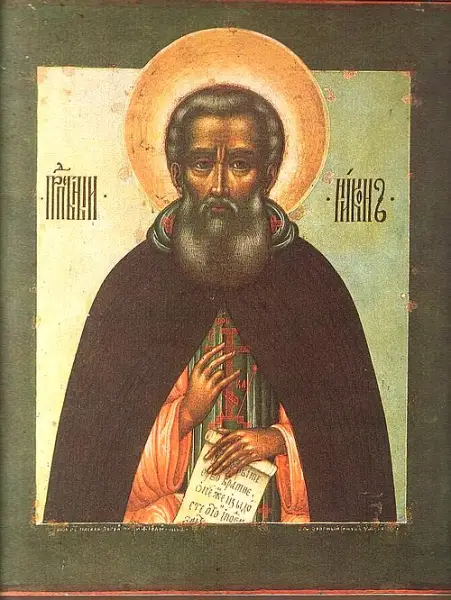
St. Nikon of Radonezh
Abbot of the Trinity Monastery of Sergius
Overview
Nikon of Radonezh was a Russian abbot, the chief disciple and successor of Sergius of Radonezh, and second hegumen of the Trinity Monastery. Born in 1352 into a prosperous merchant family of Yuryev-Polsky, he left home young in pursuit of the monastic life and took his vows at the Vysotsky Monastery in Serpukhov before being received into the brotherhood of Sergius. After Sergius died in 1392, Nikon assumed leadership of the monastery, first serving in seclusion while Sabbas of Storozhi held the abbacy, and then ruling it in his own right. His tenure spanned calamity and rebuilding: Edigu's invasion ravaged the monastery in 1408, yet within a few years Nikon had bought surrounding lands, raised a new cathedral, and set the community on firm footing. In 1422 he uncovered the relics of Sergius and built over them a stone cathedral decorated by Andrei Rublev and Daniel Chorny. Under his guidance the Trinity Monastery rose to dominance in Russian spiritual life. He died on 17 November 1426 and was buried near his teacher. The Russian Orthodox Church enrolled him among the saints in 1547.
The Complete Life
A Merchant's Son Who Chose the Cloister
Nikon was born in 1352 at Yuryev-Polsky, a town in north-eastern Rus. His vita records that he belonged to a wealthy merchant household, a background that made his eventual choice all the more striking. While still young he conceived a desire for the monastic life and left his parents' home, renouncing the prosperity into which he had been born. His first destination was the Trinity Monastery in the Radonezh forests, founded by Sergius of Radonezh, where he hoped to take monastic vows. The founder, however, judged otherwise: instead of keeping the young aspirant at Trinity, Sergius sent him to the Vysotsky Monastery at Serpukhov, another community that he himself had established at the request of Vladimir the Bold. There the young man would be formed in discipline and obedience before returning to the teacher whose disciple he was destined to become. The pattern of his early years — a summons answered, a detour accepted without complaint — set the shape of a life spent in quiet service beneath a great master and, in time, in quiet mastery himself. In this early renunciation lay the whole tenor of the life that followed.
§ Life
Disciple of Sergius
Nikon was ordained a priest, and around 1380 he made his monastic profession at the Vysotsky house. Two years later, in 1382, he departed Serpukhov and was received into the brotherhood at Trinity, entering at last the community that had first drawn him as a boy. Even then his formation proceeded slowly: he did not become a close disciple of Sergius until the final years of the saint's life, serving through long years of ordinary obedience before being entrusted with intimacy and confidence. When Sergius died in 1392, Nikon began to carry out the duties of abbot at the Trinity Monastery, though he did not immediately assume the office in name. Sabbas of Storozhi held the abbacy in the years 1392–1398, and throughout that period Nikon withdrew into seclusion, the hidden apprenticeship that preceded his public rule. After his return he became abbot in fact as well as duty, uniting in himself the memory of his teacher, the discipline of Serpukhov, and the silence of the cloister. Under his hands the brotherhood founded by Sergius passed securely from its first generation to its second.
§ Life
Rebuilder of the Trinity Lavra
Nikon's abbacy joined pastoral care with the material rebuilding of a devastated house. In 1408 the monastery was laid waste by the invasion of Edigu, and Epiphanius the Wise, together with the other monks, took refuge in Tver. Rather than abandon the ruined community, Nikon set about restoring and enlarging it. Between 1409 and 1411 he purchased nearby estates, among them lands in Dmitrov and Radonezh, greatly expanding the monastery's territory. In 1411 the building of a new timber cathedral dedicated to the Trinity reached completion, giving the brotherhood once more a house of prayer. The decisive moment of his tenure came in 1422, when he uncovered the relics of Sergius. By then the monastery's holdings had increased so considerably that the wooden cathedral could be moved aside and a stone cathedral raised in its place over the saint's grave, adorned with the work of the icon painters Andrei Rublev and Daniel Chorny. Under Nikon the Trinity Monastery became dominant in the spiritual life of Rus and a renowned place of pilgrimage, drawing monks and pilgrims to the shrine of its founder and to the community that had preserved his inheritance.
§ Life
Enrolled Among the Saints
Veneration of Nikon arose first within the Trinity Monastery itself, among the monks who prayed at his grave beside the relics of Sergius. From there his cult spread to other monasteries, and its widening into a national devotion owed much to the frequent visits of members of the ruling dynasty, beginning with Grand Prince Vasily II, who took the monastery under his patronage in 1456. In 1547 the Makaryev Sobor of the Russian Orthodox Church numbered Nikon among the saints, establishing his feast on 17 November, the day of his repose, and he was inscribed among the church's company of new miracle workers. A year later, a stone church rose above his tomb, giving permanent architectural form to the reverence of the brethren. His commemoration was later joined by a second feast on 6 July, kept together with the Synaxis of the saints of Radonezh and the disciples of Sergius. The monk whom Sergius had once sent away to be tested thus came to be honoured wherever Russian monasticism took root. So the disciple came to rest, in death as in life, at his master's side.
§ Veneration
Buried Beside His Teacher
Nikon's death came on 17 November 1426, within the walls of the Trinity Monastery he had served for more than four decades and was buried near Sergius, the master whose grave his own stone cathedral had crowned. His brethren raised a wooden chapel beside the monastery to shelter his body, and in time that chapel became a resting place for other figures of the community's golden age: twelve of Sergius' disciples were interred there together with Epiphanius the Wise, the saint's hagiographer. In this way Nikon's tomb became the centre of a whole company of Radonezh saints, a silent testimony to the brotherhood he had led. The monastery he rebuilt endured as the foremost spiritual house of Russia, and the stone Trinity Cathedral raised under his direction, with its paintings by Rublev and Chorny, remained among the chief glories of Russian church art. His feast of 17 November, with the secondary celebration of 6 July, keeps before the faithful the figure of a disciple who proved a worthy successor — a man who inherited a great legacy, defended it through invasion and poverty, and handed it on enlarged.
§ Life
Timeline
- 1352
Born at Yuryev-Polsky into a wealthy merchant family, according to his vita.
§ Life
- 1380
Took monastic vows at the Vysotsky Monastery at Serpukhov after being sent there rather than to Trinity.
§ Life
- 1382
Left Serpukhov and was accepted into the brotherhood of Sergius of Radonezh.
§ Life
- 1392
Began fulfilling the duties of abbot of the Trinity Monastery following the death of Sergius.
§ Life
- 1398
Returned from seclusion and became abbot in his own right after Sabbas of Storozhi stepped down.
§ Life
- 1408
Saw the monastery devastated by Edigu's invasion of Russia.
§ Life
- 1409
Began buying up neighbouring lands, among them holdings in Dmitrov and Radonezh, to enlarge the monastery's territory.
§ Life
- 1411
Completed construction of a new wooden Trinity Cathedral.
§ Life
- 1422
Uncovered the relics of Sergius and oversaw the building of a stone cathedral in place of the wooden one.
§ Life
- 17 Nov 1426
Reposed at the Trinity Monastery and was laid to rest beside Sergius.
§ Life
- 1456
Grand Prince Vasily II took the monastery under his patronage, spreading Nikon's veneration nationally.
§ Veneration
- 1547
Canonized at the Makaryev Sobor, which established his feast on 17 November.
§ Veneration
- 1548
A stone church was raised over his grave.
§ Veneration
The Record
- Major works
- Rebuilding and expansion of the Trinity Monastery after the invasion of 1408·New wooden Trinity Cathedral (completed 1411)·Stone Trinity Cathedral over the relics of Sergius, with frescoes and icons by Andrei Rublev and Daniel Chorny (1422)
- Canonization
- Canonized in 1547 at the Makaryev Sobor, the council of the Russian Orthodox Church
Prayer
Bibliography
Show 4 sources
- Kuzmin, A. V. (2018). "Никон". Православная энциклопедия. Т. L: Никодим — Никон, Патриарх Антиохийский. Moscow: Православная энциклопедия. pp. 713–725. ISBN 978-5-89572-057-8.
- Miller, David B. (2010). Saint Sergius of Radonezh, His Trinity Monastery, and the Formation of the Russian Identity. Cornell University Press. ISBN 978-1-5017-5661-0.
- Bushkovitch, Paul (1992). Religion and Society in Russia: The Sixteenth and Seventeenth Centuries. Oxford University Press. ISBN 978-0-19-506946-4.
- "Никон, игумен Троицкой обители". Brockhaus and Efron Encyclopedic Dictionary (in Russian). 1906.
Profile text adapted from the Wikipedia article, licensed CC BY-SA 4.0.
Pray with this saint every day
Save St. Nikon of Radonezh to your favorites, read the full profile, and get feast-day reminders in the Saints app.
Get the Saints AppFree on the App Store for iPhone and iPad