
1060 – 1137·Feast March 6
St. Olegarius
Archbishop of Tarragona and Church Reformer
Overview
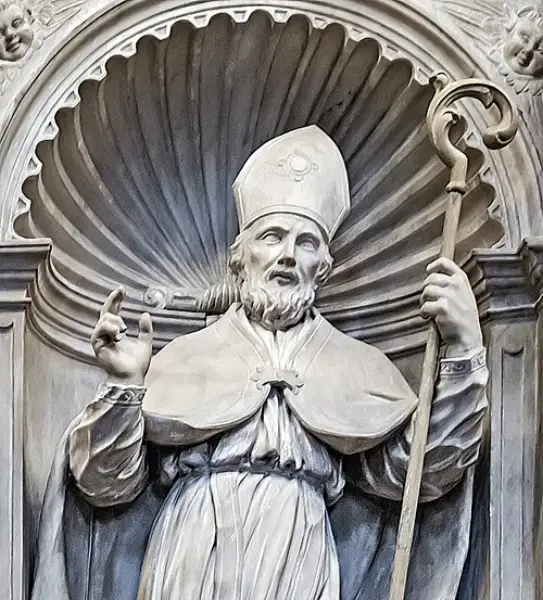
Olegarius Bonestruga, known in Catalan as Oleguer, was a Catalan churchman of the Gregorian reform who held the see of Barcelona from 1116 and the metropolitan chair of Tarragona from 1118 until his death, 6 March 1137. Born to a noble family of Barcelona, he entered the cathedral canons as a boy, served as provost of the canonries of Barcelona and Sant Adrià de Besós, and rose to be abbot of the Augustinian monastery of Saint-Ruf in Avignon, where he helped broker the Mediterranean alliance against the Almoravid pirates that produced the expedition against the Balearics of 1113–15. As archbishop he held full jurisdiction over the frontier province of Tarragona, laboring to rebuild its churches, resettle its countryside, and gather knights for its defense, while attending the great reforming councils of his age from Toulouse and Rheims to the First Lateran. A close counselor of the counts of Barcelona and an able diplomat, he established the archconfraternity for the restoration of Tarragona, negotiated treaties and marriage alliances, helped establish the Knights Templar in Catalonia, and in December 1134 brokered peace between the kings of Aragon and Castile at Zaragoza. Canonized in 1675, he rests in a side chapel of the cathedral of Barcelona, where his feast is kept on the day of his death.
The Complete Life
A Son of Barcelona
Olegarius was born in 1060 into the noble society of Barcelona, in an age when the county stood on the military and religious frontier between Christendom and al-Andalus. His father had served the count Ramon Berenguer I of Barcelona, and his mother, Guilla or Guilia, came from to the same aristocratic world of office and land. The direction of his life was settled early: when he was ten years old he joined the guild of cathedral canons at Barcelona, growing up inside the liturgical and scholarly life of the cathedral close rather than the castle court. He advanced through the canonical ranks until he served as superior, the provost, first of the canonries of Barcelona and then of Sant Adrià de Besós, an office he held from 1095 to 1108. These were the years in which the reforming party in the Church sought to gather secular canons into disciplined common life, and the young provost's career pointed steadily toward that movement. In time he crossed the Pyrenees to become abbot of the Augustinian monastery of Saint-Ruf in Avignon, from 1113 to 1118, the house that had given the canons regular their name, and the Catalan nobleman became one of the leading Augustinian reformers of the western Mediterranean.
§ Early ecclesiastical career
Abbot and Diplomat
Olegarius's abbacy at Saint-Ruf showed the mixture of prayer and statecraft that marked his whole career. From Avignon he mediated a Mediterranean alliance binding the Republic of Pisa, the Kingdom of Cagliari, the County of Provence, and Barcelona in a common cause against the Almoravid pirates who operated from the Balearic Islands; the compact bore fruit in the naval expedition of 1113–15 against the islands. The Pisan account of that campaign, the Gesta triumphalla per Pisanos of the deacon Enric, preserves his name, though it mangles it as Nogelarius or Nigelarius, one of several spellings a cosmopolitan career would accumulate; he was also, at some point, a member of the confraternity of San Pedro de la Portella. His reputation brought him back to Catalonia in 1116, when Count Ramon Berenguer III named him bishop of Barcelona. He was consecrated by Cardinal Boso of Sant'Anastasia in the cathedral of Maguelone in Occitania, during the pontificate of Paschal II, and in 1117 he traveled to Rome to pay homage to Pope Gelasius II—a pope who, in his monastic days, had lived at Saint-Ruf beneath Olegarius's authority. The abbot of an international reform house had become the bishop of a frontier county, and he carried the trust of both pope and count into his new office.
§ Early ecclesiastical career
Restorer of Tarragona
The great enterprise of Olegarius's episcopate was the restoration of Tarragona, the ancient metropolitan see on the coast that had been re-conquered from the Moors but lay nearly deserted. On 8 March 1118 he was consecrated its archbishop, remaining bishop of Barcelona, by Gelasius II, who confirmed him by bull and pallium, both following on 21 March. By an arrangement settled on 23 January 1118, Count Ramon Berenguer III conveyed the secular lordship of Tarragona and its countryside to the church pending reconquest, and the pope added ecclesiastical administrative rights over the projected, still unconquered, diocese of Tortosa. Olegarius set about his task on every front. Between 1126 and 1130 he labored at rebuilding the city and its churches above all, encouraged resettlement and colonization, and worked to draw knights and soldiers to defend the new territory, and benefices flowed regularly from his hand throughout the years of his greatest exertion in New Catalonia. The First Lateran council had given him legatine rank a latere for the crusade in that province, taking the title of dispenser or rector of Tarragona, and in 1126–1127 he began encouraging a second crusading effort, compensating William V of Montpellier for knights lent to Barcelona and reconciling that lord with his son to strengthen the anti-Almoravid alliance. In 1129 he entrusted the district's secular defense to Robert Bordet as prince of Tarragona, and concentrated on restoring the metropolis itself.
§ Restoration of Tarragona
The Reformer's Way
As a churchman Olegarius belonged firmly to the reforming tradition of the Gregorian age, and his spirituality expressed itself in institutions rather than in writings. He was often present at the papal synods where that program was forged, his presence marking Toulouse in 1119, Rheims the following year, the First Lateran in 1123, then Narbonne in 1129 and Clermont in 1130, and a return to Rheims in 1131; at Clermont he probably met Bernard of Clairvaux, whose arguments helped bring about the condemnation of the antipope Anacletus II. His reforming zeal was Augustinian: in the 1120s he transformed the monastery of Santa Eulàlia outside Barcelona into a community of canons regular and was broadly engaged in the Augustinian renewal of Catalonia's monasteries. The same instinct produced his most original work, the brotherhood he raised to rebuild the church of Tarragona, begun on a local footing in 1126 and confirmed as an interprovincial brotherhood by the council of Narbonne in 1129, through which lay and clerical members, noble or otherwise, paid dues that flowed to his archdiocese for the rebuilding of the frontier church. His charity took practical forms: in 1133 he left the beds and bedding of departed clergy to En Guitard's hospital in Barcelona. And his zeal could be severe: in 1132 he laid an excommunication on the monastery of Santa Maria de Ripoll in a dispute over the right to judge crimes committed on its lands.
§ Ecclesiastical reformer and leader
The Last Years
The close of Olegarius's life was spent in the service of peace among the warring Christian powers of Spain. In 1129 he had been drawn into the Investiture Controversy between papacy and empire and returned to southern France to stand with the pope in exile; he passed briefly through Barcelona and Castile, attending the council of San Zoilo on 4 February 1130, before going back to France. He was in Barcelona for the court of 1131, where he successfully petitioned for the restoration of the tithe on the revenues of the port, which his newly negotiated treaty with the Republic of Genoa had just enlarged. In 1134 he helped establish the Knights Templar in Catalonia, a militia that would serve God and fight in the land, to carry on the defense of the frontier he had spent his archiepiscopate rebuilding. That December, at Zaragoza, he played an important part in brokering peace between Ramiro II of Aragon and Alfonso VII of Castile, kings whose quarrels threatened the Christian cause in Spain. He had already, at some point after the Catalan defeat at Corbins in 1124, made a pilgrimage to the Holy Land, cutting his stay short at Antioch out of concern for his flock and returning by 1127. He died in Barcelona on 6 March 1137, and the date of his death became the day of his feast.
§ Diplomatic activity
Canonization and Cult
Olegarius was honored as a saint by the Church of Catalonia long before his cause reached Rome. His canonization came in 1675, when Pope Clement X, having pronounced his beatification on 25 May of that year in Rome, raised the archbishop of Tarragona to the altars more than five centuries after his death. His major shrine and sepulchre were set in the cathedral of his native city, in the side chapel of Christ of Lepanto, where the faithful still venerate him on 6 March. The literary record of his sanctity has a tangled history that his canonizers themselves acknowledged in part: for the proceedings there was composed an untrustworthy vita, drawn from the fourteenth-century Vitae sancti Ollegarii, itself dependent on a lost twelfth-century life usually ascribed to Renald the Grammarian, a contemporary of Olegarius in Barcelona. The chain of documents means that the modern historian reads his career through medieval lenses polished for a canonization, yet the core facts of his reforming activity, confirmed by the acts of the councils he attended and by the charters he signed, have survived the sifting. In Barcelona his memory remained fixed to the cathedral where he had served as a boy canon and where he now lies, the nobleman who had entered that church at the age of ten and never wholly left it again.
§ Introduction
Legacy
Olegarius's legacy lies in the institutions he built and the settlements he brokered, which shaped Catalonia for generations after his death. The archconfraternity of Tarragona pioneered a form of lay-financed reconstruction of the Christian frontier that outlived him, and the jurisdictional arrangement by which the church of Tarragona held the secular lordship of the reconquered territory anticipated the churchly principalities of the Spanish Reconquista. His diplomacy drew the counts of Barcelona into the politics of Provence, Pisa, and Genoa: he negotiated the marriage alliance between Douce I, Countess of Provence, and Ramon Berenguer III, and, in a match that would alter the history of the peninsula, the marriage of Petronila of Aragon to Ramon Berenguer IV, the union from which the crown of Aragon grew. The Knights Templar he helped establish in Catalonia in 1134 carried the military defense of New Catalonia forward when his own strength was spent. Modern historians have returned to him repeatedly, for his career touches the Augustinian reform, the crusading movement in Spain, the Investiture Controversy, and the early history of the Templars all at once. In the cathedral of Barcelona his sepulchre in the chapel of Christ of Lepanto keeps his memory before the faithful, and his feast on 6 March marks the passing of the restorer of Tarragona.
§ Ecclesiastical reformer and leader
Timeline
- 1060
Born in Barcelona to a noble family, son of a follower of Count Ramon Berenguer I
§ Early ecclesiastical career
- 1095
Holds the superior's office over the canonries of Barcelona, afterward of Sant Adrià de Besós
§ Early ecclesiastical career
- 1113
As abbot of Saint-Ruf in Avignon, mediates the anti-Almoravid alliance behind the Balearic expedition of 1113–15
§ Early ecclesiastical career
- 1116
Named bishop of Barcelona by Ramon Berenguer III and consecrated at Maguelone during the pontificate of Paschal II
§ Early ecclesiastical career
- 1117
Travels to Rome to pay homage to Pope Gelasius II
§ Early ecclesiastical career
- 8 Mar 1118
Consecrated archbishop of Tarragona, retaining the see of Barcelona, with the pallium confirmed on 21 March
§ Restoration of Tarragona
- 1122
Puts his signature at Montearagón to the founding charter of Belchite's military confraternity
§ Diplomatic activity
- 1123
At the First Lateran council is declared legate a latere over the crusade in New Catalonia
§ Ecclesiastical reformer and leader
- 1124
After the Catalan defeat at the Battle of Corbins, undertakes a pilgrimage to the Holy Land, returning by 1127
§ Restoration of Tarragona
- 14 Mar 1129
Hands over the secular rule of the Tarragona district to Robert Bordet, made princeps Tarraconensis
§ Restoration of Tarragona
- 4 Feb 1130
Attends the council of San Zoilo in Castile
§ Ecclesiastical reformer and leader
- 1134
Helps establish the Knights Templar in Catalonia to serve God and fight in the land
§ Diplomatic activity
- Dec 1134
At Zaragoza, brokers a peace between Ramiro II of Aragon and Alfonso VII of Castile
§ Diplomatic activity
- 6 Mar 1137
Dies in Barcelona; his feast is afterwards kept on the date of his death
§ Introduction
The Record
- Major works
- Archconfraternity (confratrium) for the restoration of the church of Tarragona·Augustinian reform of the Catalan monasteries, including Santa Eulàlia outside Barcelona
- Canonization
- Beatified 25 May 1675 and canonized in 1675 by Pope Clement X
Prayer
Bibliography
Show 6 sources
- Bishko, Charles Julian. "The Spanish and Portuguese Reconquest, 1095–1492". A History of the Crusades, vol. 3: The Fourteenth and Fifteenth Centuries. Harry W. Hazard, ed. Madison: University of Wisconsin Press, 1975.
- Bisson, Thomas N. The Medieval Crown of Aragon: A Short History. Oxford: Clarendon Press, 1986. ISBN 0-19-821987-3.
- Brodman, James William. Charity and Welfare: Hospitals and the Poor in Medieval Catalonia. University of Pennsylvania Press, 1998.
- Fletcher, R. A. "Reconquest and Crusade in Spain, c. 1050–1150." Transactions of the Royal Historical Society, 5th Ser., 37 (1987), pp. 31–47.
- Freedman, Paul H. The Diocese of Vic: Tradition and Regeneration in Medieval Catalonia. New Jersey: Rutgers University Press, 1983.
- McCrank, Lawrence J. "The Foundation of the Confraternity of Tarragona by Archbishop Oleguer Bonestruga, 1126–1129." Viator, 9 (1978) pp. 157–168.
Profile text adapted from the Wikipedia article, licensed CC BY-SA 4.0.
Pray with this saint every day
Save St. Olegarius to your favorites, read the full profile, and get feast-day reminders in the Saints app.
Get the Saints AppFree on the App Store for iPhone and iPad