
died 138·Feast March 5
St. Oliva of Brescia
Virgin Martyr of Hadrian's Persecution at Brescia
Overview
Oliva — sometimes written Olivia — died in the year 138, put to death for the faith during the reign of the emperor Hadrian. Her relics are venerated at the church of Saint Afra in Brescia, the Lombard city that keeps her feast on 5 March. She belongs to the earliest generation of northern Italian martyrs, those whose witness predates any formal process of canonization and whose names survive through local liturgical memory rather than written passion narratives. The brevity of her record is not the brevity of her witness: like the many virgin martyrs of the Hadrianic era, she stands for the Christian of the second century who chose death over apostasy, and whose body, treasured by a grateful community, made the church that housed it a place of prayer for centuries afterward.
The Complete Life
Martyrdom Under Hadrian
The one dated certainty of Oliva's life is its end: she died in 138, the final year of the emperor Hadrian's reign, put to death for adherence to the Christian faith. The second century was for the Church an age of informal but lethal danger; a believer who refused the gods of the empire could be condemned at the discretion of any magistrate, and the populations of northern Italy saw their share of such condemnations. Whatever her age and station — her title of virgin has attached to her cult from the beginning — Oliva stood in the dock of that world and did not bend. The particulars of her passion, the place of her trial, the manner of her execution have all been lost to time, swallowed by the distance between her generation and the first written collections of the acts of the martyrs. What the community of Brescia remembered, and transmitted, was simpler and harder: that one of their own had died for Christ under Hadrian, in the year the emperor himself died, and that her blood had consecrated their city.
§ Introduction
A Pre-Congregation Saint
Oliva was never canonized in the modern sense; she belongs wholly to the pre-congregation era, when the Church recognized as saints those whom the memory of the local community and the witness of their death had already declared. Her veneration is shared by the Greek Orthodox and the Roman Catholic churches, a sign that her cult belongs to the undivided heritage of the first Christian centuries, before the great schisms divided the East from the West. The Church keeps her feast on 5 March, when she is commemorated among the martyrs of the day in the calendars of both traditions. Saints of her kind — attested by cult rather than by contemporary biography — form the ancient foundation of the sanctoral calendar: their names were carried forward not because chroniclers wrote their lives but because congregations would not let their memory lapse, and the honor paid to their graves became, over generations, the fixed testimony of their holiness. In Oliva's case that fidelity centered on Brescia and on the liturgical date attached to her passion, handed from generation to generation of the faithful of the Lombard city until it reached the printed calendars, the martyrologies, and the indices of the saints that preserve it today for the whole Church.
§ Introduction
Relics at the Church of Saint Afra
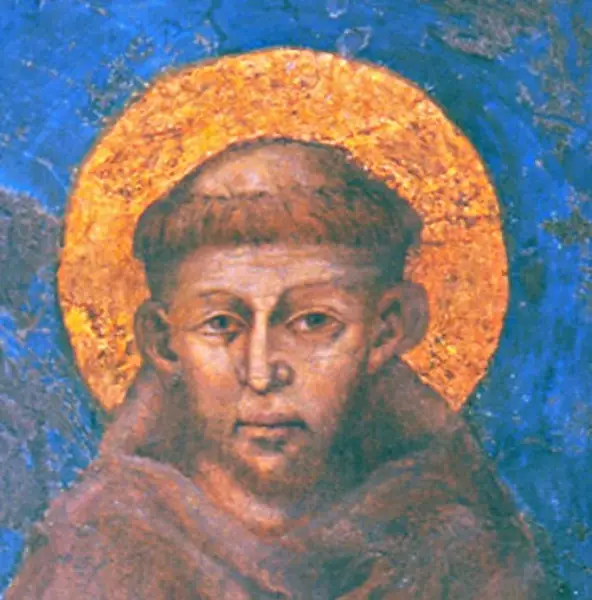
The tangible center of Oliva's cult is the church of Saint Afra in Brescia, where her relics have been venerated for centuries. The pairing is fitting: Afra herself was a martyr of the ancient church, and Lombard Brescia, like many cities of the north, kept its martyrs close, laying their remains beneath or beside the altars where the Eucharist was celebrated so that the community might pray in the company of those who had died for the faith celebrated there. To house a martyr's relics was to claim her as the city's own intercessor, and the church that received Oliva's remains became a station of her memory in the religious geography of Brescia. Beyond the city her name traveled in the usual ways of early cult — through calendars of the saints and collections made for the instruction of the faithful, and even in painted icons that carried her image to the devout who would never visit Lombardy; an icon of Saint Olivia was listed among the devotional treasures connected with her name. Her feast on 5 March keeps that memory alive each year, joining the ancient church of Brescia to the communion of saints of every later age, and making of one obscure second-century death a living intercession that has not ceased in eighteen centuries.
§ Introduction
The Record
- Canonization
- Pre-congregation; venerated as a martyr since antiquity in the Greek Orthodox and Roman Catholic churches
Prayer
Bibliography
Show 3 sources
- "Icon of St Olivia".
- "Oliva at Patron Saints Index".
- "5 March saints at SaintPatrickDC.org".
Profile text adapted from the Wikipedia article, licensed CC BY-SA 4.0.
Pray with this saint every day
Save St. Oliva of Brescia to your favorites, read the full profile, and get feast-day reminders in the Saints app.
Get the Saints AppFree on the App Store for iPhone and iPad