
c. 1856 – 21 June 1931·Feast June 21
St. Onesimos Nesib
Oromo scholar who translated the Bible into his mother tongue
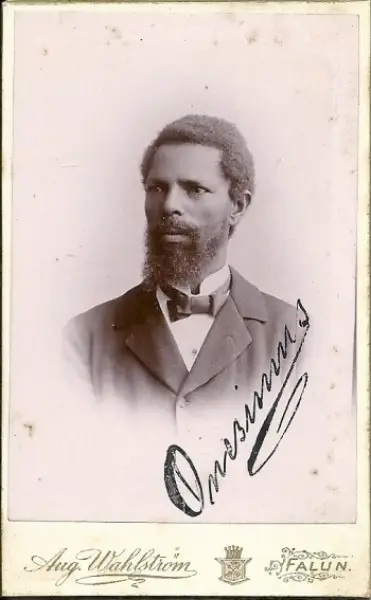
Overview
Onesimos Nesib was an Oromo scholar, born around 1856 near Hurumu in what is now Ethiopia, who became a Lutheran Christian and produced the first complete rendering of the Bible in the Oromo language. His parents named him Hika, meaning Translator, and the name proved prophetic. Kidnapped by slave raiders in 1869, he passed through eight owners before being freed at Massawa by Werner Munzinger, who placed him in the Imkullu Swedish Evangelical Mission school. Baptized on Easter Sunday 1872, he took the biblical name Onesimus and later studied for five years at the Johannelund missionary seminary in Bromma, Sweden. Repeated attempts to carry the Gospel back to his own people were frustrated by travel restrictions, illness, and war, so he began translating Scripture from the Red Sea coast instead, aided by Aster Ganno, a rescued slave girl whose linguistic knowledge supplied much of the material. He finally reached Welega in 1904, preached in the Oromo tongue over the objections of Ethiopian Orthodox clergy, endured accusations and a threatened exile, and lived under restrictions until 1916. He continued to preach and distribute his translations until his death on 21 June 1931, and is honored as a pioneer of modern Oromo literature.
The Complete Life
A Childhood Stolen and Restored
The child who would become Onesimos Nesib was born around 1856 near Hurumu, in the Oromo lands of what is now Ethiopia. His parents called him Hika, a name meaning Translator, though no one could then foresee how literally it would be fulfilled. His father died when the boy was four years old, leaving the family exposed in a region where slave raiders operated with impunity. In 1869 the worst came: the boy was seized by slavers and sold onward, passing through the hands of eight different owners. In a letter he later wrote to the Board of the Swedish Evangelical Mission, he recounted this ordeal in his own words, an account that modern scholars have preserved in the Acta Aethiopica collection. His deliverance came at Massawa, on the Red Sea coast, where Werner Munzinger secured his freedom and enrolled him in the Imkullu Swedish Evangelical Mission school in that port city. There the captive proved an able student, and on Easter Sunday, 31 March 1872, he received baptism, taking the name Onesimus from the runaway slave of the New Testament letter to Philemon. The choice of name joined his own history of bondage and liberation to one of the most pointed stories of the early church.
§ Life
Called to Carry the Book Home
Baptism set the young Onesimus on a missionary path. Recognizing his gifts, the mission community sent him from Massawa to Sweden, where he spent five years in study at the Johannelund missionary seminary in Bromma, absorbing theology, languages, and the disciplines of translation. When he returned to Massawa he married Mehret Hailu, forming a household suited to the missionary life he intended to lead. His purpose was single: to go back to the Macha Oromo, the people of his birth, with the Christian Scriptures in their own language. Emperor Menelik II had imposed travel restrictions on foreign missionaries seeking to enter the Oromo country, and Onesimos hoped to evade the blockade by approaching Welega from an unexpected quarter, traveling through central Sudan. The scheme collapsed in the field. His party advanced no farther than Asosa and was compelled to withdraw to the border town of Famaka, where he fell dangerously ill with fever. Driven back north, they reached Khartoum on 10 April 1882, arriving just as the Mahdist revolt erupted across the Sudan. Onesimos survived both sickness and the gathering war, made his way back to the Imkullu Mission, and there, while awaiting fresh instructions, began the first of what would become many translations into Oromo.
§ Life
Translation Against Every Obstacle
After a second failed attempt to reach Welega in 1886, Onesimos committed himself to the task he could complete from exile: the translation of the entire Bible into Oromo. The work revealed a humbling weakness. Having left his people as a child, he lacked the full range of words and idioms that living speech requires, and he needed help. It came through Aster Ganno, a young girl the Italian navy had rescued from a slave ship bound for Yemen and brought to the Imkullu Mission. Ganno supplied much of the linguistic material on which the translation rested, gathering vocabulary and phrasing from the living language, though she received no public acknowledgement of her contribution when the Bible appeared in 1893. The following year Onesimos published an Oromo Spelling Book with the Swedish Mission Press at Moncullo, giving his people not only Scripture but the tools of literacy. A decade of further waiting followed before passage home was possible. In 1904 he at last reached Welega, settling at Nedjo, where the governor, Dejazmach Gebre Egziabher, received him with great honor. Unlike the foreign missionaries before him, Onesimos preached to the people in Oromo, the tongue they actually used, and the Ethiopian Orthodox clergy of the district, unable to follow the services, quickly learned to resent them.
§ Life
The Word in the People's Tongue
The conviction that shaped Onesimos's whole life was that the Gospel must speak the language of the hearer. It was foreshadowed in the name his parents gave him, Hika, the Translator, and confirmed in everything he did: the years of seminary study, the stubborn journeys toward Welega, the decision to translate from the coast when the road home was barred. In the field his vernacular preaching set him apart from the established order. The Ethiopian Orthodox clergy at Nedjo could not follow the Oromo services, and the esteem in which the local people held the new teacher sharpened their hostility. Priests alleged that he was blaspheming the Virgin Mary, and in May 1906 he was brought before Abuna Mattheos, who ordered his exile on the strength of those accusations. The sentence did not stand. Emperor Menelik II reversed the Abuna's decision and ruled instead that Onesimos could remain at Nekemte on condition that he preach no longer. For years afterward he confined his public activity to teaching in his school at Nekemte, forming students rather than congregations, while the threat of renewed exile hung over him. His endurance through trial, silence, and restriction became as much a part of his witness as the printed page.
§ Life
Permission to Preach at Last
The restrictions under which Onesimos lived began to lift only late in his life. In 1916 Lij Iyasu, then the designated but uncrowned emperor, authorized him to preach his faith without restriction. Iyasu fell from power the next year, yet the edict was never rescinded, and the old translator regained the freedom he had been denied for a decade. He used it quietly and steadily. Until his death he continued the two labors that had defined him: distributing the translations he had made, and preaching in the Oromo tongue among his own people. The Bible that had appeared in 1893, the spelling book of 1894, and the school at Nekemte formed the durable machinery of a movement that no longer depended on his personal presence. He died on 21 June 1931, having lived to see Oromo Christians reading Scripture in a language that imperial and ecclesiastical authority had once tried to exclude from the sanctuary. The date of his death became the date of his commemoration, and the man who had been kidnapped, sold, exiled in effect, and forbidden to preach ended his days as a free herald of the book he had carried home.
§ Life
Commemoration Among the Lutherans
Onesimos Nesib never underwent a formal process of canonization, in keeping with Lutheran practice, but the churches that trace their heritage to the mission world of the nineteenth century honor him as a saint in the older sense of the word. The American Lutheran Book of Worship includes him in its calendar, and the churches that use it commemorate his life on 21 June, the anniversary of his death in 1931. In Ethiopia the Mekane Yesus Church paid him a distinctive tribute by naming its seminary in Addis Ababa for him, so that every generation of Ethiopian Lutheran pastors trains in an institution that bears the translator's name. This recognition reflects the judgment of the churches that his labors fulfilled the classic marks of sanctity: suffering endured for the Gospel, fidelity under restriction, and a gift, the Oromo Bible, that outlived him. He is regarded as a pioneer of modern Oromo literature, since his translation and spelling book helped establish the written forms of the language. His commemoration stands alongside that of the other missionary translators of the Lutheran calendar, a company of scholars who believed that no tongue is too humble for Scripture and no captive beyond the reach of providence.
§ Life
Pioneer of Oromo Letters
The measure of Onesimos Nesib lies less in institutions he founded than in a language he equipped. By rendering the Bible into Oromo and publishing a spelling book the following year, he helped establish Oromo as a literary language at a time when the people who spoke it were largely shut out of both literacy and official religion. Scholars of Oromo writing identify him as the pioneer of its modern literature, and later studies, such as Mekura Blucha's account of his contributions to Oromo writing, place his work at the fountainhead of the tradition. The translation of 1893 was not his achievement alone: Aster Ganno's linguistic labor was essential to it, and her unacknowledged contribution has become part of the story's moral weight. The school he kept at Nekemte during his years of restriction trained believers even when preaching was forbidden, and the seminary in Addis Ababa that bears his name continues the work of forming Oromo church leadership. Historians of the Ethiopian church, notably Gustav Arén in his study of the evangelical pioneers, treat him as a central figure in the encounter between Oromo society and Protestant Christianity. For the churches that commemorate him each 21 June, his life demonstrates that translation is itself an act of liberation.
§ Life
Timeline
- 1856
Born near Hurumu in western Ethiopia to an Oromo family, and given the name Hika.
§ Life
- 1869
Kidnapped by slave raiders and sold through eight successive owners before reaching the coast.
§ Life
- 31 Mar 1872
Baptized on Easter Sunday at the Imkullu Swedish Evangelical Mission in Massawa, taking the name Onesimus.
§ Life
- 10 Apr 1882
Reached Khartoum with his overland party just as the Mahdist revolt broke out, recovering from fever there.
§ Life
- 1886
Attempted a second unsuccessful journey toward Welega, then began translating the entire Bible into Oromo.
§ Life
- 1893
His Oromo translation of the Bible, built with linguistic material gathered by Aster Ganno, was published.
§ Life
- 1894
Published the Oromo Spelling Book through the Swedish Mission Press at Moncullo.
§ Publications
- 1904
At last returned to Welega, settling at Nedjo and receiving an honored welcome from governor Dejazmach Gebre Egziabher.
§ Life
- May 1906
Brought before Abuna Mattheos on accusations from local Orthodox clergy and ordered exiled, though Emperor Menelik reversed the ruling.
§ Life
- 1916
Lij Iyasu authorized him to preach openly, a decree that stood even after the emperor's deposition.
§ Life
- 21 Jun 1931
Died in Ethiopia after decades of preaching and distributing his Oromo translations.
§ Life
The Record
- Major works
- Oromo translation of the Bible (1893)·The Oromo Spelling Book (1894)
- Canonization
- Not formally canonized; commemorated as a saint in the American Lutheran Book of Worship on 21 June
Prayer
Bibliography
Show 5 sources
- Jalata, Asafa (2001). Fighting Against the Injustice of the State and Globalization: Comparing the African American and Oromo Movements, p. 73.
- Rubenson, Sven. Acta Aethiopica: Internal Rivalries and Foreign Threats, 1869-1879. Addis Ababa: University Press, 2000, pp. 206f. ISBN 0-7658-0728-9.
- Prouty, Chris (1986). Empress Taytu and Menilek II: Ethiopia 1883-1910. Trenton: The Red Sea Press, p. 300. ISBN 0-932415-10-5.
- Arén, Gustav. 1978. Evangelical Pioneers in Ethiopia. Stockholm: EFS Vorlage.
- Mekura Blucha, "Onesimos Nasib's Pioneering Contributions to Oromo Writing", Nordic Journal of African Studies 4(1): 36-59 (1995).
Profile text adapted from the Wikipedia article, licensed CC BY-SA 4.0.
Pray with this saint every day
Save St. Onesimos Nesib to your favorites, read the full profile, and get feast-day reminders in the Saints app.
Get the Saints AppFree on the App Store for iPhone and iPad