
c. 604 – 642·Feast August 5
St. Oswald of Northumbria
King and martyr who brought Christianity to Northumbria
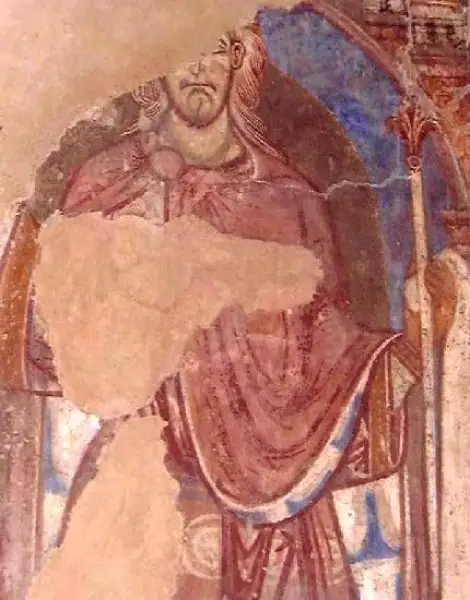
Overview
Oswald was king of Northumbria from 634 until his death on the battlefield, and one of the most beloved royal saints of the Anglo-Saxon world. Born around 604, the son of Æthelfrith of Bernicia and Acha of Deira, he passed his youth in exile among the Scots of Dál Riata after his father's fall, and there he embraced the Christian faith. Recalled by the collapse of Northumbrian power before Cadwallon ap Cadfan and Penda of Mercia, he raised a small army, won a crushing victory at Heavenfield near Hexham, and reunited Bernicia and Deira under one crown. Bede praises him as the most powerful ruler in Britain, a Bretwalda who spread Christianity among his people: he invited the Irish monks of Iona to evangelize Northumbria, granted Aidan the island of Lindisfarne as his see, and served as his interpreter in preaching. Celebrated for his generosity to the poor, he was killed on 5 August 641 or 642 at the Battle of Maserfield against the Mercian king Penda, dying, it was said, with a prayer for his soldiers on his lips. His relics were recovered, translated, and venerated at Bardney, Bamburgh, Lindisfarne, Gloucester, and Durham.
The Complete Life
A King's Son in Exile
Oswald was born around 604, the son of Æthelfrith, the successful war-leader who first joined the crowns of Bernicia and Deira, and of Acha, a princess of the Deiran royal house his father had won along with her kingdom. His early years belonged to a world still divided between distinct peoples, before any common Northumbrian identity had formed. The fortune of his house collapsed in 616, when Æthelfrith fell in battle on the River Idle against Raedwald of East Anglia, and Edwin, Acha's exiled brother, took the whole of Northumbria. Oswald and his brothers fled north, and the rest of his youth was spent in the Scottish kingdom of Dál Riata. There, far from his father's kingdom, he was converted to Christianity, the faith that would shape his reign. Irish tradition may remember him among Saxon princes fighting in Ireland; an Irish poem even names one of three such princes as Osalt. When Edwin fell at Hatfield Chase in 633 before Cadwallon of Gwynedd and Penda of Mercia, and Oswald's elder brother Eanfrith was killed the next year after seeking peace, the way opened for the young exile to return and claim his father's crown.
§ Background, youth and exile
The Cross at Heavenfield
Oswald's path to the throne began with an act of faith. Advancing with only a small force, perhaps stiffened by Scottish or Pictish allies, against Cadwallon's victorious army, he halted near Hexham at a place afterward called Heavenfield. Tradition tells that before the fighting he set up a wooden cross with his own hands, gripping it upright while earth was packed around it, and then called his soldiers to kneel and pray with him. The night before the battle, he told his council, he had seen a vision of St. Columba, who promised him victory and urged him to advance at daybreak; the whole company resolved to accept baptism and the Christian faith once the fight was won. When battle came, Cadwallon's larger army was routed and the Welsh king himself was slain. Adomnán, writing within living memory, records the vision as Oswald himself told it, and hails the conqueror as one marked out by heaven to bear sway over the whole island. The victory restored Bernician supremacy, brought Deira and Bernicia once more under a single ruler, and opened Northumbria to the Christian mission that became the work of Oswald's life.
§ Victory over Cadwallon
The Most Powerful Ruler in Britain
For the eight years of his reign Oswald stood at the height of Anglo-Saxon power. Bede credits him with dominion over all the nations and provinces of Britain, English, Briton, Scot, and Pict, and the Anglo-Saxon Chronicle numbers him among the Bretwaldas; Adomnán styles him emperor of all Britain. The reality of his overlordship was probably narrower than the chroniclers claim, yet it reached from Lindsey, where Bede shows him ruling as king, perhaps to the Gododdin stronghold of Edinburgh, besieged in 638 in a campaign thought to have ended that British kingdom. To the south he subdued Mercia to some degree after Heavenfield, and Penda's killing of Edwin's captive son Eadfrith may have been meant to appease him. With the West Saxons he contracted an alliance of faith and marriage: he stood sponsor to King Cynegils at his baptism and took Cynegils' daughter as his wife, remembered by name as Kyneburga in a later Durham life. His one known son, Æthelwald, who ruled Deira from 651, may have been born of this marriage or of an earlier bond from his years of exile.
§ Overlordship
A Saintly King and His Bishop
Oswald's Christianity was not a private conviction but the engine of his government. Hardly seated on his throne, he sent envoys to the Irish of Dál Riata with a request for a bishop to bring the faith to his people; when a first, austere missionary made little headway, the Irish sent Aidan, whose gentler method transformed the north. Oswald handed him the island of Lindisfarne as his episcopal see, close to the royal fortress of Bamburgh, and stood by the mission with a personal service few kings have matched: since Aidan knew little English and Oswald had learned Irish in exile, the king interpreted for the bishop while he preached. Bede, who never calls him a martyr, venerated Oswald rather as a king saintly in his ruling, a portrayal rare among early medieval royal saints. The story he loved best showed the quality at the root of it all: at an Easter dinner, when a servant reported the streets full of beggars, Oswald ordered the dainties before him carried out to the poor and had the silver dish itself broken up and shared among them. Aidan, watching, took the king's right hand and blessed it to endure uncorrupted; Bede reports that hand and arm were preserved from decay after death.
§ Christianity
Maserfield
The conflict with pagan Mercia that had shadowed Oswald's supremacy brought him down. On 5 August 641 or 642, after eight years of rule, he fell in battle against Penda at Maserfield, traditionally identified with Oswestry, then probably within the territory of Powys. If the site is correctly placed, Oswald had taken the war into enemy country, with Welsh allies likely fighting beside the Mercian; Welsh poetry preserves the part played by the men of Powys. The defeat cost him his life and his body's wholeness: the victorious pagans cut the fallen king's head and limbs from his trunk and set them on stakes. Bede cautiously hands on the report that Oswald ended his life in prayer, interceding with God for the souls of his soldiers as he saw death coming. A curious note survives in the sources about his ally in the fight: Penda's own brother Eowa also fell there, and some have speculated that he was Oswald's subject, fighting on the king's side against his brother. Bede, anxious for his hero's justice, allows him no more than the phrase that Oswald fell in defense of his native soil, and passes over what began the war.
§ Downfall
Miracles at the Place of Death
Reverence for Oswald began at the field where he died. Bede relates that the spot became a scene of marvels: the sick and devout carried off its dust in such quantities that a hole was dug as deep as a man's height. His brother Oswiu recovered the remains the following year, and the relics began their long procession through English history. When Oswald's niece Osthryth later moved the bones to Bardney Abbey in Lindsey, the monks at first refused them, their grievance being that he had once governed them as a stranger from another province; they yielded after a pillar of light rose from the resting wagon by night and shone into the sky, and by morning they were praying earnestly to keep the relics. His head came to rest in Durham Cathedral beside the body of Cuthbert of Lindisfarne, where it is generally believed to lie still, though at least four other claimed heads existed on the continent. Reginald of Durham tells how a bird, perhaps a raven, carried the sacred right arm to an ash tree that ever after knew no age, and how a healing spring rose where it fell. In 909 Æthelflæd, daughter of Alfred the Great, translated the relics from Viking-threatened Bardney to the new minster at Gloucester, renamed St Oswald's Priory in his honor.
§ Veneration and legacy
Oswald's Tree
Few Anglo-Saxon saints left so deep a mark on the map and memory of England and Europe. The town of Oswestry itself takes its name from Oswald's Tree, grown, as men believed, from the ground that held his relics; Kirkoswald in Cumbria and another Kirkoswald in Scotland commemorate the passage of his body. Churches dedicated to him cluster across the landscape, from the church at Heavenfield that still stands where his wooden cross was raised, rebuilt in 1717, to St Oswald's Grasmere on a riverbank where he is said to have preached, and parish churches at Compton Abdale and Peterborough. His cult crossed the Channel, flourishing at Hildesheim and leaving his name on Slovenian Ožbalt; centuries after his death he was remembered in legend as the noble king Languines of the Iberian romance Amadís de Gaula, a father-figure to the young hero, under the Latinized form of his by-name Lamnguin, the White Blade. In the Church of England he is kept with a Lesser Festival on 5 August, his traditional feast day, and Peterborough monks long guarded the arm they were said to have carried off by night from Bamburgh, watching it in shifts from a tower built too narrow for sleep.
§ Veneration and legacy
Timeline
- 604
Was born into the Deiran royal line, son of Æthelfrith of Bernicia and Acha of Deira.
§ Background, youth and exile
- 616
Fled to the Scottish kingdom of Dál Riata after Raedwald of East Anglia killed his father Æthelfrith and Edwin became king of Northumbria.
§ Background, youth and exile
- 634
Defeated and killed Cadwallon ap Cadfan at the Battle of Heavenfield after raising a wooden cross in battle.
§ Victory over Cadwallon
- 634
Reunited the kingdoms of Bernicia and Deira and began his reign as king of Northumbria.
§ Overlordship
- 638
The siege of Edinburgh, stronghold of the Gododdin, is entered in the Irish annals for this year, marking the end of their kingdom.
§ Overlordship
- 5 Aug 642
Was killed at the Battle of Maserfield fighting the pagan Mercian king Penda, and his body was dismembered.
§ Downfall
- 643
His brother and successor Oswiu retrieved his remains in the year after the battle.
§ Veneration and legacy
- 909
His relics were translated from Bardney to a new minster in Gloucester, renamed St Oswald's Priory, after a raid led by Æthelflæd.
§ Veneration and legacy
In Their Own Words
Be strong and act manfully. Behold, I will be with thee.
May this hand never perish.
The Record
- Major works
- Foundation of the Christian mission of Northumbria with Aidan of Lindisfarne·Unification of Bernicia and Deira under a single Christian ruler
- Patron of
- Invoked by soldiers and kings·Patron of the poor, whom he fed from his own table
- Symbols
- King in crown carrying sceptre and orb·Ciborium·Sword·Palm-branch·Raven
- Canonization
- Pre-congregation; venerated as a saint soon after his death in battle
Prayer
Bibliography
Show 6 sources
- Adomnán, Life of Saint Columba, translated and edited by Richard Sharpe. ISBN 0-14-044462-9.
- Bede (731). Historia ecclesiastica gentis Anglorum, trans. Leo Sherley-Price (2008), The Ecclesiastical History of the English People, Penguin Classics. ISBN 978-0-14-044565-7.
- Craig, D. J. (2004). "Oswald [St Oswald]", Oxford Dictionary of National Biography (online ed.), Oxford University Press. doi:10.1093/ref:odnb/20916.
- Kirby, D.P., The Earliest English Kings (1991, 2000). ISBN 0-04-445692-1.
- Stancliffe, Clare, "Oswald, 'Most Holy and Most Victorious King of the Northumbrians'", in C. Stancliffe and E. Cambridge (eds), Oswald: Northumbrian King to European Saint (1995, 1996).
- Ziegler, Michelle, "The Politics of Exile in Early Northumbria", The Heroic Age, Issue 2, Autumn/Winter 1999.
Profile text adapted from the Wikipedia article, licensed CC BY-SA 4.0.
Pray with this saint every day
Save St. Oswald of Northumbria to your favorites, read the full profile, and get feast-day reminders in the Saints app.
Get the Saints AppFree on the App Store for iPhone and iPad