
1809 – 1882·Feast June 11
St. Paula Frassinetti
Foundress of the Sisters of Saint Dorothy
Overview
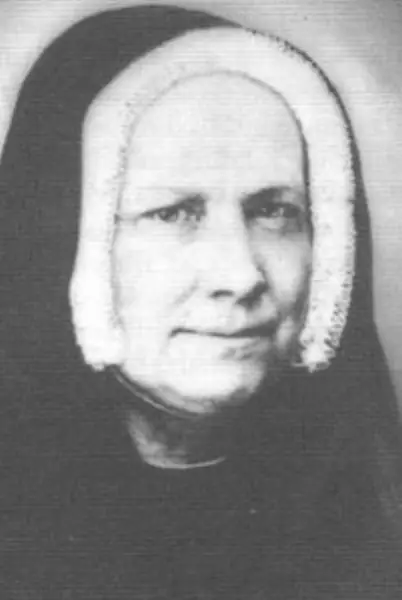
Paula Frassinetti was an Italian religious foundress whose congregation carried the work of educating poor youth far beyond her native Genoa. Born in 1809 to a cloth merchant and his wife Angela, she lost her mother at nine and, when an aunt who had taken over the household also died, assumed its management at the age of twelve. At nineteen she went to live with her brother Giuseppe, a priest at Quinto on the Ligurian coast, where a parish school gave her first experience of teaching. In 1834 she and six companions formed a community known as the Daughters of Holy Faith, and in 1835 she accepted from Luca Passi of Bergamo the Pious Work of Saint Dorothy, taking that name for her sisters. A house opened in Rome in 1841 began an expansion through Italy and eventually to Malta, Portugal, Brazil and the British Isles. She died on June 11, 1882, after pneumonia following several strokes, and her body was reported incorrupt in 1906. Beatified by Pope Pius XI in 1930, she was canonized by Pope John Paul II on March 11, 1984.
The Complete Life
A Merchant's Daughter in Genoa
Paula Frassinetti was born on March 3, 1809, in Genoa, a busy Mediterranean port whose fortunes rose and fell with trade and war. Her father, Giovanni Battista Frassinetti, was a cloth merchant, and she was the third of five children in a household of decided religious inclinations: all four of her brothers would eventually become priests. The stability of her childhood broke early. When Paula was nine years old her mother Angela died, and an aunt came to care for the family in her place. That arrangement lasted only three years; the aunt too died, and at twelve Paula found herself responsible for the running of the household. The burdens and skills of those years, keeping a merchant's house in order, caring for brothers, managing scarcity with patience, formed a character better suited to responsibility than most nineteen-year-olds could claim. Genoa itself was at this time part of the French Empire, and the restored peace after the Napoleonic years would coincide with the first stirrings of her religious life. The domestic discipline she learned under compulsion became, in later life, the quiet backbone of a large spiritual family.
§ Life
Quinto and the Daughters of Holy Faith
At nineteen Paula left Genoa for Quinto, a small seaside village in Liguria, to stay with her brother Giuseppe, who served there as a priest. What began as a change of household became the beginning of her vocation. Giuseppe and members of his parish opened a small school in a church dedicated to Clare of Assisi, and Paula and the women around her taught in it, giving poor children instruction they could not otherwise have obtained. The work attracted others. In 1834 she and six companions formed a small community that took the name Daughters of Holy Faith, combining a common religious life with the teaching that had already become their habit. When cholera broke out in Genoa they went into the city to help, nursing the sick in a season when such service meant real danger. Their reputation for devoted work spread, and in 1835 Luca Passi of Bergamo, a friend of Giuseppe, asked Paula to take over the Pious Work of Saint Dorothy, an undertaking he had begun on behalf of young people who had the least. From that transfer her community took the name by which it has been known ever since: the Sisters of Saint Dorothy.
§ Life
Building the Congregation
The assumption of the Pious Work of Saint Dorothy gave Paula's community both a name and a mandate: the education and care of youth who had the least. Under her direction the sisters organized themselves for teaching, and the institute grew quickly. On May 19, 1841, she established a house in Rome, planting the congregation in the papal capital itself. From Liguria and Rome the work spread across the peninsula, with new houses, boarding schools and orphanages appearing wherever local requests arrived. The expansion did not stop at the peninsula's borders. In time the sisters established a presence in Malta, carrying the congregation into the central Mediterranean, and in Portugal and Brazil, where they took up the same educational mission among very different populations. In the British Isles the congregation eventually ran an international students' residence and became involved in parish ministry, adapting the Dorothean charism to the needs of emigrant and traveling communities. Through all this growth Paula remained the center of the institute, directing foundations, forming the sisters, and holding together a work that had passed from a village school at Quinto to an international congregation.
§ Life
Educating Through Heart and Love
The spirituality that guided Paula Frassinetti joined trust in God with labor on behalf of the young and the poor. The sayings preserved from her give its outlines in her own words. She told her sisters to work in full simplicity, stripping their activity of self-display; she professed that the will of God was her paradise, making obedience and acceptance the measure of holiness rather than extraordinary favors; and she could declare, in hardship, that being in God's hands left her, in her own phrase, so very well. Her conception of the apostolate was captured in her own maxim on teaching with heart and love: instruction was never to be a cold transaction but an act of charity directed at the whole person. This ideal suited the constituency she had chosen, the poorest and most needy youth, for whom patience and affection were as necessary as lessons. Her willingness to send the sisters into Genoa during the cholera outbreak showed the same spirit in action, valuing the lives of the stricken above the safety of the community. Prayer, simplicity, and practical service of the young formed a single fabric in her understanding of religious life.
§ Quotes
Last Years and Incorrupt Remains
Paula's final years were marked by declining health borne without relinquishing her responsibilities. She suffered several strokes, and their aftermath was complicated by pneumonia, from which she died on June 11, 1882, the date on which her feast has since been kept. She had spent more than four decades leading the congregation she founded, long enough to see it established across Italy and beginning its life abroad. Devotion to her did not end with her death. In 1906, twenty-four years after her burial, her body was reported found incorrupt, a condition that in Catholic tradition has often accompanied the causes of foundresses and strengthened the confidence of those promoting their veneration. By that time the congregation she left behind had already taken root in several countries, and the memory of her directives and letters continued to shape its internal life. The incorrupt remains became a focus for those who prayed through her intercession, and the reports surrounding them belonged to the body of material later considered when the Church examined her life and reputation for holiness in the decades that followed her death.
§ Life
From Beatification to the Altars
The Church's formal recognition of Paula Frassinetti proceeded through the usual stages of the modern canonical process. She was beatified by Pope Pius XI on June 8, 1930, an act that allowed public veneration of the foundress throughout the Church and gave new impulse to the devotion of her sisters. Five years later, on April 10, 1935, the cause for her canonization was opened, beginning the long judicial examination of her life, virtues and fame of sanctity that such causes require. The process extended over half a century, sustained by the congregation she had founded and by the communities touched by its schools and orphanages. It reached its conclusion when Pope John Paul II canonized her on March 11, 1984, enrolling her among the saints of the Roman Catholic Church. The canonization came in the early years of a pontificate that would raise many foundresses to the altars, and it confirmed the judgment of nearly a century: that the woman who had run a household at twelve, taught in a village school at nineteen, and built an international institute for the poorest youth had exercised heroic virtue. Her feast is celebrated on June 11, the anniversary of her death.
§ Veneration
A Congregation Across Continents
The most enduring monument to Paula Frassinetti is the congregation itself. The Sisters of Saint Dorothy number today about twelve hundred religious, active in Europe, Latin America, Africa and Asia, continuing the educational work for which she gathered her first companions at Quinto. The institute that began in a Ligurian parish school now staffs schools, boarding schools and orphanages on four continents, and its presence in Malta, Portugal and Brazil, planted in her own lifetime, grew into mature provinces of the congregation. In the United Kingdom the sisters run an international students' residence and take part in parish ministry, extending the Dorothean charism to students far from home. Her letters to the congregations, published in modern editions, remain a living source of guidance for the institute, preserving her counsels on simplicity, charity and the formation of the young. In the Church at large she is remembered as one of the nineteenth century's great educators of the poor, a woman who translated domestic competence and personal loss into a system of schools that outlived her. Her canonization in 1984 presented her example to the whole Church as a model of active charity directed at those with the least.
§ Legacy
Timeline
- 3 Mar 1809
Born at Genoa, third child of the merchant Giovanni Battista Frassinetti and of Angela his wife
§ Life
- 1834
Formed the Daughters of Holy Faith with six other women at Quinto
§ Life
- 1835
Assumed Luca Passi's Pious Work of Saint Dorothy, and her community became the Sisters of Saint Dorothy
§ Life
- 19 May 1841
Established a house of the institute in Rome
§ Life
- 11 Jun 1882
Died after pneumonia following several strokes
§ Life
- 1906
Her body was reported found incorrupt
§ Life
- 8 Jun 1930
Beatified by Pope Pius XI
§ Veneration
- 10 Apr 1935
The cause for her canonization was formally opened
§ Veneration
- 11 Mar 1984
Canonized by Pope John Paul II
§ Veneration
In Their Own Words
Work in full simplicity
We're in God's hands, and we are so very well
Our mission is to educate through heart and love
The will of God is my paradise
The Record
- Major works
- Congregation of the Sisters of Saint Dorothy·Schools, boarding schools and orphanages across Liguria, Rome and other parts of Italy·Houses of the congregation in Malta, Portugal and Brazil·Letters to the Congregations
- Canonization
- Beatified June 8, 1930 by Pope Pius XI; canonized March 11, 1984 by Pope John Paul II
Prayer
Bibliography
Show 7 sources
- "St. Paula Frassinetti", Catholic Courier, Diocese of Rochester, NY
- "Paula Frassinetti". Retrieved 2008-09-13
- Joseph S.J., P.J. "St. Paula Frassinetti", Vatican Radio. Archived from the original on 2013-10-17. Retrieved 2013-04-01
- "The Sisters of Saint Dorothy", Malta Dorothean Province
- Index ac status causarum beatificationis servorum dei et canonizationis beatorum (in Latin). Typis polyglottis vaticanis. January 1953. p. 184
- Aubut, Rebecca. "Sisters of St Dorothy celebrate 100 years in the United States", The Anchor, Diocese of Fall River, Massachusetts. Archived from the original on 2017-08-15
- Paula Frassinetti - Letters to the Congregations!, Paulinas Editions, 1997
Profile text adapted from the Wikipedia article, licensed CC BY-SA 4.0.
Pray with this saint every day
Save St. Paula Frassinetti to your favorites, read the full profile, and get feast-day reminders in the Saints app.
Get the Saints AppFree on the App Store for iPhone and iPad