
1865 – 1942·Feast July 9
St. Pauline of the Agonizing Heart of Jesus
Foundress of the Little Sisters of the Immaculate Conception
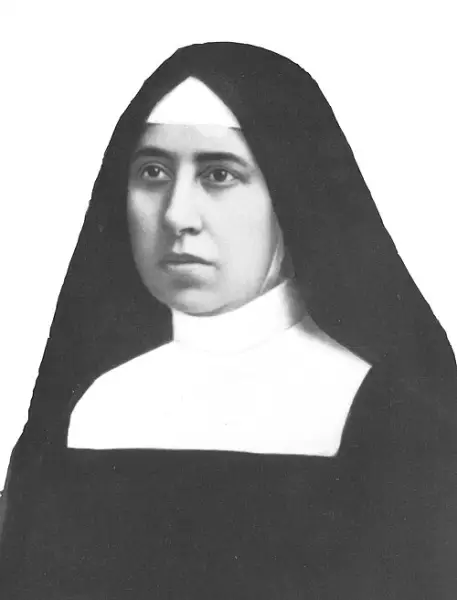
Overview
Pauline of the Agonizing Heart of Jesus, born Amabile Lucia Visintainer, was a Brazilian religious sister of Austrian-Hungarian birth who established the Little Sisters of the Immaculate Conception, the earliest congregation of religious founded on Brazilian soil. Born in the Tyrolean village of Vigolo Vattaro in 1865, she emigrated with her family in 1875 to Santa Catarina, where settlers from their Alpine homeland laid out the village of Vigolo, today within the bounds of Nova Trento. In 1890, with her friend Virginia Rosa Nicolodi and under the direction of the Jesuit Luigi Rossi, she committed her life to religious service and began by caring for a woman dying of cancer. The community grew, took vows in 1895, and received the approval of the Bishop of Curitiba for a congregation devoted to serving the poor. Elected Superior General for life in 1903, Pauline moved to Ipiranga in São Paulo to care for orphans and the children and elderly abandoned by the recently ended slavery. Removed from office in 1909 after internal disputes, she spent years in humble exile before returning to the Ipiranga motherhouse in 1918. She died on July 9, 1942, and in 2002 became the first Brazilian proclaimed a saint.
The Complete Life
From the Tyrol to Brazil
Amabile Lucia Visintainer was born on December 16, 1865, in Vigolo Vattaro, a village in the County of Tyrol, the second daughter of Antonio Napoleone Visintainer and Anna Pianezzer. Her ancestors were Germanic settlers who had established themselves in the region as early as 1491, their surname originally spelled Wiesenteiner. Like most families of the area they were very poor, but they were devout and practicing Catholics, and their poverty was of the kind that sharpens faith rather than destroying it. Even as a small girl Amabile was spoken of for piety and charity, and while still a child she was saying that she meant to consecrate her whole existence to God. Schooling offered her little, but her attachment to the Catholic faith and her pity for those who suffered or lacked grew without measure. In September 1875 the Visintainer family joined a mass emigration: with a hundred other people, about a fifth of the village, they crossed the Atlantic to the State of Santa Catarina in Brazil, where the settlers founded a village they called Vigolo, now part of Nova Trento. After her First Communion at about the age of twelve she threw herself into her parish's round of duties: instructing children in the catechism, calling on the ill, and keeping the village chapel clean and tidy.
§ Early life
The Beginning at Nova Trento
The decisive step in Amabile's vocation came on July 12, 1890, when she and her companion Virginia Rosa Nicolodi placed themselves under the guidance of the Jesuit Luigi Rossi and bound their lives to religious service in dedication to the Immaculate Conception of Our Lady. They did not begin with buildings or constitutions but with a work of mercy: the care of a woman suffering from terminal cancer, taken into a small house donated to the venture, where the young women organized a schedule of religious living around the sickbed. When the woman died the following year, the little community did not dissolve; a third friend, Teresa Anna Maule, joined the two foundresses, and the work continued among the poor of the immigrant settlements. Rossi and Amabile saw that the young women gathering to them needed a more formal and secure organization, and in 1895 they established a religious congregation, the Little Sisters of the Immaculate Conception, which received the approval of José de Camargo Barros, Bishop of Curitiba. In December of that year the founding trio took religious vows, and Amabile took the name by which the world would know her: Pauline of the Agonizing Heart of Jesus.
§ Religious life
A Brazilian Congregation and Its Work
The congregation Pauline founded was the first religious congregation established in Brazil, and it grew quickly through the state of Santa Catarina. In 1903 the sisters elected her their Superior General for life, and she left Nova Trento for Ipiranga in São Paulo and established a convent of the young institute there. The choice of work there was characteristic. Brazil had abolished slavery only in 1888, and its wreckage was visible in the streets: Pauline's sisters took in orphans, the little ones of freed slaves, and old slaves discarded once their labor was spent, abandoned to die. In caring for those whom the new order had abandoned, the congregation expressed its founding dedication to the poor in its most concrete form. The church authorities recognized what had grown from the house at Nova Trento: on May 19, 1933, Pope Pius XI granted the Decree of Praise to the Little Sisters of the Immaculate Conception, establishing the congregation as one of pontifical right, and Pauline was acknowledged as Venerable Mother Foundress. The Italian immigrant girl who had cleaned a village chapel now stood at the head of a Brazilian religious family of pontifical standing.
§ Religious life
Obedience in the Shadow
The deepest test of Pauline's spirituality came not from hardship among the poor but from within her own congregation. In 1909 the Archbishop of São Paulo, Duarte Leopoldo e Silva, removed her from her position as Superior General following a series of disputes within the institute she had founded. She was dispatched to nurse the sick in the Santa Casa and to tend the aged in the Hospice of St. Vincent de Paul at Bragança Paulista, unable to take any active role in the congregation's life. The foundress, stripped of her office, answered with silence and prayer: she devoted her spare time to praying in support of the congregation. Only in 1918, with the archbishop's permission, did Superior General Vicência Teodora bring her back to live at the motherhouse in Ipiranga, where she remained for the last quarter century of her life in the quiet standing of a mother among her daughters. Her religious name, Pauline of the Agonizing Heart of Jesus, expressed the spirit of compassion with which she had begun at the cancer bed in Nova Trento, and her final words, God's will be done, closed a life shaped by surrender to that same will in prosperity and obscurity alike.
§ Religious life
The Long Goodbye
From 1938 onward Pauline's strength ebbed in a protracted struggle with diabetes that she could not win. The price was terrible: surgeons operated twice, taking first a middle finger and then the whole right arm, and robbing the hands that had nursed the dying and governed a congregation their capacity to work. She bore the worsening years in the Ipiranga motherhouse where she had lived since 1918, among the sisters of the community she had founded half a century before. In her last months she was totally blind, the eyes that had watched over Brazil's poorest helpless before the advancing darkness. She died on July 9, 1942, at the age of seventy-six, and her last recorded words were the epitaph of her whole life: God's will be done. The date of her death became her feast day, kept on July 9 by the Church. She had lived to see her congregation recognized as one of pontifical right nine years earlier, and she left behind a religious family spread through Brazil, carrying on the service of orphans, the aged and the abandoned that had begun with two girls and a dying woman in a donated house.
§ Religious life
Honors of the Church
Pauline's path to the altars moved swiftly once her cause was undertaken. Pope John Paul II beatified her on October 18, 1991, during his visit to Florianópolis in Santa Catarina, in the land of her adopted village. For the beatification the fingerbones of her surviving hand yielded three relics: the pope received one, a second was consigned to her convent and rests today in the Shrine of Saint Paulina at Nova Trento, and the last went to her kinsman Albert Visintainer and his household in Mount Carmel, Pennsylvania, where it is displayed at the Saint Pauline Visintainer Center in Kulpmont. The culmination came on May 19, 2002, when John Paul II canonized her in a ceremony in Saint Peter's Square. Hundreds of Brazilians attended, among them the then-President Fernando Henrique Cardoso, and the event marked a national milestone: Pauline stood forth as the first native of Brazil ever raised to the Church's altars. The saint of the Tyrolean emigration, who had crossed the ocean as a child of ten, now stood as the glory of the Church in Brazil, honored in the land where she had served the slaves' children and died blind among her sisters.
§ Veneration
Memory and Shrine
Pauline's memory lives above all in the congregation she founded, the Little Sisters of the Immaculate Conception, Brazil's first locally founded religious institute, which continues the service of the poor that began at Nova Trento. Her shrine at Nova Trento in Santa Catarina has become a center of pilgrimage, housing the relic venerated since her beatification and recalling the village where two young immigrant women took in a dying cancer patient in 1890. In the United States her family's descendants keep her memory through the Saint Pauline Visintainer Center in Kulpmont, Pennsylvania, where one of the beatification relics is displayed, a token of the Tyrolean diaspora that carried her story across another ocean. As the first Brazilian saint she holds a special place in the devotion of the Brazilian Church, and her canonization in Saint Peter's Square in the presence of the nation's president was celebrated as an honor to the whole country. For her sisters she remains the Venerable Mother Foundress, whose removal from office and decades of quiet prayer taught the congregation that its heart is not authority but service. Her feast on July 9 gathers all these strands: the immigrant child, the servant of slaves' children, and the blind foundress who died saying, God's will be done.
§ Veneration
Timeline
- 16 Dec 1865
Born Amabile Lucia Visintainer at Vigolo Vattaro in the County of Tyrol, second daughter of Antonio Napoleone Visintainer and Anna Pianezzer
§ Early life
- Sep 1875
Emigrated with her family and about a fifth of her home village's population to the State of Santa Catarina in Brazil, where they founded the village of Vigolo
§ Early life
- 12 Jul 1890
Committed her life to religious service together with Virginia Rosa Nicolodi under the spiritual direction of the Jesuit Luigi Rossi
§ Religious life
- 1895
Established the Little Sisters of the Immaculate Conception with Luigi Rossi's help; Bishop José de Camargo Barros of Curitiba approved the new institute
§ Religious life
- Dec 1895
Took religious vows with her companions and received the name Pauline of the Agonizing Heart of Jesus
§ Religious life
- 1903
Elected Superior General for life and moved from Nova Trento to Ipiranga, São Paulo, opening a convent to care for orphans and freed slaves
§ Religious life
- 1909
Stripped of the office of Superior General by Archbishop Duarte Leopoldo e Silva of São Paulo amid internal disputes in the congregation
§ Religious life
- 1918
Brought back by Superior General Vicência Teodora to live at the congregation's motherhouse in Ipiranga, where she remained until her death
§ Religious life
- 19 May 1933
Pope Pius XI granted the Decree of Praise to the congregation, making it one of pontifical right, and Pauline was acknowledged as Venerable Mother Foundress
§ Religious life
- 1938
Her health entered a long failing struggle against diabetes
§ Religious life
- 9 Jul 1942
Died blind at Ipiranga; her dying words were 'God's will be done'
§ Religious life
- 18 Oct 1991
Beatified by Pope John Paul II during his visit to Florianópolis, Santa Catarina
§ Veneration
- 19 May 2002
Canonized by Pope John Paul II in Saint Peter's Square, becoming the first Brazilian proclaimed a saint
§ Veneration
In Their Own Words
God's will be done
The Record
- Major works
- Congregation of the Little Sisters of the Immaculate Conception, the first religious congregation founded in Brazil·Convent and works of charity at Ipiranga, São Paulo, serving orphans and former slaves·Shrine of Saint Pauline at Nova Trento, Santa Catarina
- Canonization
- Beatified October 18, 1991 by Pope John Paul II in Florianópolis; canonized May 19, 2002 by Pope John Paul II in Saint Peter's Square
Prayer
Bibliography
Show 7 sources
- Saint Paulina do Coração Agonizante de Jesus at the Catholic Forum (en)
- "Paulina do Coração Agonizante de Jesus". Vatican News Service
- Farace, Love's Harvest, p. 108 (en)
- "Saint Pauline Foundation". 2008-06-25. Archived from the original on 2008-06-25. Retrieved 2021-06-05
- "Biografia". Congregação da Irmãzinhas da Imaculada Conceição (in Portuguese). Archived from the original on 2013-10-29. Retrieved 2013-10-26
- "Brazil gets first female saint". BBC News. May 19, 2002
- "St. Pauline of the Agonizing Heart of Jesus", Saints Resource, RCL Benziger. Archived from the original on 2014-03-07
Profile text adapted from the Wikipedia article, licensed CC BY-SA 4.0.
Pray with this saint every day
Save St. Pauline of the Agonizing Heart of Jesus to your favorites, read the full profile, and get feast-day reminders in the Saints app.
Get the Saints AppFree on the App Store for iPhone and iPad