
3 December 1874 – 28 July 1936·Feast July 28
St. Pedro Poveda Castroverde
Priest, Educator of the Poor, and Martyr
Overview
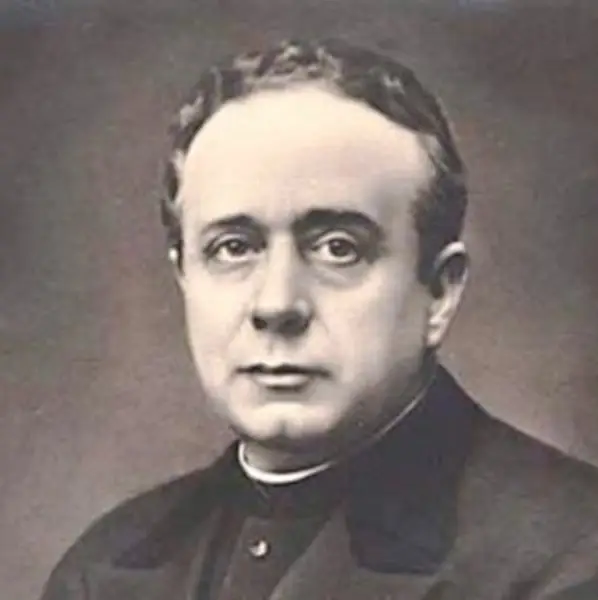
Pedro Poveda Castroverde was a Spanish priest, educator, and martyr who devoted more than thirty years to the conviction that education is the road out of poverty. Born on 3 December 1874 at Linares into a solidly Christian family, he was ordained at twenty-three and sent to the seminary towns of Jaén, Guadix, and Seville for formation and study. His life's direction was set in 1902, when a Lenten mission brought him to the Roma community living in the caves of Guadix; he moved into the caves himself, opened doctrine classes, schools, and a dining hall, and created the Sacred Heart schools for needy children. Driven from that work in 1905, he carried its lesson onward: as a canon of Covadonga and later in Madrid he wrote on the formation of teachers, founded the St. Teresa of Avila Academy at Oviedo in 1911, inaugurated in 1914 the nation's first university residence for women, at Madrid, and gathered the movement that became the Teresian Association, approved by the pope in 1924. When the Spanish Civil War broke out in 1936 he was marked as an enemy by those who wished to dechristianize the schools. At dawn on 28 July 1936 paramilitaries searched his house; he declared himself a priest of Christ and was shot by firing squad. In 1993 he was declared blessed; ten years later John Paul II enrolled him among the saints.
The Complete Life
A Seminarian from Linares
At Linares, in the province of Jaén, Pedro José Luis Francisco Javier Poveda Castroverde first saw the light of day on 3 December 1874, into the solidly Christian household of José Poveda Montes and María Linarejos Castroverde Moreno. The faith of that home shaped him early: he resolved on the priesthood while still young, and in 1889, at fifteen, he entered the seminary of Jaén. His abilities won him a scholarship from the bishop of Guadix, and he transferred to the seminary there in Granada, completing his formation in the diocese whose poorest people he would later make his own. Ordained a priest on 17 April 1897, at twenty-three, he did not settle into a comfortable curacy. He taught in the seminary while continuing his studies, and in 1900 he received his licentiate in theology from Seville. The young priest thus carried into ministry a rare combination: the doctrinal formation of a seminary professor and the heart of a man who had already decided, as the following years would show, that the Gospel must reach those whom official Spain had abandoned in ignorance.
§ Youth and scholarship
Into the Caves of Guadix
In 1902 Poveda was sent to preach the Lenten mission among the Roma families dwelling in the cave settlements of Guadix, and the assignment remade his life. Confronting the destitution of those underground dwellings, he began with classes in Christian doctrine, then schools serving boys and girls, a refectory, and adult instruction in the evenings. Then he did what few clergy of his station would have done: he moved into the caves to live among the people he served. To sustain the work he collected funds across the province and as far as Madrid, where friends stood ready to help, and set up conferences of St. Vincent de Paul. Convinced that education was the root remedy for poverty, he opened the Sacred Heart schools for needy children. The establishment did not tolerate him long. In 1905, meeting resistance to his socio-educational activity, he was forced to abandon the caves of Guadix. He was thirty-two when he accepted appointment as a canon of the Basilica of Covadonga in Asturias, leaving behind the settlement he had built but carrying away the conviction that would govern the rest of his life.
§ Beginning of educational activity
Apostle of the Teacher
The caves had taught Poveda where Spain's poverty was rooted, and the statistics of his age confirmed it: when the nineteenth century closed, 68 percent of Spain's men and 79 percent of its women could not read. From Covadonga he started publishing articles and pamphlets on how teachers ought to be professionally formed, texts that mark the beginnings of what would become the Teresian Association. He entered the Apostolic Union of Secular Priests in 1912, argued in print for a larger teaching corps, and established centers for the training of teachers. In 1911 he had founded the St. Teresa of Avila Academy in Oviedo for women studying to become teachers, naming it for the learned doctor of the Church who was also a teacher of prayer. Madrid received in 1914 the nation's first university residence for women, and further residences followed in every city that had a university. Transferred to the capital in 1921, he served as chaplain of the Royal Palace, joined the Central Board Against Illiteracy in 1922, taught in the seminary at Jaén, directed catechetical work, and taught religion in a teachers' training school. The academies he inspired answered what he saw as the critical situation of the times.
§ Establishment of the Teresian Association, later years
The Teresian Association
Poveda's foundation grew from a double conviction: that Spain needed education, and that education needed qualified, committed teachers, among whom women had an essential role. He named his organization the Teresian Association after St. Teresa of Avila, and gave it an aim as distinctive as its name: to call men and women to the work of transforming society and culture in line with Gospel teaching, acting from within their own professional fields, above all in education and culture. Its early members were women engaged at every level of teaching, from the elementary school to the expansion of higher education for women, and additional academies soon appeared in cities across Spain. The Diocese of Jaén granted the Association its first approval in 1917; in 1924 Pope Pius XI gave it recognition as a pious union of the faithful; afterward it spread to Chile and Italy. In 1951 it became a Secular Institute, and in 1990, by approval of Pope John Paul II, it returned to its original identity as an Association of the Faithful. Registered with the Vatican's Dicastery for Laity, Family and Life, it works today in thirty countries, seeking each person's advancement and the overturning of unjust structures by means of education and culture imparted from a Christian standpoint.
§ Teresian Association
Martyr of the Civil War
When the Spanish Civil War broke out in 1936, the forces of the Socialist Republicans identified Poveda as an enemy precisely because of his life's work, for they wished to strip the schools of their Christian character. A few days before the end, he wrote to his own that the lives of the earliest Christians must now above all be studied, since their obedience to the Church, their confession of Christ, their readiness for martyrdom, and their forgiving prayer for persecutors taught how to bear times of persecution. In the dawn hours of 28 July 1936 paramilitaries appeared at his house to conduct a search. He did not conceal who he was; he identified himself with the words, I am a priest of Christ. For that faith, and for the Christian education he had served for three decades, a firing squad's volley ended his life. Father Poveda was sixty-one years old. He died as he had lived: a priest who had spent himself for the enlightenment of the poor, killed by those who found the light of the Gospel an obstacle.
§ Death
Raised to the Altars
The Church moved to honor him within a lifetime of his death. On 10 October 1993 Pope John Paul II beatified him in St. Peter's Basilica, together with Victoria Diez, a member of his own Teresian Association, joining the founder to one of the many his foundation had formed. A decade later, on 4 May 2003, the same pope canonized him in Madrid, the city where he had been shot. Preaching on that occasion, John Paul II recalled Poveda's grasp of education's power in society and the humanitarian, educational labor he had undertaken among the marginalized and needy; he called the new saint a teacher both of Christian living and of the bond between faith and knowledge, one convinced that believers must carry essential values into the building of a fairer and more mutually supportive world, and he observed that the saint's life had closed with the crown of martyrdom. The Teresian Association carries his work forward through its members on four continents, with schools in Brazil, Ireland, the Philippines, India, and most of the capitals of South America.
§ Veneration
Timeline
- 3 Dec 1874
Was born at Linares, Spain, to José Poveda Montes and María Linarejos Castroverde Moreno
§ Youth and scholarship
- 1889
Entered the seminary of Jaén, his priestly vocation having declared itself in boyhood
§ Youth and scholarship
- 17 Apr 1897
Was ordained a priest at the age of twenty-three, and began teaching at the seminary
§ Youth and scholarship
- 1900
Received his licentiate in theology at Seville
§ Youth and scholarship
- 1902
Preached a Lenten mission to the Roma people of the caves of Guadix, beginning doctrine classes and schools there
§ Beginning of educational activity
- 1905
Was forced to give up the caves apostolate and took up a canonry at the Basilica of Covadonga in Asturias
§ Beginning of educational activity
- 1911
Founded the St. Teresa of Avila Academy in Oviedo for women preparing to become teachers
§ Teresian Association
- 1912
Joined the Apostolic Union of Secular Priests and opened teacher training centers
§ Establishment of the Teresian Association, later years
- 1914
Opened Spain's first university residence for women in Madrid
§ Establishment of the Teresian Association, later years
- 1917
The Diocese of Jaén granted its first approval to the Teresian Association
§ Teresian Association
- 1921
Was transferred to Madrid and appointed a chaplain of the Royal Palace
§ Establishment of the Teresian Association, later years
- 1922
Was appointed to the Central Board Against Illiteracy
§ Establishment of the Teresian Association, later years
- 1924
Pope Pius XI gave the Teresian Association recognition as a pious union of the faithful
§ Teresian Association
- 28 Jul 1936
Was identified as a priest of Christ when paramilitaries searched his house at dawn, and shot by firing squad in Madrid
§ Death
- 10 Oct 1993
Was beatified by Pope John Paul II at St. Peter's Basilica, together with Victoria Diez
§ Veneration
- 4 May 2003
Was canonized by Pope John Paul II in Madrid
§ Veneration
In Their Own Words
Now more than ever we must study the lives of the first Christians so as to learn from them how to behave in times of persecution. See how they obeyed the Church, how they confessed Christ, how they prepared for martyrdom, how they prayed for their persecutors and forgave them....
I am a priest of Christ
The Record
- Major works
- Founder of the Teresian Association·Schools of the Sacred Heart for poor children, Guadix·St. Teresa of Avila Academy, Oviedo (1911)·Spain's first university residence for women, Madrid (1914)·Articles and pamphlets on the professional formation of teachers
- Patron of
- Teresian Association
- Canonization
- Canonized 4 May 2003 in Madrid by Pope John Paul II; beatified 10 October 1993 in Rome
Prayer
Bibliography
Show 8 sources
- "Pedro Poveda Castroverde (1874-1936), 4 May 2003, biography". www.vatican.va. Retrieved 2021-10-26.
- "Saint Pedro Poveda", Teresian Association. Retrieved 2016-04-02.
- Butler, Alban; Burns, Paul. "St. Pedro Poveda Castroverde, Founder and Martyr", Butler's Lives of the Saints: Supplement of new saints and blessed, Vol. 1, Liturgical Press, 2005. ISBN 9780814618370.
- Hollingsworth, Gerelyn. "On this day: St. Pedro Poveda", National Catholic Reporter, July 28, 2011.
- "St. Pedro Poveda Castroverde, OCD", the Order of Carmelites. Retrieved 2013-04-02.
- Homily of John Paul II on the occasion of his Apostolic Journey to Spain, 4 May 2003.
- "Pedro Poveda's Life", PedroPoveda.org.
- "The Teresian Association", Saint Pedro Poveda College, Quezon City, Philippines.
Profile text adapted from the Wikipedia article, licensed CC BY-SA 4.0.
Pray with this saint every day
Save St. Pedro Poveda Castroverde to your favorites, read the full profile, and get feast-day reminders in the Saints app.
Get the Saints AppFree on the App Store for iPhone and iPad