
1748 – 1830·Feast October 31
St. Petar I Petrović-Njegoš
Prince-Bishop of Montenegro, Saint Peter of Cetinje
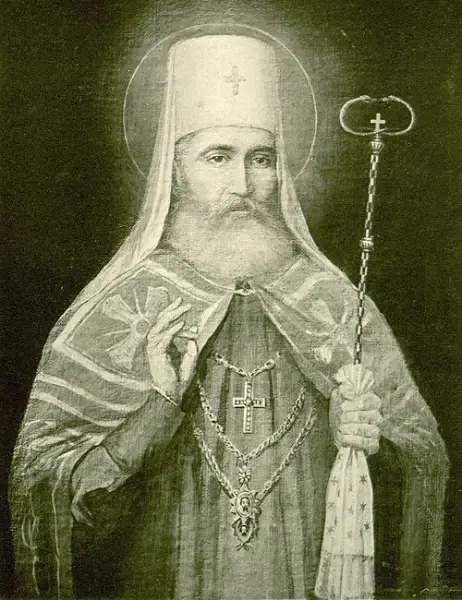
Overview
Petar I Petrović-Njegoš (1748 – 31 October 1830) was Prince-Bishop of Montenegro from 1784 until his death and exarch, or legate, of the Serbian Orthodox Church in Montenegro. The most beloved spiritual and military leader of the Petrović dynasty, he spent a rule of nearly half a century welding a land of quarrelling highland tribes into a single state: he consolidated control over the Montenegrin districts, ended a generations-long blood feud, and in 1798 introduced the first written laws in Montenegrin history, preparing the ground for the taxes, schools, and commerce of the modern state. Trained partly in Imperial Russia and ordained at Sremski Karlovci, he held off Ottoman invasions, defeating and killing Kara Mahmud Pasha at Krusi in 1796, turned back Napoleon's troops before the Bay of Kotor in 1806, and co-operated with Karađorđe during the First Serbian Uprising. He cherished a visionary plan for the renewal of a Slaveno-Serb empire and declined a French offer of the patriarchal title. A monk, poet, and lawgiver as well as a war leader, he was glorified after his death by his nephew and successor Petar II and is venerated in the Serbian Orthodox Church as Saint Peter of Cetinje, celebrated on 31 October.
The Complete Life
A Son of Njeguši
Petar was born in 1748 at Njeguši, the rugged village above the Bay of Kotor that had given Montenegro its ruling dynasty of prince-bishops. His father Marko Petrović and his mother Anđelija, born Martinović, raised him in the tradition of a family whose sons became monks, bishops, and chieftains; he followed his relatives into the monastic life and the diaconate while still young. His formation was unusually broad for a Montenegrin churchman of the day: he spent four years in Imperial Russia, completing the Military School there between 1765 and 1769, an education that joined the habits of a soldier to the offices of a clergyman. In 1778 he returned to Russia as archimandrite, travelling with guvernadur Jovan Radonjić and serdar Ivan Petrović on the business of his small and hard-pressed land. The old metropolitan Sava Petrović died in 1781, leaving the see to his nephew Arsenije Plamenac, a weak and inactive ruler; the chieftains had already marked out the young Petar for the bishop's seat, and in 1783 they proposed him formally, sending him to the Habsburg Monarchy to receive episcopal ordination.
§ Early life
Bishop of a Embattled Nation
Petar's episcopal consecration took place on 13 October 1784 at Sremski Karlovci, where Mojsije Putnik, metropolitan of Karlovci, ordained him bishop. On his journey home he passed through Vienna, meeting the Russian chancellor Potemkin, the Austrian general Zorić, and the Ragusan émigré Frano Dolci — the first of countless diplomatic encounters in a reign spent balancing empires. Russia was his chosen patron, and his early years in office were shadowed by its displeasure: for reasons left unclear in the record he was expelled from St. Petersburg in November 1785. In Montenegro he found a rival at home. The guvernadur Jovan Radonjić, backed first by Venice and then by Austria, claimed the secular mastery of the people and wished to reduce the metropolitan to spiritual matters, while Petar held to Russia and to the unity of civil and church leadership. Two parties, Russophile and Austrophile, divided the land, and their quarrel ran through the war crises of 1787 to 1792, when Radonjić petitioned Vienna in vain for an Austrian army and finally secured only a promise of munitions in 1790. Through it all Petar kept the allegiance of the tribes.
§ Office
Uniting the Tribes, Defeating the Pasha
The work of Petar's long rule was the making of Montenegro. Ottoman power pressed hard on the highlands: in 1794 the neighbouring tribes of Kuči and Rovčani were devastated by Ottoman forces, and Kara Mahmud Pasha of Scutari remained the terror of the region. In 1796 Montenegro rose to meet him. At Martinići the pasha's army was beaten back, and when he returned that autumn, the battle of Krusi on 22 September destroyed him and his host — some 30,000 men, it was said, including French officers, against a Montenegrin force of 6,000, half under the metropolitan and half under Radonjić, aided by the Bjelopavlići and Piperi. The victory brought territorial expansion: Bjelopavlići and Piperi joined the Montenegrin state, and the highland tribes turned steadily toward Cetinje. Petar then turned warrior-chieftain into lawgiver and peacemaker. In 1797 he presided over the joint assembly of all the tribes of Old Montenegro that ended the thirty-two-year blood feud between his own Njeguši and the tribe of Ceklin, a pacification counted a decisive step in his strategy of union. In 1798 he gave Montenegro its first written laws, and in 1799 he wrote to the Moračani and Rovčani urging concord, while Russia guaranteed the state a defending subsidy.
§ Office
The French Threat and the Serbian Uprising
The age of Napoleon brought new dangers. In 1806 French troops advanced toward the Bay of Kotor, and Petar, leading the Montenegrin army with Russian battalions and the Adriatic fleet of Admiral Dmitry Senyavin, drove them back to Dubrovnik and laid siege to the city. The diplomacy of empires soon undid the gains: after Tilsit in 1807 the bay passed to France. Petar answered the upheaval with vision. He had already conceived, and in 1807 informed the Russian court of, a plan to revive a Serbian empire — a Slaveno-Serb realm that would bind Montenegro to Podgorica, Spuž, Žabljak, the Kotor bay, Bosnia, Herzegovina, Ragusa, and Dalmatia, its crowned head the Russian emperor. When the French offered him instead the title of patriarch of the whole Serb nation under their protectorate, he refused, fearing papal jurisdiction behind the French offer. During the First Serbian Uprising he co-operated with Karađorđe and corresponded with Dositej Obradović; Russian envoys reported in 1803 that he had exchanged his bishop's clothes for a general's uniform and gathered 2,000 armed men. He fought on into old age, campaigning successfully against the Bosnia Eyalet in 1819, and died at Cetinje on 31 October 1830.
§ Pan-Serbism
Saint Peter of Cetinje
The glorification of Petar came swiftly after his death, and from the house he had built: his successor and nephew Petar II Petrović-Njegoš, the greatest poet-ruler of Montenegro, canonized him as Saint Peter of Cetinje. The Serbian Orthodox Church celebrates him on 31 October by the Gregorian calendar, 18 October on the Julian reckoning, and his icon — the aged bishop in his monastic habit — hangs in churches across the Montenegrin and Serbian world. In the memory of his people the saint and the statesman are one figure: the tradition of Cetinje honours him as the ruler who gave the mountaineers law instead of vengeance, victory instead of servitude, and unity instead of feuding. Pilgrims venerate him as the protector of Montenegro, and his cult belongs to the wider communion of Serbian saints in which he stands beside the medieval hierarchs and the modern martyrs. Among the prince-bishops of the Petrović line, who ruled Montenegro from 1696 to 1852, he remains the most beloved, and the epithet his Church gave him — Sveti Petar Cetinjski, Saint Peter of Cetinje — keeps alive the see he served for forty-six years.
§ Canonisation
The State He Made and the Works He Left
Petar's reign prepared Montenegro for modern statehood. When he took office the land was a congeries of tribal districts governed through serdars, vojvodas, and knezes in a mixed secular and theocratic arrangement; when he died, the tribes of Piperi and Bjelopavlići and the rest of the Brda, the Hills, had been joined to Old Montenegro, and the polity was officially styled "Black Mountain and the Hills". The first Montenegrin laws of 1798 opened the way for the taxes, schools, and commercial enterprises his successors would introduce, and the turning back of an Ottoman invasion out of Albania amid the war of 1828-29 won international recognition of Montenegrin sovereignty over Piperi. He left writings as well: versified teaching in The Lore in Verse, the narrative poem The Sons of Ivan-bey, verses addressed to Karađorđe, a poem for the Serbian Christmas Eve, and the Short History of Montenegro that carried his people's memory of their own struggle. His vision of a renewed Serbian empire entered historiography as one of the earliest programmes of South Slav unification, and historians of Montenegro treat his forty-six years on the throne of Cetinje as the foundation on which the modern principality was raised.
§ Works
Timeline
- 1748
Born at Njeguši in the Prince-Bishopric of Montenegro, son of Marko Petrović and Anđelija Martinović.
§ Introduction
- 1765
Sent to Imperial Russia, where he spends four years completing the Military School.
§ Early life
- 13 Oct 1784
Ordained bishop by Mojsije Putnik of the Metropolitanate of Karlovci at Sremski Karlovci and installed as Prince-Bishop of Montenegro.
§ Office
- Jun 1785
Kara Mahmud Pasha of Scutari invades Montenegro, crossing Bjelice and burning Njeguši, the bishop's home village.
§ Office
- 22 Sep 1796
Commands half the Montenegrin army at the Battle of Krusi, where Kara Mahmud Pasha is defeated and killed; the victory follows the Montenegrin triumph at Martinići.
§ Office
- 1798
Introduces the first laws of Montenegro, a founding act of Montenegrin statehood.
§ Introduction
- 1799
Writes to the Moračani and Rovčani urging peaceful solidarity; Russia guarantees Montenegro a defending subsidy.
§ Office
- 1806
Leads the Montenegrin army, with Russian battalions and Admiral Senyavin's fleet, in driving Napoleonic forces back from the Bay of Kotor to Dubrovnik and besieging the city.
§ Office
- 1807
Lays before the Russian court his plan for a renewed Slaveno-Serb empire uniting the Serb lands with Montenegro.
§ Pan-Serbism
- 1819
Wages a successful campaign against the Bosnia Eyalet.
§ Office
- 1820
The Morača highlanders win a major victory over Ottoman Bosnian forces in northern Montenegro under serdar Mrkoje Mijušković; Petar unites the Piperi and Bjelopavlići with Montenegro.
§ Office
- 31 Oct 1830
Dies at Cetinje after forty-six years as Prince-Bishop of Montenegro.
§ Introduction
The Record
- Major works
- The Lore in Verse (Počenje u stihovima)·The Sons of Ivan-bey (Sinovi Ivanbegovi)·Poem to Karageorge (Pjesma Karađorđu)·To Serb Christmas Eve (Srpsko Badnje veče)·Short History of Montenegro (Kratka Istorija Crne Gore)
- Patron of
- Montenegro·Serbian Orthodox Church
- Canonization
- Canonized as Saint Peter of Cetinje by his successor Petar II Petrović-Njegoš
Prayer
Bibliography
Show 7 sources
- Stamatović, Aleksandar (1999). "Митрополија црногорска за вријеме митрополита Петровића". Кратка историја Митрополије Црногорско-приморске (1219-1999).
- Stanojević, Gligor; Vasić, Milan (1975). Istorija Crne Gore (3): od početka XVI do kraja XVIII vijeka. Titograd: Redakcija za istoriju Crne Gore.
- Király, Béla K.; Rothenberg, Gunther E. (1982). War and Society in East Central Europe: The first Montenegrin uprising 1804-1813. Brooklyn College Press. ISBN 978-0-930888-15-2.
- Miller, William (2012). The Ottoman Empire and Its Successors 1801-1927. Routledge. ISBN 978-1-136-26046-9.
- Pavićević, Branko (2007). Petar I Petrović Njegoš. CID. ISBN 9788649503427.
- Milović, Jevto M. (1987). Petar I Petrović Njegoš: pisma i drugi dokumenti. Istorijski institut SR Crne Gore.
- Vuksan, Dušan (1926). Spomenica Petra II Petrovića Njegoša — Vladike Rada 1813-1851-1925. Cetinje.
Profile text adapted from the Wikipedia article, licensed CC BY-SA 4.0.
Pray with this saint every day
Save St. Petar I Petrović-Njegoš to your favorites, read the full profile, and get feast-day reminders in the Saints app.
Get the Saints AppFree on the App Store for iPhone and iPad