
1499 – 1562·Feast October 19
St. Peter of Alcántara
Franciscan Reformer, Mystic and Counselor of Teresa of Ávila
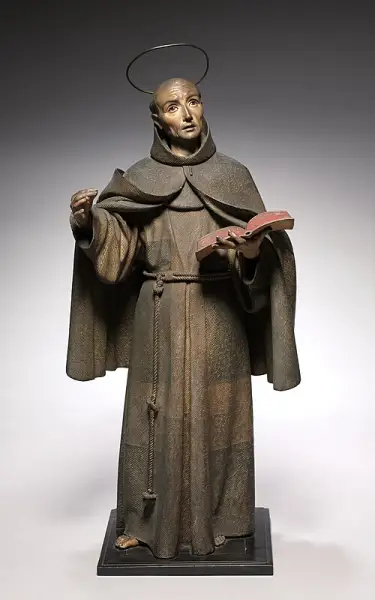
Overview
Peter of Alcántara, born Peter Garavita, was a Spanish Franciscan friar of the Stricter Observance who became one of the great reformers of sixteenth-century religious life. Born at Alcántara in Extremadura in 1499 — his father governor of the town, his mother of the noble family of Sanbia — he chose the Franciscans at sixteen while a student at Salamanca and entered the friary at Manxaretes in 1515. Guardian of Robredillo at twenty-five, provincial minister of St. Gabriel in Estremadura by 1538, he resigned when his severity met opposition and withdrew into the eremitical life of the mountains of Arrábida in Portugal with St. John of Avila. Communities gathered around him, and returning to Spain in 1553 he obtained from Pope Julius III leave to found poor friaries, which grew into the Province of St. Joseph by 1561. To St. Teresa of Ávila he became counselor, encourager, and advocate; it was his letter of 14 April 1562 that emboldened her to found her first monastery at Avila. A mystic given to ecstasies, an ascetic who ate once in three days and slept sitting up, he died kneeling in prayer at Arenas on 18 October 1562. He was canonized in 1669.
The Complete Life
The Governor's Son
Peter Garavita was born in 1499 at Alcántara, the Extremaduran town on the Tagus whose fortress guarded the Portuguese frontier, and his family stood at the top of its society: his father held the governorship of Alcántara, while his mother belonged to the noble house of Sanbia. His stepfather sent him to the University of Salamanca, the intellectual center of Castile, and it was there, at the age of sixteen, that the governor's son decided to become a Franciscan — a choice that traded a career of administration for the begging habit of the Stricter Observance. Returning home, he entered the friary at Manxaretes in Extremadura in 1515. When he joined the Order, the reform of the Discalced Friars was still a small thing — a custody of friaries in Spain and the house of Santa Maria Pietatis in Portugal, all under the Minister General of the Observants — and the boy from Alcántara would spend his life enlarging it.
§ Biography
Friar, Priest, and Preacher
The young friar rose quickly through the offices of the strict Observance. At twenty-two he was charged with establishing a new community at Badajoz; priestly ordination came in 1524, and a year later he took charge as Guardian of the Robredillo friary of St. Mary of the Angels in Old Castile. A few years later he took up the work that filled the rest of his life alongside government: preaching. He preached with much success, and his preference is worth noticing — he chose to preach to the poor, and his sermons, drawn largely from the Prophets and the Sapiential Books, breathed, as the tradition records, the tenderest human sympathy. Here was the paradox of Peter of Alcántara: an ascetic of iron severity in his own person, whose public voice was gentleness. The austerity he never relaxed was the austerity he aimed at himself; toward the poor of Castile he was all compassion, and the Gospel he carried on bare feet through Spain was good news first of all to them.
§ Biography
Reformer of the Friars
In 1538 Peter reached the summit of his province's government as minister provincial of St. Gabriel of Estremadura, and promptly attempted to enforce severe rules among the friars. The opposition he met taught him the limits of office: he resigned and withdrew with St. John of Avila into the mountains of Arrábida in Portugal, joining Friar Martim de Santa Maria in eremitical solitude. Solitude, as it happened, was the seed of the next foundation. Other friars came out to join him, several little communities took shape, and the house of Palhais in Barreiro chose Peter as its guardian and master of novices; in 1560 these were erected into the Province of Arrábida. Back in Spain from 1553, after two further years of solitude, he walked barefoot to Rome and obtained from Pope Julius III permission to found poor friaries in Spain under the Minister General of the Conventuals. Houses went up at Pedrosa, Plasencia, and elsewhere; 1556 saw them organized as a commissariat with Peter at its head, and 1561 saw the friaries take rank as a religious province named for St. Joseph, whose constitutions drafted by Peter with even greater severity than the rules that had cost him St. Gabriel. The reform spread rapidly through Spain and Portugal, and in 1562 the new province passed to the Observants with two new custodies, St. John the Baptist in Valencia and St. Simon in Galicia. Francis Borgia wrote to him that his remarkable success was a special comfort.
§ Biography
Poverty, Ecstasy, and the Master of Prayer
The austerity of Peter of Alcántara approached the limits of human endurance. According to St. Teresa of Ávila, whose autobiography preserves much of what is known of him, a single meal in three days was his ordinary custom, and at times seven days went by without food; he slept very little and always sitting up. He walked the length of Spain preaching the Gospel to the poor, possessing nothing, and the poverty he profounced he performed. Yet the severest of men was also a mystic of conspicuous sweetness: onlookers repeatedly caught him in ecstasy, even levitation, during prayer and contemplation, and his counsel was sought by the greatest spirits of the Spanish century. His Treatise on Prayer and Meditation was judged a masterpiece by Teresa, by Francis de Sales, and by Louis of Granada — a small book from a hard man that has taught gentleness of prayer for centuries. Between the desert and the page lay his real doctrine: that God is found by emptying, and that the friar who owns nothing has nothing to hinder his rising.
§ Biography
Counselor of Teresa, Death on His Knees
Peter recognized in Teresa of Ávila a soul marked out by God for a great work, and the reform of Carmel owed him, in the judgment of Teresa herself, much of its success — his counsel, his encouragement, his advocacy. It was his letter of 14 April 1562 that gave her the courage to found her first monastery at Avila, on 24 August of that year: the Discalced Carmelites trace their existence in part to a Franciscan's encouragement. In the autumn of 1562, at the monastery of Arenas in Old Castile — the place now called Arenas de San Pedro — the dying friar was offered a glass of water and refused it, saying that even his Lord Jesus Christ had thirsted on the Cross. He died as he had lived, in prayer, found on his knees on 18 October 1562, aged about sixty-two. The ascetic who had eaten once in three days died thirsty; the reformer whose letters had founded orders died without office, on his knees, in a poor friary he had built.
§ Biography
Beatified, Canonized, and Calendared
Peter of Alcántara was beatified in Rome by Pope Gregory XV on 18 April 1622 — the same year that saw the canonization of Teresa of Ávila, Ignatius Loyola, and Francis Xavier — and was canonized by Pope Clement IX on 28 April 1669. His feast entered the General Roman Calendar in 1670 on 19 October, the day after his death, because 18 October was already taken by St. Luke the Evangelist; there the feast stood for three centuries. The revision of 1969 omitted his name from the universal calendar on the ground that the feast's importance was limited at a worldwide level, while expressly envisaging its retention in local calendars, and his observance thus returned to 18 October, the day of his death, as its official date. Traditionalist Catholics who continue to use the calendars of the 1670–1969 period, incorporated in the 1962 Roman Missal whose use Pope Benedict XVI widened by the motu proprio Summorum Pontificum, keep him still on 19 October.
§ Legacy
The Saint Who Watches at Night
The devotional afterlife of Peter of Alcántara is as watchful as he was. Because he kept vigil while his brothers slept — sitting upright, scarcely sleeping at all — he became the patron of night watchmen, and for the same reason nocturnal adoration of the Blessed Sacrament took him as its patron: the friar who never quite slept became the heavenly intercessor of those who keep the hours of the night before the tabernacle. Brazil claimed him as its patron in 1826; his native Extremadura followed in the centenary year of 1962 and took him for its own. He is venerated as patron of parishes in the United States and the Philippines — among them Shrewsbury Cathedral in England and the church of Pakil in Laguna — and Málaga's town of San Pedro de Alcántara keeps his name. His Treatise on Prayer and Meditation remains in print four and a half centuries after his death, the masterpiece that Teresa and Francis de Sales knew it to be, and his founder's statue stands in St. Peter's Basilica among the founders of the Church's reforming orders.
§ Legacy
Timeline
- 1499
Born at Alcántara in Extremadura, son of the town's governor Peter Garavita
§ Biography
- 1515
Enters the Franciscan friary of the Stricter Observance at Manxaretes, Extremadura
§ Biography
- 1521
Sent at the age of twenty-two to found a new community of the Stricter Observance at Badajoz
§ Biography
- 1524
Ordained a priest
§ Biography
- 1525
Made Guardian of the Robredillo friary of St. Mary of the Angels in Old Castile
§ Biography
- 1538
Made minister provincial of the Franciscan Province of St. Gabriel of Estremadura, and resigns when his plans for severe reform are opposed
§ Biography
- 1553
Returns to Spain, then journeys barefoot to Rome and obtains from Pope Julius III permission to found poor friaries in Spain
§ Biography
- 1556
His friaries at Pedrosa, Plasencia, and elsewhere are made a commissariat with Peter as commissary
§ Biography
- 1560
The Portuguese communities of Arrábida are erected into a province
§ Biography
- 1561
His Spanish friaries are erected into the religious Province of St. Joseph
§ Biography
- 14 Apr 1562
Writes the letter that encourages St. Teresa of Ávila to found her first monastery
§ Biography
- 18 Oct 1562
Dies kneeling in prayer at the monastery of Arenas, refusing even a glass of water on his deathbed
§ Biography
- 18 Apr 1622
Beatified in Rome by Pope Gregory XV
§ Legacy
- 28 Apr 1669
Canonized by Pope Clement IX
§ Legacy
- 1670
His feast is set for 19 October, the day after his death, because 18 October belongs to St. Luke the Evangelist
§ Legacy
- 1826
Named patron saint of Brazil
§ Legacy
- 1962
Named patron saint of the Spanish region of Extremadura on the fourth centenary of his death
§ Legacy
In Their Own Words
Your remarkable success is a special comfort to me.
The Record
- Major works
- Treatise on Prayer and Meditation·Constitutions of the Province of St. Joseph
- Patron of
- Brazil·Eucharistic adoration (nocturnal adoration of the Blessed Sacrament)·Extremadura·Night watchmen·Pakil·Shrewsbury Cathedral
- Symbols
- Franciscan habit
- Canonization
- Beatified by Pope Gregory XV on 18 April 1622; canonized by Pope Clement IX on 28 April 1669
Prayer
Bibliography
Show 11 sources
- Newcomb, Thomas (September 13, 1669). "London Gazette"
- "St Peter of Alcantara", Diocese of Shrewsbury, archived from the original on 2018-02-24, retrieved 2013-08-06
- Reagan, Nicholas. "St. Peter of Alcántara." The Catholic Encyclopedia. Vol. 11. New York: Robert Appleton Company, 1911
- Butler, Alban. The Lives of the Saints, Vol. 10 (1866)
- The Franciscan Book of Saints, ed. by Marion Habig, OFM, Franciscan Herald Press, 1959
- Treatise on Prayer & Meditation; translated with an introduction and sketch of the saint's life by Dominic Devas, O.F.M.; together with a complete English version of Pax animae by John of Bonilla. London: Burns, Oates, and Washbourne, 1926
- A Golden Treatise of Mental Prayer; a new translation [by G. F. Bullock] edited by George Seymour Hollings. London: Mowbray, 1905
- "St. Peter of Alcantara", Saints Resource, RCL Benziger
- "Calendarium Romanum" (Libreria Editrice Vaticana, 1969), p. 143
- Martyrologium Romanum (Libreria Editrice Vaticana 2001, ISBN 88-209-7210-7)
- Pope Benedict XVI, Summorum Pontificum
Profile text adapted from the Wikipedia article, licensed CC BY-SA 4.0.
Pray with this saint every day
Save St. Peter of Alcántara to your favorites, read the full profile, and get feast-day reminders in the Saints app.
Get the Saints AppFree on the App Store for iPhone and iPad