
1862 – 1937·Feast October 10
St. Peter of Krutitsy
Hieromartyr and Patriarchal Locum Tenens of Moscow
Overview
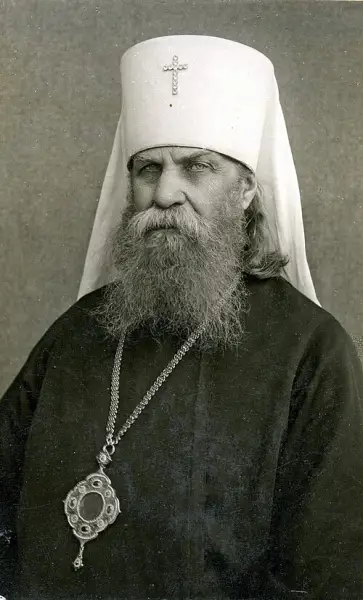
Peter of Krutitsy, born Pyotr Fyodorovich Polyansky, was a Russian Orthodox bishop who bore the highest office of his persecuted Church through twelve years of imprisonment and died a martyr's death. The son of a parish priest from Voronezh Governorate, he followed the theological schools to a distinguished academic career, yet for most of his life served the Church as a layman, rising to secretary of the Education Committee of the Most Holy Synod. In 1920, at Patriarch Tikhon's request, he accepted monastic tonsure and the episcopacy, foreseeing that the acceptance would cost him his life. Consecrated Bishop of Podolsk in October 1920, he was almost immediately exiled, then advanced to archbishop in 1923 and Metropolitan of Krutitsy in 1924. When Tikhon died, Peter — the only successor candidate neither imprisoned nor exiled — was confirmed on April 12, 1925 as patriarchal locum tenens, head of the Russian Orthodox Church. His refusal to reconcile with the Renovationist schism brought arrest that December. He remained the Church's nominal head through successive exiles, hard labor, and solitary confinement, until the NKVD shot him at Magnitogorsk on October 10, 1937. The Russian Orthodox Church canonized him as a hieromartyr in 1997.
The Complete Life
A Priest's Son from Voronezh
Pyotr Fyodorovich Polyansky was born on July 10, 1862, in the village of Storozhevoye, in the Korotoyaksky district of Voronezh Governorate of the Russian Empire, into the household of a parish priest. The son of a village clergyman followed the educational path prepared for the Church's service: the theological college at Kostroma received him in 1875, the seminary at Voronezh followed in 1879, and in 1885 he completed its course with a first-degree distinction. In 1892 he graduated from the Moscow Theological Academy and stayed on as Assistant Dean of Students, defending a Master's thesis in 1897. Remarkably, one of the ablest graduates of his generation did not seek ordination. For most of his life he served the Church as a layman in its official establishments, working from 1906 to 1918 on the Education Committee of the Most Holy Synod. There he rose to Secretary by 1915, carrying the civil rank of Active State Councillor — equivalent to a major general — and acting as inspector of all the Russian Church's theological schools. The extensive travel his duties demanded brought a close acquaintance with the future Patriarchs Tikhon and Sergius, an acquaintance that would one day place the whole Church in his hands.
§ Early life
The Reluctant Bishop
When the Bolshevik revolution swept the Education Committee away in 1918, Polyansky joined the apparatus of the All-Russian Council then sitting in Moscow. In 1920, with anti-religious policy hardening, Patriarch Tikhon asked him for a different kind of service: to accept monastic tonsure and the episcopacy and help administer the embattled Church. The layman's answer, as reported, became the epitaph of his life — that refusal would make him a traitor of the Church, while acceptance would sign his own death sentence. He accepted. Metropolitan Sergius tonsured him a monk, and on October 8, 1920, Patriarch Tikhon consecrated him Bishop of Podolsk. Arrest came almost at once; he spent 1920 to 1923 in exile at Veliky Ustiug. Return brought no rest, only advancement. In 1923 he was raised to archbishop, and in 1924 he became Metropolitan of Krutitsy, an ancient see within Moscow that had been titular since 1919. On December 25, 1924, Tikhon drew up a secret testament naming three possible successors — Metropolitan Kirill of Kazan, Metropolitan Agathangel of Yaroslavl, and Metropolitan Peter of Krutitsy. Peter alone was neither in prison nor in exile.
§ After the Bolshevik Revolution
Locum Tenens Under Pressure
Tikhon died, and on April 12, 1925, the day of the Patriarch's funeral, Metropolitan Peter was confirmed as patriarchal locum tenens, head of the Russian Orthodox Church. The step stood outside both the church canons and the Church's statutes, but a free patriarchal election by an independent council had become impossible. The Soviet government and its secret services pressed the new head of the Church at once to reconcile with the Renovationist schism calling itself the Living Church and to profess unconditional loyalty to the Soviet state. Peter drew a careful line: Orthodox Soviet citizens might owe political loyalty, but reconciliation with the schism rested wholly upon the schismatics' willingness to repent. His Letter of July 28, 1925 confirmed to his flock the Church's settled position toward the Renovationists. Their reply was to accuse him of conspiring with Russian emigres in the West, an accusation that contributed to his arrest. Foreseeing imprisonment, he had already followed Tikhon's example in naming three candidates to carry on if he were seized. On December 10, 1925 the prediction was fulfilled: he was arrested, and his responsibilities passed to Metropolitan Sergius as Deputy locum tenens, while Peter remained the Church's nominal head.
§ Locum tenens
Loyalty Without Compromise
The virtue for which Peter is honored is a discerning steadfastness. He refused to confuse the political loyalty the state demanded of Orthodox Soviet citizens with the spiritual surrender the schism demanded of the Church, and he would not trade one for the other. The warning he uttered when asked to accept the episcopacy — that refusal would betray the Church while acceptance might cost his life — set the pattern for every decision that followed. As locum tenens he taught that reconciliation with the Living Church required the schismatics' repentance, and no pressure, however menacing, moved him from that condition. Even from confinement he kept watch over the Church's trust: in December 1929 he wrote to Metropolitan Sergius, rebuking him for overstepping his powers as deputy and reminding him that Peter remained, in law and in conscience, the head of the Church. The harshness of his captors broke his body — partial paralysis overtook him before his sentencing in 1930 — but the record shows no retreat, no resignation offered, no office abandoned. His fidelity was quiet, administrative, and unglamorous, and it was precisely there, in the endurance of ordinary duties under extraordinary menace, that its holiness lay.
§ After the Bolshevik Revolution
Twelve Years of Chains
Peter's remaining years unfolded in a sequence of sentences. In November 1926 he received three years of exile in the Ural region, extended in May 1928 by two more. In 1930 came a second arrest; having rejected both resignation and recruitment as a GPU agent, he was condemned to five years of hard labor. Weakened by harsh prison conditions, he had already suffered a partial paralysis. Throughout 1931 to 1937 he was kept in solitary confinement at the Verkhneuralsk prison. July 1936 brought a further extension of three years, and Metropolitan Sergius, deceived by a false report of Peter's death, assumed full leadership of the Russian Church — though only as locum tenens, since authority did not permit him to convene a council to elect a patriarch. The end came swiftly in the autumn of the terror. The death sentence came from the NKVD troika for Chelyabinsk Oblast on October 2, 1937. It was carried out at four in the afternoon of October 10, 1937; his body was laid in the earth at Magnitogorsk, in the Chelyabinsk region. Technically, to the hour of his martyrdom, he remained the head of the Russian Orthodox Church.
§ Imprisonment and death
Hieromartyr
Sixty years after his execution, on February 23, 1997, the Hierarchical Council of the Russian Orthodox Church canonized Peter of Krutitsy as a hieromartyr. The title joins in a single word the two offices he held simultaneously at his death: a hierarch of the Church, and a witness who sealed his confession with his blood. His feast falls on October 10, the anniversary of his martyrdom according to the new calendar, and he is honored among the new martyrs and confessors whose witness under the Soviet regime the Russian Church has solemnly recognized. In iconography he is shown vested as a bishop, his right hand raised in blessing — the gesture of a hierarch who blessed even while bound. His memory has even reached children's literature: an illustrated volume of 2019 tells how, flung from a moving train, he survived through the strange protection of a gentle bear. For Orthodox Christians he stands as a model of ecclesial fidelity — the man who carried the Church's supreme office in prison cells and exile settlements, understood exactly what acceptance would cost, and went forward.
§ Imprisonment and death
The Faithful Head of the Church
Peter's significance lies less in what he built than in what he preserved. As patriarchal locum tenens from April 1925 until his death in October 1937 — nominally, through twelve years of detention — he maintained the continuity of the Russian Church's supreme authority through the most violent persecution in its history. His insistence that the Living Church schism could be healed only by repentance held the line against a Soviet project to domesticate the Church through compromised collaborators. The Letter of July 28, 1925, and the prison correspondence in which he reproved Sergius for exceeding his powers, became documents of principled resistance composed from the margins of exile. The distinction he drew between civic loyalty and ecclesial capitulation offered later generations of Christians living under hostile states a model of discernment without defiance and fidelity without fanaticism. His canonization in 1997 gathered this legacy into the Church's official memory, and his feast each October 10 recalls the price at which the institution's freedom was ultimately kept. The Metropolitan of Krutitsy who died by a firing squad at Magnitogorsk never led a free synod, yet his tenure is remembered as one unbroken act of confession.
§ Imprisonment and death
Timeline
- 10 Jul 1862
Born in Storozhevoye, Voronezh Governorate, to the family of a parish priest
§ Early life
- 1875
Entered the Kostroma Theological College
§ Early life
- 1879
Graduated from Kostroma and entered the Voronezh Theological Seminary
§ Early life
- 1885
Completed the seminary course with the first degree
§ Early life
- 1892
Graduated from the Moscow Theological Academy and remained there as Assistant Dean of Students
§ Early life
- 1897
Defended his Master's thesis at the Moscow Theological Academy
§ Early life
- 1906
Began service on the Education Committee of the Most Holy Synod of the Russian Orthodox Church
§ Early life
- 1915
Became Secretary of the Education Committee, with the rank of Active State Councillor, as inspector of all theological schools
§ Early life
- 8 Oct 1920
Consecrated Bishop of Podolsk by Patriarch Tikhon after accepting monastic tonsure and the episcopacy
§ After the Bolshevik Revolution
- 1920
Arrested almost immediately after consecration and sent into exile at Veliky Ustiug until 1923
§ After the Bolshevik Revolution
- 1923
Returning from exile, elevated to the rank of archbishop
§ After the Bolshevik Revolution
- 1924
Became Metropolitan of Krutitsy, an ancient see within Moscow that had been titular since 1919
§ After the Bolshevik Revolution
- 25 Dec 1924
Named in Patriarch Tikhon's secret will among three possible successors to the Patriarchal Throne
§ After the Bolshevik Revolution
- 12 Apr 1925
Confirmed as Patriarchal locum tenens on the day of Tikhon's funeral
§ After the Bolshevik Revolution
- 28 Jul 1925
Issued a Letter to his flock confirming the Church's position toward the Renovationists
§ Locum tenens
- 10 Dec 1925
Arrested after Renovationist accusations; his duties passed to Metropolitan Sergius as Deputy locum tenens
§ Locum tenens
- Nov 1926
Sentenced to three years of exile in the Ural region
§ Imprisonment and death
- May 1928
Exile extended by a further two years
§ Imprisonment and death
- Dec 1929
Reprimanded Metropolitan Sergius by letter for exceeding his powers as deputy, asserting his own continued headship
§ Imprisonment and death
- 1930
Arrested again; after refusing to resign or become a GPU agent, sentenced to five years of hard labor
§ Imprisonment and death
- Jul 1936
Confinement extended three more years; a false report of his death led Sergius to assume full leadership
§ Imprisonment and death
- 2 Oct 1937
Sentenced to death by the NKVD troika for Chelyabinsk Oblast
§ Imprisonment and death
- 10 Oct 1937
Executed by shooting at four in the afternoon and buried in the city of Magnitogorsk
§ Imprisonment and death
- 23 Feb 1997
Canonized as a Hieromartyr by the Hierarchical Council of the Russian Orthodox Church
§ Imprisonment and death
In Their Own Words
If I refuse, I will be a traitor of the Church; but I am aware that by accepting this offer, I am signing my own death sentence.
The Record
- Symbols
- Vested as a bishop with right hand raised in blessing
- Canonization
- Canonized as a Hieromartyr by the Hierarchical Council of the Russian Orthodox Church on February 23, 1997.
Prayer
Bibliography
Show 4 sources
- "Hieromartyr and Metropolitan of Moscow and Krutitsy, Peter Polyansky". Orthodox Church in America (OCA).
- "Канонизированные Новомученики и Исповедники Русской Православной Церкви" [Canonized New Martyrs and Confessors of the Russian Orthodox Church]. Archived from the original on 2007-09-29.
- Tsypin, Vladislav. History of the Russian Orthodox Church 1917–1997.
- Mancuso, T. Anne. The Sleepy Bear and the Golden Whispers: A Story from the Life of the New Martyr Peter of Krutitsy. Illustrated by T. Anne Mancuso. Milford, OH: St. Innocent Press, 2019.
Profile text adapted from the Wikipedia article, licensed CC BY-SA 4.0.
Pray with this saint every day
Save St. Peter of Krutitsy to your favorites, read the full profile, and get feast-day reminders in the Saints app.
Get the Saints AppFree on the App Store for iPhone and iPad