
died 1900·Feast July 9
St. Peter Wu Anbang
Layman and Martyr
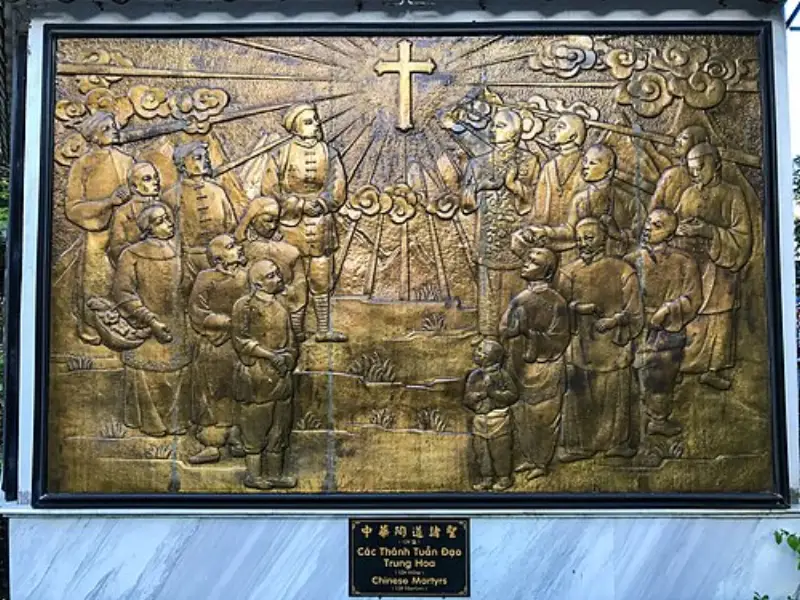
Overview
Peter Wu Anbang was a Chinese layman of the Secular Franciscans at Taiyuan in Shanxi. He belonged to the eleven Secular Franciscans, all Chinese, whose history is joined to that of the Franciscan friars and sisters of the city. In the summer of 1900 the Boxer uprising — tolerated and then backed by the authorities — brought massacre to the Christians of Shanxi. Wu Anbang died a martyr on 9 July 1900 at Taiyuan. John Paul II canonized him on 1 October 2000 among the 120 Martyr Saints of China, most of whom were, like him, Chinese laypeople. His title in the martyrology is simply layman, and it was on that title, with no other biography pleaded, that the Church raised him to the altars.
The Complete Life
Early Life
Peter Wu Anbang was a Chinese layman of Taiyuan in Shanxi, one of the eleven Secular Franciscans of the city whose names the martyrology has kept. The Secular Franciscans, or tertiaries, were laypeople who took a rule of life while remaining in the world, and at Taiyuan they formed a lay corps around the friars: men of the crafts and trades of a provincial capital, with their families, bound to the mission by rule and by worship. Beyond this affiliation the sources tell us nothing individual of Wu Anbang, neither his trade nor his age nor his family. The record of the martyrs of 1900 is like this for most of the Chinese laypeople: the church preserved their names and their constancy, and the details of their lives went unrecorded by a world that killed them in batches.
Trial and Final Years
In 1900 the Boxer uprising reached Shanxi with exceptional severity, the provincial authorities lending the movement official support. The Christians of Taiyuan were arrested and, on 9 July 1900, executed together in the massacre that killed the Franciscan bishops and friars, the sisters of the mission, the seminarians, and the laypeople of the community. Peter Wu Anbang died in that company. The tertiaries of Taiyuan died with their friars, which was the logic of the persecution as the Boxers framed it: the foreign teachers and their Chinese adherents were one enemy. That framing, unjust as it was, testified to the truth that the mission was not a foreign enclave but a joined community, and it is the reason the martyrology of China is overwhelmingly Chinese in composition.
Canonization
Wu Anbang was beatified with the first large group of the martyrs of China by Pope Pius XII on 24 November 1946, and canonized by Pope John Paul II on 1 October 2000 among the 120 Martyr Saints of China, whose deaths span the years 1648 to 1930. In the canonized company the Chinese laypeople form the majority, and Wu Anbang stands explicitly in their number, listed among the eleven Secular Franciscans of Taiyuan who died with their friars. The Martyr Saints of China are commemorated on 9 July, the anniversary of the massacre at Taiyuan in which he died.
Legacy
Wu Anbang's legacy is that of the unnamed lay majority of the Chinese martyrs. He has no biography in the ordinary sense, and the church that canonized him did so on the strength of the one thing the record holds, that he died rather than deny his faith. For the Secular Franciscan order he is one of its eleven Chinese brothers of Taiyuan, a group commemoration of the lay vocation carried to martyrdom. For the wider church his name in the roll of the 120 is a standing lesson: the history of Christianity in China was written principally by Chinese laypeople, most of whose names are lost, and a few of whom, like Peter Wu Anbang, are now invoked in the liturgy itself.
Timeline
- 9 Jul 1900
Martyred in the Taiyuan massacre in Shanxi during the Boxer Rebellion, a layman among the Secular Franciscans
§ Martyrs of the Boxer Rebellion
- 24 Nov 1946
Beatified by Pope Pius XII, one of 29 Chinese martyrs beatified together that day
§ Introduction
- 1 Oct 2000
Canonized by Pope John Paul II among the 120 Martyr Saints of China
§ Introduction
The Record
- Canonization
- Canonized by Pope John Paul II on 1 October 2000, among the 120 Martyr Saints of China
Prayer
Profile text adapted from the Wikipedia article, licensed CC BY-SA 4.0.
Pray with this saint every day
Save St. Peter Wu Anbang to your favorites, read the full profile, and get feast-day reminders in the Saints app.
Get the Saints AppFree on the App Store for iPhone and iPad