
died c. 121·Feast March 27
St. Philetus
Illyrian senator martyred under Hadrian
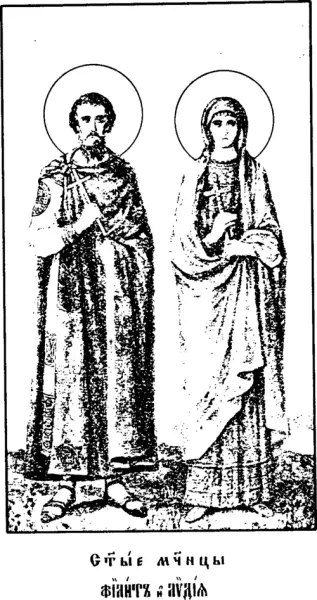
Overview
Philetus is venerated, together with Saints Lydia, Macedo, Theoprepius, Amphilochius, and Cronidas, as a Christian martyr of the early second century. According to the Roman Martyrology and the Orthodox Synaxarium, the group suffered death at Illyria during the persecution raised under the emperor Hadrian, around the year 121. The Martyrology preserves the household relations of the victims with unusual completeness: Philetus was a senator whose residence lay in the province of Illyria, Lydia was his wife, Macedo and Theoprepius were their sons, Amphilochius was a captain, and Cronidas a notary. The company that perished with the senator thus joined his own family to officers of the provincial administration and the army, all condemned together for the Christian faith. The passion narrative that purports to recount their trial is considered unreliable by scholars, but the essential record of a family of rank and its companions put to death in an Illyrian province has remained fixed in the calendars of both East and West, where the feast of the saints is kept on 27 March in the Roman Martyrology and 23 March in the Eastern Orthodox liturgical books.
The Complete Life
A Senator's Household in Illyria
Philetus is commemorated as a senator of the Roman province of Illyria, a man of rank and responsibility who dwelt in that region of the Balkan peninsula where the empire met the Adriatic. The Martyrology names his household with unusual completeness: Lydia was his wife, and Macedo and Theoprepius were their sons; with them suffered Amphilochius, a captain, and Cronidas, a notary. Whatever the precise offices each held, the group that gathered around the senator joined the highest civil standing to the confession of Christ in a province far from the centers of imperial power. The faith had reached into the official and domestic life of Illyria within a century of the apostles, taking root among those whose position made apostasy easy and confession costly. Ancient catalogues place the death of the saints around the year 121, in the course of the persecution raised under the emperor Hadrian. The acta that purport to recount the trial are judged unreliable in their details, but they agree on the essential frame: a Christian family of senatorial dignity, joined by companions of the administration and the army, condemned together for the name of Christ.
§ Philetus (martyr)
One Confession, One Sentence
The witnesses of Illyria perished as a single company, and their common feast preserves the memory of their common witness. Philetus and Lydia, with their sons Macedo and Theoprepius, offered their household itself as the ground of the confession, husband and wife and children passing together through interrogation and sentence. Beside them stood Amphilochius the captain and Cronidas the notary, officers of the provincial order whose fidelity to Christ set their duties against their faith and their careers against their lives. The tradition of the Church, recorded in the Roman Martyrology and the Orthodox Synaxarium, gives the year of their passion from the reign of Hadrian and the place from the province of Illyria, holding both fast even where the narrative of the trial has been judged unreliable. Martyrdom in the Danubian and Adriatic provinces at so early a date testifies to the reach of the Gospel in the generation after the apostolic age, and the number of the condemned, seven souls bound by kinship and service, made of one family and its circle a single sacrifice offered in the name of Christ.
§ Philetus (martyr)
Remembered in East and West
Philetus and his companions are venerated in the Roman Catholic Church and the Eastern Orthodox Church alike, their names carried by the liturgical books of both traditions. The Roman Martyrology records the martyrdom at Illyria under Hadrian and assigns the commemoration to 27 March, while the Eastern churches keep the feast on 23 March according to their liturgical calendars. The Orthodox Synaxarion preserves the saints together under their several titles, calling them by the ranks the Martyrology gives them, and devotional calendars of the saints repeat the same outline, adding the scholarly caution that the surviving acta of the passion cannot be relied upon in every detail. The memory of the group has endured as a family commemoration, unusual among the martyrologies, which more often list companions without kinship or household. In the long catalogue of Hadrianic martyrs the household of Philetus stands as evidence that the Christian faith reached and transformed the domestic and official life of an Illyrian province within a century of the apostles, and the double feast of East and West keeps that household before the faithful of both traditions still.
§ Philetus (martyr)
In Their Own Words
a senator who resided in the province of Illyria and was put to death during the persecution under Emperor Hadrian
The Record
- Canonization
- Pre-congregation; venerated as a martyr in the Roman Catholic and Eastern Orthodox Churches
Prayer
Bibliography
Show 2 sources
- Matthew Bunson, Stephen Bunson, Our Sunday Visitor's Encyclopedia of Saints, 1998, p. 502
- Saint of the Day, March 27, St. Patrick Organization, DC, accessed July 2022
Profile text adapted from the Wikipedia article, licensed CC BY-SA 4.0.
Pray with this saint every day
Save St. Philetus to your favorites, read the full profile, and get feast-day reminders in the Saints app.
Get the Saints AppFree on the App Store for iPhone and iPad