
1557 – 1595·Feast October 19
St. Philip Howard
Earl of Arundel and martyr of the Tower
Overview
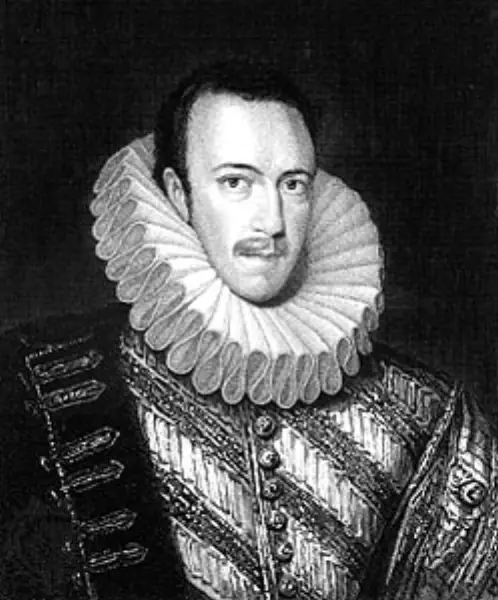
Philip Howard, 13th Earl of Arundel, was an English nobleman whose path ran from the summit of Elizabethan court life to the cell of the Tower of London, where he died for his Catholic faith after more than ten years of imprisonment. Born on June 28, 1557, the only son of the Duke of Norfolk, he was orphaned by his mother within weeks of birth and by his father's execution for treason when he was fifteen. A favorite of Queen Elizabeth I in his youth, he was changed by hearing the Jesuit Edmund Campion defend the faith at his trial, and on September 30, 1584 he was secretly received back into the Catholic Church by Father William Weston. His attempt to leave England for a freer life abroad was betrayed, his ship was boarded, and he was committed to the Tower on April 25, 1585. The charges against him were profession of the Catholic faith, departure from England without royal license, and complicity in Jesuit conspiracies; on that basis he was condemned to death for treason in 1589, though the Queen never signed the warrant. He spent his imprisonment in prayer, writing, and courtesy to his keepers, and refused every offer of freedom bought at the price of conformity. Dying of dysentery in October 1595, he declined to attend the Protestant service that would have restored him to his wife, his son, and his estates, and died alone. Paul VI canonized him in 1970 among the Forty Martyrs of England and Wales.
The Complete Life
Heir of the Howards
Philip was born at Arundel House in the Strand on June 28, 1557, during the upheaval of the English Reformation, the only son of Thomas Howard, 4th Duke of Norfolk, and Lady Mary FitzAlan. His baptism at Whitehall Palace was conducted with the royal family in attendance: the baby was named for his co-godfather, King Philip II of Spain, husband of Queen Mary I, and his godmother, Elizabeth Stafford, held him over a gold baptismal font normally reserved for royal children. His mother died at Arundel House only weeks later, probably of childbed fever; Philip, from the time he turned seven, was raised in a monastery that had once belonged to the Carthusians. Darker shadows followed. His father, a Catholic educated as a Protestant, was arrested in 1569 for intrigues against Queen Elizabeth I, drawn into the Ridolfi Plot to overthrow her and restore Catholicism, and executed for high treason in June 1572, when Philip was almost fifteen. The dukedom was forfeit, and the boy lost his father's estates and his courtesy title. He and his surviving siblings were placed in the care of their uncle Henry Howard at Audley End; Philip went on to St John's College, Cambridge, finishing his degree in 1574, aged seventeen. By eighteen he was attending the court of Elizabeth I, where, despite his family's record, he became a favorite of the Queen.
§ Early life
The Return to the Old Faith
Philip's Catholicism was never far beneath the surface. He had been baptized a Catholic, and though raised in the Protestant settlement, his closest kin had stayed loyal to the old Church: his maternal grandfather was a staunch Catholic, and his paternal grandfather, the Earl of Surrey, had been executed by Henry VIII partly for the same faith. In 1581 the decisive moment came. Philip stood in the audience as Anglican divines disputed with two Catholic priests held in prison, Edmund Campion and Ralph Sherwin. Campion's fearless pleading for the faith with his life at stake moved Philip to return to Arundel and consider reconciliation with the Catholic Church, whatever dangers it would bring. In 1583 he fell under suspicion of complicity in the Throckmorton Plot, and that same year Anne Dacre, his wife, dreading his anger, made her own quiet return to England's hidden Catholic community and won back, with patient effort, the affection of her husband. On September 30, 1584, Philip was secretly received into the Catholic Church by the Jesuit Father William Weston, his younger half-brother Lord William Howard being received at the same time. He concealed his adherence at court for a time, withdrew to his house, and set himself to be a better husband and father before resolving to live openly as a Catholic abroad.
§ Received again into Catholic Church and later imprisonment
Betrayal and the Tower
The plan of flight was betrayed to Sir Francis Walsingham by a trusted servant, identified by Father Philip Caraman as the Earl's chaplain, the agent provocateur Father Edward Grately. Philip mattered to the regime as few recusants did: through kinship to Anne Boleyn he was the Queen's second cousin once removed, and persecuted Catholics who dreamed of regime change regarded him as a plausible successor to the English crown. His vessel had barely cleared Littlehampton when English pirates in Tudor pay came alongside and boarded her, and Philip discovered, not the ransom demand he braced for, but committed to the Tower of London on April 25, 1585. Before the Star Chamber the indictment named his Catholic faith, his departure from England without leave, his alleged part in Jesuit schemes, and his assumption of the Dukedom of Norfolk in defiance of his father's attainder. Fined £10,000 in May 1586 and imprisoned at the Queen's pleasure, he refused in July of that year an offer of freedom that required him to walk in procession carrying the sword of state ahead of the Queen on her way to church. Accused in 1588 of praying for the Spanish Armada's victory, he was tried for high treason on April 14, 1589, found guilty, condemned to death, and attainted of every title and estate. The principal charge was that he had asked a priest to pray for the Spanish fleet; what his enemies could prove was only that he had asked for prayers day and night in the prisons of London.
§ Received again into Catholic Church and later imprisonment
Ten Years of Prayer Behind the Wall
The Queen never signed the death warrant, but Howard was never told, and he lived under constant fear of execution for the rest of his life. His imprisonment became a school of prayer. Each day he gave several hours to prayer and meditation; suffering never broke his patience, and even harsh keepers met unfailing courtesy from him. His companions in the Tower included the priest Robert Southwell, whom Philip never met face to face: the two men smuggled messages to one another by means of Philip's dog, an animal he loved and which is commemorated beside him in a statue at Arundel Cathedral. The captive years were also literary years: Philip turned his hand to composing and rendering Catholic verse and devotional prose, and Father Caraman records that the manuscripts were carried out of the Tower again and again for Father William Weston to correct, one of them eventually reaching the Spanish Netherlands and the exiled publisher Richard Verstegan. On one wall of his cell he scratched words still visible today: every affliction accepted for Christ in this life is repaid in glory with Christ in the life to come, a sentence drawn from the thought of the eighth chapter of Romans and now carved on a step of his shrine in Arundel. When a final offer of liberation came, on condition that he dispute with the Archbishop of Canterbury, he refused it, reckoning persecution a greater happiness than the shallow satisfaction of worldly freedom.
§ Received again into Catholic Church and later imprisonment
Dying Alone in the Tower
In the autumn of 1595 Philip lay dying of dysentery, and he petitioned the Queen for one grace: to see his wife and his son, the boy who had been born after his imprisonment began. Elizabeth's answer made the visit a bargain of conscience: if he would attend the Protestant service once, he would see his wife and children and be restored to his honors and estates with every mark of royal favor. His reply has become the most quoted sentence of his life: if his religion was the cause for which he suffered, he was sorry he had but one life to lose. The bargain was refused. The Tower kept him to the last: wife and son were never seen again, and on Sunday, October 19, 1595, in his thirty-eighth year, he died with no one beside him. Some suspected poison, though careful inquiry by Father Weston found no confirmation; as he lay dying Philip bequeathed his breviary to Weston, and Father Garnet kept it for its safety, declaring it more precious than gold, only for it to vanish, together with Southwell's own breviary, when priest hunters raided the London lodging where Garnet kept his treasures. the Tower's own church of St Peter ad Vincula received his body under its pavement, close to the bones of his father; his funeral, Father Caraman records, cost his frugal sovereign two pounds.
§ Death and burial
From Fitzalan Chapel to the Altars
Philip's cause moved slowly across three centuries. His widow, Anne Dacre, took a vow of chastity after his death, devoted her remaining years to Christian poetry, Mass, and the care of the sick, and in 1624 obtained permission, with their son, to move his remains from the Tower first to West Horsley in Surrey and finally to the Fitzalan Chapel at Arundel Castle. Their son Thomas recovered the family's standing under James I, regaining the earldom of Arundel and its estates in 1604. Philip was beatified on December 15, 1929, by Pope Pius XI, and on October 25, 1970, Pope Paul VI canonized him as one of the Forty Martyrs of England and Wales, the company of men and women put to death for the Catholic faith under the Tudor and Stuart monarchs. The honor transformed his resting place. Arundel Cathedral, commissioned by the 15th Duke of Norfolk in 1868 and elevated to cathedral status in 1965, changed its dedication from Saint Philip Neri to Our Lady and Saint Philip Howard shortly after the canonization. On March 10, 1971, with the Coadjutor Bishop of Arundel and Brighton and the Chapter of Canons looking on, the relics left the Fitzalan Chapel for the new shrine raised within the cathedral, which has been a place of pilgrimage ever since.
§ Legacy
Memory in Sussex and Beyond
Saint Philip Howard is co-patron, with Our Lady of the Assumption, of the Roman Catholic Diocese of Arundel and Brighton, and his feast is kept on October 19, the day of his death, with his canonization also remembered on October 25. The shrine in the north transept of Arundel Cathedral holds his relics, and the inscription from his Tower cell, with its promise that affliction borne for Christ is exchanged for glory with Christ, is carved on a step before it, so that pilgrims read the prisoner's own consolation at the saint's side. His writings survived their smuggling and losses: his translation of John Justus of Landsberg's Epistle in the Person of Jesus Christ to the Faithful Soule was printed at Antwerp in 1595 and reprinted in 1871, his verse rendering of Marko Marulić's poem on Christ hanging on the cross served as the introduction to that edition and was republished with modernized spelling in 2022 in the St. Austin Review, and his three manuscript treatises on the excellence and utility of virtue remain witnesses to the nobleman's turn from a frivolous youth to contemplative authorship. The poet Louise Imogen Guiney gathered his life and Christian poetry into her 1939 collection The Recusant Poets, fixing his place in English recusant letters. In Arundel the statue of the saint with his dog keeps alive the human details of a long imprisonment, and the earl who died for refusing one church service stands among the best-remembered of the Forty Martyrs.
§ Legacy
Timeline
- 28 Jun 1557
Born at Arundel House in the Strand, London, and named after his godfather King Philip II of Spain.
§ Early life
- 1569
His father arranged Philip's marriage to Anne Dacre, his step-sister; the rite was said again two years on, once both had reached the age of consent.
§ Early life
- Jun 1572
His father, Thomas Howard, 4th Duke of Norfolk, was executed for high treason after involvement in the Ridolfi Plot.
§ Early life
- 1574
Graduated from St John's College, Cambridge, at the age of seventeen.
§ Early life
- Feb 1580
Succeeded his maternal grandfather and was made Earl of Arundel by Queen Elizabeth I.
§ Early life
- 1581
Attended the public disputations of the imprisoned priests Edmund Campion and Ralph Sherwin, an experience that turned his thoughts toward the Catholic Church.
§ Received again into Catholic Church and later imprisonment
- 30 Sep 1584
Brought back, in secret, to communion with the Catholic Church by the Jesuit William Weston.
§ Received again into Catholic Church and later imprisonment
- 25 Apr 1585
Arrested at sea while attempting to flee to the continent and committed to the Tower of London.
§ Received again into Catholic Church and later imprisonment
- 17 May 1586
Sentenced before the Star Chamber to a £10,000 fine and imprisonment at the Queen's pleasure.
§ Received again into Catholic Church and later imprisonment
- 14 Apr 1589
Tried for high treason, found guilty, condemned to death, and attainted with forfeiture of all titles and property.
§ Received again into Catholic Church and later imprisonment
- 19 Oct 1595
Died alone in the Tower of London of dysentery, refusing the Protestant service that would have restored his family and estates.
§ Death and burial
- 1624
His widow and son obtained permission to move his remains to the Fitzalan Chapel at Arundel Castle.
§ Death and burial
- 15 Dec 1929
Beatified by Pope Pius XI.
§ Legacy
- 25 Oct 1970
Canonized by Pope Paul VI as one of the Forty Martyrs of England and Wales.
§ Legacy
- 10 Mar 1971
His relics left the Fitzalan Chapel for the newly built shrine in Arundel Cathedral.
§ Legacy
In Their Own Words
Quanto plus afflictiones pro Christo in hoc saeculo, tanto plus gloriae cum Christo in futuro.
Tell Her Majesty if my religion be the cause for which I suffer, sorry I am that I have but one life to lose.
The Record
- Major works
- Translation of An Epistle in the Person of Jesus Christ to the Faithful Soule by John Justus of Landsberg (Antwerp, 1595)·Verse translation of Marko Marulić's Carmen de doctrina Domini nostri Iesu Christi pendentis in cruce (A Dialogue Betwixt a Christian and Christ Hanging on the Crosse)·Three manuscript treatises On the Excellence and Utility of Virtue
- Patron of
- Diocese of Arundel and Brighton
- Canonization
- Beatified December 15, 1929, by Pope Pius XI; canonized October 25, 1970, by Pope Paul VI as one of the Forty Martyrs of England and Wales
Prayer
Bibliography
Show 6 sources
- Pollen, John Hungerford. "Ven. Philip Howard." The Catholic Encyclopedia, Vol. 7. New York: Robert Appleton Company, 1910
- Norfolk, Henry Granville Fitzalan-Howard. The Lives of Philip Howard, Earl of Arundel, and Anne Dacre, his wife. London: Hurst and Blackett, 1857
- Weston, William (1955). An Autobiography from the Jesuit Underground. Translated by Philip Caraman, with an introduction by Evelyn Waugh. New York: Farrar, Straus and Cudahy
- Conyers Read, Mr. Secretary Walsingham and the Policy of Queen Elizabeth, vol. 2. Archon Books, 1967, pp. 388–389
- Pullan, Malcolm (2008). The Lives and Times of the Forty Martyrs of England and Wales 1535–1680, p. 214
- Guiney, Louise Imogen (1939). The Recusant Poets: With a Selection from their Work: From Thomas More to Ben Jonson. Sheed & Ward, pp. 203–228
Profile text adapted from the Wikipedia article, licensed CC BY-SA 4.0.
Pray with this saint every day
Save St. Philip Howard to your favorites, read the full profile, and get feast-day reminders in the Saints app.
Get the Saints AppFree on the App Store for iPhone and iPad