
1874 – 1941·Feast May 5
St. Platon of Banja Luka
Serbian Orthodox bishop martyred under the Ustaše
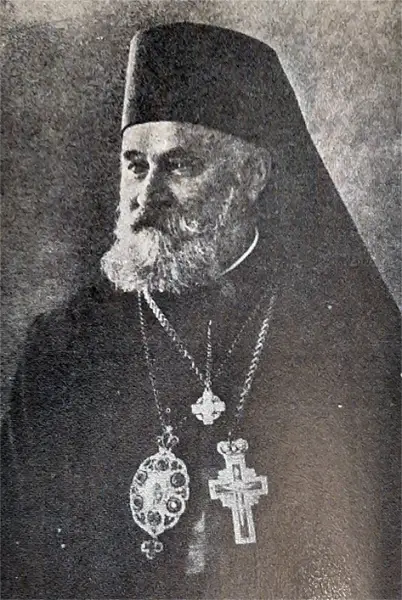
Overview
Platon of Banja Luka was born Milivoje Jovanović in Belgrade on 29 September 1874, the son of a soldier from Trebinje and a mother from Foča whose families had settled in Serbia as refugees from Herzegovina. Educated at the Belgrade seminary and then at the Moscow Theological Academy, where he became the first Serb to hold the Ivan Aksakov Scholarship, he took monastic vows in 1895 and rose through teaching, editing, and monastic office. He was an army chaplain through the Balkan Wars and early in the First World War, spent the occupation of Serbia under arrest and narrowly escaped execution by Bulgarian forces, and endured periods of political sidelining within his own Church hierarchy. Ordained a bishop in 1936, he led the Eparchy of Ohrid and Bitola before being transferred to Banja Luka in October 1940. When the Axis powers dismembered Yugoslavia in 1941 and Bosnia fell to the Ustaše-run Independent State of Croatia, an expulsion decree ordered Serbs born in Serbia to leave the city. Platon refused to abandon his flock. Arrested on the night of 4–5 May 1941, he was tortured and killed near the Vrbas river together with the dean Dušan. His body came to light on 23 May and was laid in an unnamed grave. Reinterred in 1973 and declared a hieromartyr in 1998, he was canonized in 2000; his feast falls on 5 May.
The Complete Life
A Refugee's Son from Belgrade
The child born Milivoje Jovanović in Belgrade on 29 September 1874 belonged to a family shaped by displacement. His father Ilija, a career soldier, had been born in Trebinje; his mother Jelka came from Foča; both sides had settled in the Serbian capital as refugees from Herzegovina. The boy was baptized at the Church of the Ascension in Belgrade, attended primary school in Vranje, and completed his secondary education in Niš. In 1892 he entered the Serbian Orthodox seminary in Belgrade's Bogoslovija district, and three years later he took monastic vows, adopting the name Platon. He completed the seminary course in 1896, was ordained deacon and then presbyter, and promptly crossed into Russia to continue his education. At the Moscow Theological Academy, in which he enrolled in 1897, he became the first Serb to receive the Ivan Aksakov Scholarship, a mark of the ability that would carry him through a life of study, teaching, and administrative service. He finished the Moscow program in 1901 and returned home to a Church that soon found uses for his learning: raised to the rank of syncellus and attached to the Rajinovac Monastery at Grocka, he then led Serbian monks to Visoki Dečani in Ottoman Kosovo in 1902, and taught theology in Aleksinac and Jagodina before being certified a professor of theology in 1906.
§ Early life
Monk, Teacher, Editor, Chaplain
Platon's rise through the ranks of the Serbian Orthodox Church was steady but repeatedly interrupted. Raised to protosyncellus in 1906, he was given charge of the Gazette of the Serbian Orthodox Patriarchate in 1908, elevated to archimandrite in 1909, and relieved of the editorship in 1910. When the Balkan Wars broke out in November 1912 he was summoned to serve as military chaplain to the Morava Brigade of the Royal Serbian Army, and he carried the same ministry into the first months of the First World War before being released from the chaplaincy on 11 December 1914 to teach again at Bogoslovija. He stayed in occupied Serbia through the war, refusing evacuation to Corfu with the army, and was arrested under the Austro-Hungarian occupation and all but faced a Bulgarian firing squad in their zone. Peace brought no respite from internal politics: in 1919 his opponents in the Bishops' Council forced him into retirement, and the former archimandrite worked as a carpenter's apprentice and then as an accountant before managing a publishing house. Only after the death of a chief rival in 1922 was he readmitted to the priesthood, becoming archimandrite of Rakovica Monastery and administrator of its school. Accusations of misappropriated funds, later dismissed, again cost him the post, and years of appeals and precarious appointments followed before his rehabilitation of 1932 restored him to office, placing him over the monastery printing press at Sremski Karlovci.
§ Clerical service
Bishop in Troubled Times
Platon received episcopal ordination on 4 October 1936 at Sremski Karlovci, Patriarch Varnava presiding. Almost at once he showed that he would not keep silent on questions of Church and state. During the Concordat Crisis over the Yugoslav government's agreement with the Holy See, he composed the pamphlet Remarks and Objections to the Concordat Project, issuing it anonymously; once his pen was identified, it opened a rift with Prime Minister Milan Stojadinović's government. On 19 July 1937, as the National Assembly debated the concordat, clerics led street demonstrations that gendarmes beat back in the violence the press named the Bloody Liturgy; Platon scuffled with the police, and a bishop and a priest were killed. In June 1938 the Bishops' Council elected him to the Eparchy of Ohrid and Bitola, where he found his priests quarreling among themselves, divisions he blamed on his predecessor. A sermon on the feast of Saint Nicholas in December 1939 denouncing that predecessor provoked the Council to demand a formal apology, and Platon, threatened with defrocking, complied. Rather than retire him, the authorities transferred him to the Eparchy of Banja Luka, where he arrived unannounced and took up the bishopric on 1 October 1940 without enthronement. The Council soon barred such informal accessions for the future, but allowed him to keep the post.
§ Ordination as Bishop
Refusal, Arrest, and Martyrdom
The Axis invasion of April 1941 placed Bosnia and Herzegovina under the Independent State of Croatia, the Ustaše puppet state whose race laws targeted Serbs, Jews, and Roma. In Banja Luka the Ustaše commissioner Viktor Gutić dismissed Serbs and Jews from public employment and, on 24 April, decreed that everyone born in the former Serbia and Montenegro must leave the city within five days. Platon sought to soften the measures, sending the priest Dušan Mačkić to intercede with Gutić, who described the anti-Serb policies as God's punishment for the Serbs but granted a ten-day postponement of the deportations. Though a Serbian-born subject of the decree, Platon would not leave his diocese; on 1 May he sent Gutić a letter vowing never to forsake his flock. On the night of 4–5 May he was arrested, along with many other prominent Serbs and priests, and detained in the Habsburg-era prison called the Black House, sharing a cell with the Episcopal Dean of Gradiška, named Dušan. On the evening of 5 May, Gutić's bodyguards drove the two clerics out of the city to a riverside spot on the Vrbas at Rebrovac, where the prisoners were savagely beaten and mutilated with savage cruelty; Platon finally died from a bullet to the head. He was sixty-six. Both bodies were pushed into the river. Platon's mutilated remains were found on 23 May and buried the following day in an unmarked grave at a military cemetery.
§ Death
Hieromartyr of the Serbian Church
Platon was one of three Serbian Orthodox bishops out of ten serving in the Independent State of Croatia who were killed during the war, in a persecution that annihilated the Church's nine dioceses in the puppet state and left its clergy murdered, exiled, or in flight. His grave bore no name, but his memory did not perish. In 1973 his body was taken up and laid to rest once more in the crypt of Banja Luka's Church of the Holy Trinity — a building the Ustaše had dynamited in wartime and only lately raised anew. In 1998 the Serbian Orthodox Church formally elevated him to the rank of hieromartyr, and on 21 May 2000 the canonization rite at Belgrade's Cathedral of Saint Sava enrolled him, alongside other clergy who died at Ustaše hands. After the canonization his relics were moved from the crypt and placed in a sarcophagus before the church's altar. Scholars have observed that the canonizations of that year took place against the backdrop of Pope John Paul II's contested beatification of the wartime Archbishop of Zagreb, Aloysius Stepinac, in October 1998, and a scholar of religion has contended that his martyrdom owed as much to his ethnic belonging as to his religious convictions. The Church keeps his feast each 5 May, the day he died.
§ Legacy
Memory and Justice
Justice of a kind followed Platon's killing. Asim Đelić, the bodyguard who had taken the two clerics from their cell, was hanged in October 1944 on the orders of a Croatian Home Guard general for insubordination. A post-war investigation by the Yugoslav State Commission established that the murder had been ordered by Viktor Gutić himself. As the puppet state collapsed in 1945 Gutić fled to Italy, but the Allies apprehended and extradited him; his February 1947 trial ended in conviction on charges of treason, collaboration, and crimes against humanity, and the gallows claimed him before the month was out. Beyond the courtroom, Platon's death has come to stand for the wider catastrophe that engulfed the Serbian Orthodox Church in the Independent State of Croatia, in which historians count the killing of between roughly 150 and 217 priests and monks and the murder of three bishops. His relics remain in the Church of the Holy Trinity in Banja Luka, where the faithful venerate the bishop who stayed when he might have fled. In the calendar of the Serbian Orthodox Church he is numbered among its modern saints, a witness from an age of ideological violence whose fidelity to his flock, maintained through Balkan wars, occupation, internal Church politics, and finally genocide, gave his episcopate the shape of a sacrifice.
§ Legacy
Timeline
- 29 Sep 1874
Born Milivoje Jovanović in Belgrade, son of Ilija and Jelka, refugees' descendants from Herzegovina.
§ Early life
- 1892
Enrolled in the Serbian Orthodox seminary in Belgrade's Bogoslovija district.
§ Early life
- 1895
Took monastic vows and adopted the name Platon.
§ Early life
- 1896
Graduated from the seminary, was ordained deacon and presbyter, and moved to Russia for further study.
§ Early life
- 1897
Enrolled at the Moscow Theological Academy as the first Serb to receive the Ivan Aksakov Scholarship.
§ Early life
- 1901
Finished his Moscow studies and, once home in Serbia, received the dignity of syncellus.
§ Early life
- 1902
Guided Serbian monks to Visoki Dečani in Ottoman-ruled Kosovo.
§ Early life
- 1906
Finished teaching in Aleksinac and Jagodina, was certified a professor of theology, and raised to protosyncellus.
§ Early life
- 1908
Put in charge of the patriarchate's official Gazette as its editor.
§ Early life
- 1909
Raised to the rank of archimandrite.
§ Early life
- Nov 1912
Summoned to serve as military chaplain to the Morava Brigade of the Royal Serbian Army in the Balkan Wars.
§ Clerical service
- 11 Dec 1914
Relieved of his chaplaincy after serving in the opening months of the First World War, and resumed teaching at Bogoslovija.
§ Clerical service
- 1919
Forcibly retired through the lobbying of political opponents within the Bishops' Council, and forced to seek work outside the Church.
§ Clerical service
- 1922
Permitted to return to the priesthood after the death of a chief rival, and appointed archimandrite of the Rakovica Monastery.
§ Clerical service
- 1932
The Bishops' Council dismissed the embezzlement charges from his Rakovica tenure, and he was put in charge of the monastery printing press at Sremski Karlovci.
§ Clerical service
- 1933
Launched a children's newspaper called Little Bogoljub.
§ Clerical service
- 4 Oct 1936
Ordained a bishop at Sremski Karlovci in a ceremony presided over by Patriarch Varnava.
§ Ordination as Bishop
- 19 Jul 1937
Scuffled with gendarmes during the street demonstrations against the concordat known as the Bloody Liturgy.
§ Ordination as Bishop
- 22 Jun 1938
Elected by the Bishops' Council to the vacant Eparchy of Ohrid and Bitola.
§ Ordination as Bishop
- 1 Oct 1940
Assumed the position of Bishop of Banja Luka without a formal enthronement ceremony.
§ Ordination as Bishop
- 24 Apr 1941
Ustaše commissioner Viktor Gutić decreed that all born in Serbia or Montenegro must leave Banja Luka within five days.
§ Death
- 1 May 1941
Sent Gutić a letter vowing never to forsake his flock, in defiance of the expulsion order.
§ Death
- 5 May 1941
Arrested the previous night, he was taken from the Black House prison, tortured and shot near the Vrbas at Rebrovac.
§ Death
- 23 May 1941
His mutilated body was found along the Vrbas riverbank.
§ Legacy
- 24 May 1941
Buried without ceremony in an unmarked grave at a military cemetery in Banja Luka.
§ Legacy
- 1 Jul 1973
His remains were lifted from the grave and laid again in the crypt of Banja Luka's rebuilt Church of the Holy Trinity.
§ Legacy
- 1998
The Serbian Orthodox Church elevated Platon to the status of hieromartyr.
§ Legacy
- 21 May 2000
Canonized in Belgrade's Cathedral of Saint Sava, together with other clergy killed by the Ustaše.
§ Legacy
The Record
- Major works
- Remarks and Objections to the Concordat Project (pamphlet, published anonymously)·Children's newspaper Little Bogoljub·Editor of the Gazette of the Serbian Orthodox Patriarchate
- Symbols
- wearing episcopal vestments·holding a Gospel book·holding a martyr's cross
- Canonization
- Canonized 21 May 2000, Belgrade, by the Holy Synod of the Serbian Orthodox Church; declared hieromartyr in 1998
Prayer
Bibliography
Show 8 sources
- Puzović, Predrag (2002). "Платон Јовановић, Епископ Бањалучки (1874–1941)" (PDF). Bogoslovlje (in Serbian). 61 (1). Belgrade, Yugoslavia: University of Belgrade: 243–251. ISSN 0006-5714.
- Brady, Dimitri (1999). "Plato Jovanović". In Parry, Ken (ed.). The Blackwell Dictionary of Eastern Christianity. Hoboken, New Jersey: John Wiley & Sons. pp. 383–384. ISBN 978-0-6311-8966-4.
- Dulić, Tomislav (2005). Utopias of Nation: Local Mass Killing in Bosnia and Herzegovina, 1941–42. Uppsala, Sweden: Uppsala University Library. ISBN 978-9-1554-6302-1.
- Mojzes, Paul (2011). Balkan Genocides: Holocaust and Ethnic Cleansing in the 20th Century. Lanham, Maryland: Rowman & Littlefield. ISBN 978-1-4422-0665-6.
- Perica, Vjekoslav (2002). Balkan Idols: Religion and Nationalism in Yugoslav States. Oxford, England: Oxford University Press. ISBN 978-0-19517-429-8.
- Ramet, Sabrina P. (2006). The Three Yugoslavias: State-Building and Legitimation, 1918–2005. Bloomington, Indiana: Indiana University Press. ISBN 978-0-253-34656-8.
- Tomasevich, Jozo (2001). War and Revolution in Yugoslavia, 1941–1945: Occupation and Collaboration. Stanford, California: Stanford University Press. ISBN 978-0-8047-3615-2.
- Velikonja, Mitja (2003). Religious Separation and Political Intolerance in Bosnia-Herzegovina. College Station, Texas: Texas A&M University Press. ISBN 978-1-58544-226-3.
Profile text adapted from the Wikipedia article, licensed CC BY-SA 4.0.
Pray with this saint every day
Save St. Platon of Banja Luka to your favorites, read the full profile, and get feast-day reminders in the Saints app.
Get the Saints AppFree on the App Store for iPhone and iPad