
died 2 August 914 (or 923)·Feast August 2
St. Plegmund
Archbishop of Canterbury and scholar of King Alfred
Overview
Plegmund was a Mercian scholar who rose from probable obscurity to become Archbishop of Canterbury, the highest ecclesiastical office in Anglo-Saxon England. Little is recorded of his early life beyond his Mercian origins and a later tradition, first set down three centuries after his death, that he lived as a hermit at Plemstall in Cheshire. His learning drew the attention of King Alfred the Great, who summoned him to court before 887 to help revive English scholarship; there Plegmund joined a small team of scholars translating Pope Gregory the Great's Pastoral Care into Old English. In 890 Alfred selected him for the vacant archbishopric of Canterbury, and his election was recorded in the Anglo-Saxon Chronicle with the words that he was chosen by God and all the people. As archbishop, Plegmund confronted a see weakened by decades of decline and Viking disruption. He re-established Canterbury's authority, journeyed to Rome in 908 — the first archbishop of Canterbury to do so in nearly a century — to obtain a renewed pallium from Pope Sergius III, and between 909 and 918 divided the vast Diocese of Winchester to create the new sees of Crediton, Ramsbury, Sherborne, and Wells, giving each shire of Wessex its own bishop. He crowned Edward the Elder in 899 and served on the king's councils until his death on 2 August, remembered variously as 914 or 923. His feast is kept on 2 August.
The Complete Life
A Mercian of Hidden Origins
The origins of Plegmund are wrapped in the obscurity that surrounds most Anglo-Saxons who were not born to thrones. The sources record only that he was of Mercian descent, a native of the great midland kingdom whose scholarship and monasteries had suffered alongside those of Wessex in the Viking wars. A later tradition, first committed to writing some three hundred years after his death, held that he lived as a hermit at Plemstall in Cheshire, a place whose very name means the holy place of Plegmund. Historians have noted that the early recording of the place name gives the tradition at least a possibility of truth, though it cannot be verified. Whether he was in fact a solitary given to prayer and study in a Cheshire hermitage, or simply a learned churchman of the Mercian clergy, what is certain is that his reputation as a scholar crossed the border into Wessex. There King Alfred the Great was laboring to revive learning in a kingdom battered by war, gathering educated men from every quarter to restore religious and literary culture to the English people. The king's search for such men brought Plegmund to the center of one of the great intellectual enterprises of the early Middle Ages.
§ Early life
Scholar at the Court of Alfred
Some time before 887, King Alfred summoned Plegmund to his court, adding him to the circle of learned men the king had assembled to rebuild English religious culture. In that company Plegmund worked alongside three other scholars — Wærferth, Bishop of Worcester, and the priests Æthelstan and Wærwulf — on the translation of Pope Gregory the Great's treatise Pastoral Care into Old English. The book was no arbitrary choice: Gregory's instruction on the duties of shepherds of souls was the classic manual of episcopal responsibility, and Alfred had already lamented that learning had decayed so far in England that few clergy could read Latin. Translating it into the vernacular put the ideals of pastoral office before every English priest who could read his own tongue. The project placed Plegmund at the heart of Alfred's program of educational renewal, and it demonstrated precisely the qualities the king needed in an archbishop: Latinity, devotion, and the ability to make learning serve the Church of a war-weary people. When the archbishopric of Canterbury fell vacant in 890, Alfred looked to the Mercian scholar he had tested at court. The election of Plegmund was entered in the Anglo-Saxon Chronicle, which records his election as the work of God and of all the people together. From Reims, Archbishop Fulk sent praise, predicting that the new occupant of the see would help drive the last traces of paganism from his flock.
§ Archbishop of Canterbury
Restoring the See of Canterbury
Plegmund took up the archbishopric at a low ebb in its history. Throughout the ninth century the see of Canterbury had declined, its authority eroded by Viking devastation and by the mediocrity of its recent occupants, and one of his chief responsibilities was to re-establish its standing in the English Church. His election had followed an interval after the death of his predecessor Æthelred, perhaps because the see had first been offered to the Flemish monk and scholar Grimbald, who refused it. Once confirmed, Plegmund received his pallium from Pope Formosus. The decades that followed showed the seriousness of his stewardship. When Alfred died in 899, it was Plegmund who crowned his son Edward as king, and through the early years of the reign he attended Edward the Elder's formal councils in 901, 903, 904, and 909, standing at the intersection of Church and state in the making of a unified English kingdom. Under his administration the Latin of his scribes rose markedly in quality, surpassing the poor work of the chancery of the previous two archbishops. Most consequentially, he carved four new sees out of the vast Winchester diocese between 909 and 918, seated at Crediton, Ramsbury, Sherborne, and Wells, so that each future shire of Wessex — Devon and Cornwall, Wiltshire, Dorset, and Somerset, alongside Hampshire's Winchester — had a bishop of its own.
§ Archbishop of Canterbury
The Roman Journey and the New Sees
The great reform of the Winchester diocese required delicate diplomacy, for the acts of Pope Formosus had been annulled after his death amid the scandals of the Roman church, and Pope Sergius III, Formosus's successor in the settled order, had voided them all. Plegmund's own pallium, granted by Formosus, was thereby cast into doubt. In 908 he therefore traveled to Rome to be re-granted the pallium from Sergius III, an act that secured both his own position and the validity of the reforms he intended. No archbishop of Canterbury had made the Roman journey for close on a hundred years before him, and he returned to England bearing relics of Saint Blaise, a treasure for the churches of his province. Strengthened in authority, he carried through the reorganization of the Winchester diocese between 909 and 918, erecting the sees of Crediton, Ramsbury, Sherborne, and Wells and dedicating the tall tower of the New Minster at Winchester in 909. The death of Plegmund is placed on 2 August, though the year is disputed between 914 and 923, with the shorter tenure supported by the standard chronologies and the longer by other authorities. Either way he had served Canterbury for more than two decades, dying as he had lived, in the service of a Church he had done much to revive.
§ Death and legacy
A Saint of the English Church
Plegmund was regarded as a saint after his death, and his feast day was fixed on 2 August, the anniversary of his passing. His cult, however, is documented only from the thirteenth century, a long gap between the archbishop's burial and the formal expression of his veneration that is common among the saints of the Anglo-Saxon Church. By the later Middle Ages his name stood among the holy bishops of Canterbury, and in the modern era he is honored both by the Roman Catholic Church, in whose calendar of English saints he appears, and by the Eastern Orthodox Church, which numbers him among the saints of the British Isles. No formal canonization process stands behind his title, for he belongs to the pre-congregation saints, those whose sanctity was received by the continuous devotion of the Church rather than declared by a papal decree. His cult thus grew from the memory of what he had done: the scholar of Alfred's court, the restorer of Canterbury, the organizer of the dioceses of Wessex, and the first archbishop in a century to pray at the tombs of the Apostles and return to his people with the blessing of Rome and the relics of a martyr.
§ Death and legacy
The Churchman Who Helped Make England
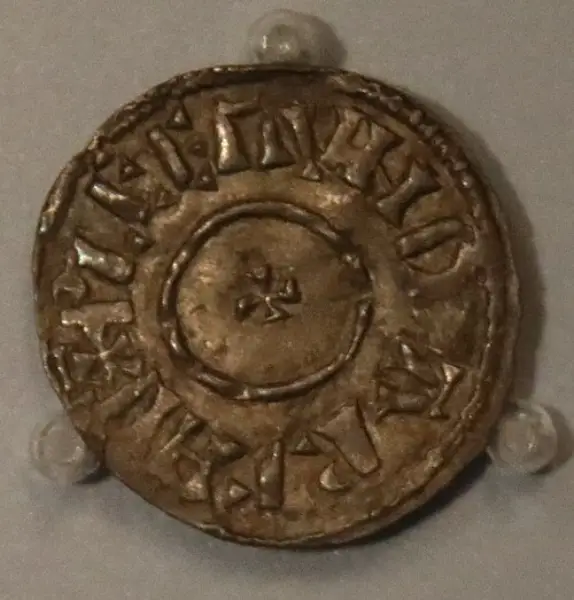
Plegmund's achievements outlasted him in the institutions of the English Church. The sees he created in Wessex — Crediton for Devon and Cornwall, Ramsbury for Wiltshire, Sherborne for Dorset, and Wells for Somerset — endured as the framework of the Church in southern England, aligning episcopal authority with the shires through which royal government was organized. In this respect his reform of the Winchester diocese contributed to the same great work to which Alfred and Edward the Elder devoted their reigns: the consolidation of a single English kingdom under Christian law and learning. His share in the translation of the Pastoral Care links him forever to the revival of English prose, one of the founding moments of English literature. Successive archbishops built on the foundations of authority he had restored at Canterbury, and the improved Latin of his chancery marked a turning point in the professional quality of the see's administration. Historians of the Anglo-Saxon Church remember him as the embodiment of Alfred's ideal of the learned bishop, a man drawn from a hermit's obscurity to the highest office in the English Church who proved worthy of both callings. His coinage, struck in his name as archbishop, survives in the Ashmolean Museum at Oxford, a small metal witness to the authority he exercised.
§ Archbishop of Canterbury
Timeline
- 887
By this year, King Alfred had summoned the Mercian scholar to court to work on the translation of Gregory the Great's Pastoral Care.
§ Early life
- 890
Selected by King Alfred for the see of Canterbury and consecrated Archbishop; granted his pallium by Pope Formosus.
§ Archbishop of Canterbury
- 899
Crowned Edward as king upon the death of Alfred the Great.
§ Archbishop of Canterbury
- 901
Attended the first of Edward the Elder's formal councils in which he took part as archbishop.
§ Archbishop of Canterbury
- 903
Attended Edward the Elder's formal council held in this year.
§ Archbishop of Canterbury
- 904
Attended Edward the Elder's formal council held in this year.
§ Archbishop of Canterbury
- 908
Traveled to Rome to be re-granted his pallium by Pope Sergius III, the first Canterbury archbishop to visit Rome in nearly a century, returning with relics of Saint Blaise.
§ Archbishop of Canterbury
- 909
Dedicated the tall tower of the New Minster at Winchester and began the creation of the new sees of Crediton, Ramsbury, Sherborne, and Wells.
§ Archbishop of Canterbury
- 2 Aug 914
Died on 2 August, in either this year or 923 according to different sources.
§ Death and legacy
The Record
- Major works
- Old English translation of Pope Gregory the Great's Pastoral Care (collaborative)·Reorganization of the Diocese of Winchester into the sees of Crediton, Ramsbury, Sherborne, and Wells
- Canonization
- Pre-congregation; venerated as a saint after his death, with a documented cult from the 13th century
Prayer
Bibliography
Show 7 sources
- Abels, Richard Philip (1998). Alfred the Great: War, Kingship, and Culture in Anglo-Saxon England. New York: Longman. ISBN 0-582-04047-7.
- Brooks, Nicholas (1984). The Early History of the Church of Canterbury: Christ Church from 597 to 1066. London: Leicester University Press. ISBN 0-7185-0041-5.
- Farmer, David Hugh (2004). Oxford Dictionary of Saints (Fifth ed.). Oxford, UK: Oxford University Press. ISBN 978-0-19-860949-0.
- Keynes, Simon (2001). "Plegmund". In Lapidge, Michael; Blair, John; Keynes, Simon; Scragg, Donald (eds.). The Blackwell Encyclopaedia of Anglo-Saxon England. Malden, MA: Blackwell Publishing. pp. 371–372. ISBN 978-0-631-22492-1.
- Stafford, Pauline (1989). Unification and Conquest: A Political and Social History of England in the Tenth and Eleventh Centuries. London: Edward Arnold. ISBN 0-7131-6532-4.
- Stenton, F. M. (1971). Anglo-Saxon England (Third ed.). Oxford: Oxford University Press. ISBN 978-0-19-280139-5.
- Wareham, A. F. (2004). "Plegemund (d. 914)". Oxford Dictionary of National Biography. Oxford University Press. doi:10.1093/ref:odnb/22378.
Profile text adapted from the Wikipedia article, licensed CC BY-SA 4.0.
Pray with this saint every day
Save St. Plegmund to your favorites, read the full profile, and get feast-day reminders in the Saints app.
Get the Saints AppFree on the App Store for iPhone and iPad