
c. 489 – 536·Feast April 22
St. Agapetus I
Pope who faced an emperor in Constantinople
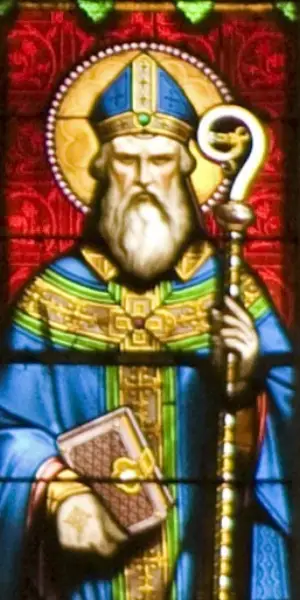
Overview
Agapetus I served as bishop of Rome for barely ten months at a decisive moment in Mediterranean history. Born in Rome around 489 or 490, he was the son of Gordianus, a priest killed during the disorders of Pope Symmachus's era, and may have been related to the popes Felix III and Gregory I. Formed in the Roman clergy during the Laurentian schism, he was ordained a deacon perhaps as early as 502 and was elevated from archdeacon to the papacy on 13 May 535. His brief reign was consumed by the looming Byzantine reconquest of Italy. Sent by the Ostrogothic king Theodahad to dissuade Emperor Justinian I from invasion, he failed in that political errand but achieved something greater: in Constantinople he deposed the intruded patriarch Anthimus I and personally consecrated Menas as lawful successor, defending orthodox faith against imperial pressure. He died in the eastern capital on 22 April 536, and his remains were carried back to Rome for burial in St. Peter's Basilica. Both the Catholic and Orthodox traditions honor him as a saint.
The Complete Life
A Roman Childhood in Troubled Times
Agapetus was born in Rome around 489 or 490, into a family already woven into the life of the Roman church. His father, Gordianus, was a priest of the city who met a violent end during the street riots that troubled the long pontificate of Pope Symmachus, which lasted from 498 to 514. The boy therefore grew up fatherless in a community still divided by the Laurentian schism, the quarrel over the papal office that shadowed those years. The name Gordianus carried weight in Roman ecclesiastical circles, and it has led scholars to suspect a family bond with two other occupants of the papal chair: Pope Felix III, who reigned from 483 to 492, and Pope Gregory I, the celebrated pontiff of the following century. Such a connection, if real, would make Agapetus a kinsman of saints at both ends of a turbulent era. Whatever the truth of his lineage, his formation took place among the clergy of Rome, and he rose steadily through the clerical ranks while the wounds of the schism were still fresh.
§ Family
The Last of the Old Guard
The historian Jeffrey Richards judged Agapetus the final surviving member of the old guard loyal to Symmachus; he had probably been made a deacon as early as 502, in the thick of the Laurentian controversy. By the time of his election he had reached the office of archdeacon, the senior deacon of the Roman church, and on 13 May 535 he was raised from that post to the papacy. His first official act set the tone of his administration: before the assembled clergy he committed to the flames the anathema his predecessor Boniface II had uttered against Dioscurus after death, falsely branding him a simoniac, and had commanded the Roman archives to keep. Agapetus also assisted Cassiodorus in founding the monastery of Vivarium, the learned retreat where classical letters would be preserved for later ages. After Byzantine arms retook North Africa from the Vandals, he confirmed the decrees of the Council of Carthage, which barred converts from Arianism from holy orders and admitted those already ordained only to lay communion. When the Council of Marseilles condemned Contumeliosus, bishop of Riez, for immorality, Agapetus accepted the bishop's appeal and directed Caesarius of Arles to grant him a new trial before papal delegates.
§ Pontificate
Embassy to Constantinople
While Agapetus governed the Roman church, the Byzantine general Belisarius was assembling forces for the invasion of Italy. King Theodahad of the Ostrogoths, alarmed after the death of Amalasuntha, begged the pope to journey east and calm Emperor Justinian. To cover the journey's expenses Agapetus pawned the sacred vessels of the Roman church, and in midwinter he set out with five bishops and a large retinue. He appeared in the eastern capital in February 536. Justinian declined to halt the invasion, which had advanced too far to recall, and the political purpose of the journey failed. Agapetus turned instead to a religious cause. The patriarchal throne of Constantinople was occupied by Anthimus I, who had abandoned his own see of Trebizond and been seated by the empress Theodora against the protests of the orthodox. Charged as an intruder and a heretic, Anthimus was required to sign a written profession of faith and go back to Trebizond; when he refused the pope deposed him. Threatened with banishment, Agapetus answered that he had come to behold a most Christian emperor and found instead a Diocletian whose threats did not frighten him. He then consecrated Menas, Anthimus's lawful successor, the first such personal consecration by a bishop of Rome.
§ Pontificate
Death in the Eastern Capital
Agapetus did not long outlive his victory in Constantinople. Shortly after the deposition of Anthimus and the consecration of Menas, he fell ill in the eastern capital and died there on 22 April 536, after a pontificate of barely ten months. He was about forty-six years old. Before the end, Emperor Justinian delivered to him a written confession of faith, which Agapetus accepted with a characteristic reserve: he observed with pleasure that the emperor's zeal accorded with the decisions of the Fathers, while noting that a layman could not claim the right of teaching religion. His body was placed in a lead coffin and carried back over sea and land to Rome, where it was deposited in St. Peter's Basilica beside the tombs of his predecessors. In the city of his birth his name remained attached to the stones of the Caelian Hill: on the Clivus Scauri, near the ancient church of St. Andrew, the archaeological remains known as the apsidal hall of the library of Pope Agapetus I still preserve the memory of his learning and his generosity to the church of Rome.
§ Pontificate
Honored East and West
Agapetus is numbered among the saints of both the Catholic and the Orthodox communions, a rare double honor that reflects the undivided church of the sixth century, in which he lived and died long before the parting of East and West. The Roman Martyrology commemorates him on 22 April, the anniversary of his death, and the Eastern churches keep the same day; some Catholic sources, however, list his feast on 20 September, the date of his deposition from office is remembered instead, though the more widespread Western observance follows the day of his death. He is venerated in the Catholic Church and in the Eastern Orthodox Church alike, and his cult has never been confined to one rite. The chief reason for his fame is the stand he took in Constantinople: a bishop of Rome who confronted an emperor, refused to be silenced by the threat of exile, and upheld the canonical order of the eastern patriarchate at the cost of his life. That witness, more than any formal decree, carried his name into the martyrologies and synaxaria of both communions, where it has remained for fifteen centuries.
§ Veneration
Letters, Libraries, and a Precedent
Four letters of Agapetus have survived from his months in the East, and they reveal a pope engaged with every front of his office. Two go to Emperor Justinian as answers to a letter the emperor had sent, and in the second of them Agapetus refuses to acknowledge the ordinations of the Arians. A third goes to the African episcopate on the same question, while the fourth replies to Reparatus, bishop of Carthage, who had sent congratulations on his elevation to the pontificate. Beyond the written record, his intervention in Constantinople set a precedent no successor could ignore: for the first time in the church's history, a bishop of Rome consecrated with his own hands the patriarch of the imperial city, asserting the see of Rome's authority in the East at the risk of banishment. His patronage bore quieter fruit as well. The support he gave Cassiodorus helped bring the monastery of Vivarium into being, where the texts of classical and Christian antiquity were copied for posterity, and the apsidal hall on the Clivus Scauri preserves the trace of a library that bore his name in Rome itself.
§ Pontificate
Timeline
- 489
Born in Rome, son of the priest Gordianus
§ Family
- 502
Ordained a deacon of the Roman church during the Laurentian schism
§ Pontificate
- 13 May 535
Elevated from archdeacon to pope
§ Pontificate
- 535
Burned, before the assembled clergy, the anathema Boniface II had pronounced against Dioscurus
§ Pontificate
- Feb 536
Reached Constantinople as envoy of King Theodahad
§ Pontificate
- 536
Deposed Patriarch Anthimus I and consecrated Menas as his successor
§ Pontificate
- 22 Apr 536
Died in Constantinople after a pontificate of ten months
§ Pontificate
- 536
Remains returned in a lead coffin and buried in St. Peter's Basilica in Rome
§ Pontificate
In Their Own Words
With eager longing have I come to gaze upon the Most Christian Emperor Justinian. In his place I find a Diocletian, whose threats, however, terrify me not.
The Record
- Major works
- Four surviving letters: two to Emperor Justinian I, one to the bishops of Africa, one to Reparatus, Bishop of Carthage
- Symbols
- Papal tiara, as shown in the stained glass of Saint-Maixent-l'École
- Canonization
- Pre-congregation; canonized in both the Catholic and Orthodox traditions
Prayer
Bibliography
Show 5 sources
- Loughlin, James Francis (1907). "Pope St. Agapetus I". In Herbermann, Charles (ed.). Catholic Encyclopedia. Vol. 1. New York: Robert Appleton Company.
- Richards, Jeffrey (1979). The Popes and the Papacy in the Early Middle Ages. London: Routledge and Kegan Paul.
- Martindale, John R.; Jones, A.H.M.; Morris, John (1992). The Prosopography of the Later Roman Empire, Volume III: AD 527–641. Cambridge University Press. ISBN 978-0-521-20160-5.
- Brusher, Joseph S. (1980). Popes Through the Ages. San Rafael, California: Neff-Kane. ISBN 978-0-89-141110-9.
- Loomis, Louise Ropes. The Book of Popes (Liber Pontificalis). Merchantville, New Jersey: Evolution Publishing. ISBN 1-889758-86-8.
Profile text adapted from the Wikipedia article, licensed CC BY-SA 4.0.
Pray with this saint every day
Save St. Agapetus I to your favorites, read the full profile, and get feast-day reminders in the Saints app.
Get the Saints AppFree on the App Store for iPhone and iPad