
died 326 or 328·Feast April 17
St. Alexander I of Alexandria
Patriarch who led the fight against Arianism
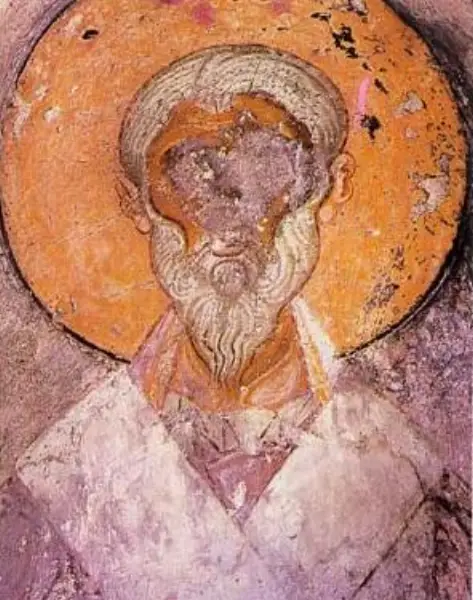
Overview
Alexander I of Alexandria was the nineteenth patriarch of Alexandria and one of the decisive figures of the early fourth-century church. Comparatively little is known of his early years, but as a priest he endured the bloody persecutions of Christians under the emperors Galerius and Maximinus Daia. He became patriarch on the death of Achillas and confronted three great challenges: a schism over the dating of Easter, the rebellion of Meletius of Lycopolis, and above all the teaching of Arius, which denied the full divinity of the Son. Alexander summoned synods that condemned Arius, wrote in defense of the unity of the Trinity, and rallied some 250 bishops to sign his confession of faith. At the First Council of Nicaea he led the opposition to Arianism, though he ceded the presidency to Hosius of Córdoba. The council confirmed Arius's condemnation, resolved the Easter question, and settled the Meletian dispute. Alexander mentored his deacon Athanasius, who succeeded him and became the great champion of the Nicene faith. He died in Alexandria, five months after returning from Nicaea.
The Complete Life
A Priest Through the Persecutions
Comparatively little is known about Alexander's early years, a silence that the antiquity of his era makes unsurprising. What the sources do record is the furnace through which his formation passed: during his time as a priest of the Alexandrian church he experienced the bloody persecutions of Christians carried out by the emperors Galerius and Maximinus Daia. These were among the last and most ferocious attempts to destroy the church in Egypt, and a clergyman in Alexandria during those years lived under the daily threat of arrest, torture, and death. The church that Alexander served emerged from the trials bloodied but not broken, and the experience left its mark on the men who would soon lead it. When the patriarch Achillas died after a remarkably short reign — a reign some believed had been cut short by heaven because he had broken the command of his own predecessor, Peter of Alexandria, never to readmit Arius to communion — Alexander was chosen to succeed him. He took up the nineteenth patriarchate of Alexandria carrying the memory of the persecution years into an age when the church's dangers would come not from the emperor's executioners but from disputes within its own house.
§ Biography
Easter, Meletius, and a Divided Church
Alexander's patriarchate opened with two disputes that, grave as they were, would soon be eclipsed by a third. The first concerned the dating of Easter. A schismatic party led by Erescentius disputed the church's timing of the feast, and Alexander had no choice but to compose a special treatise on the dispute, drawing on what Dionysius of Alexandria had said on the matter long before. His efforts quieted the dispute for a time, though it took the First Council of Nicaea, held during his tenure, to resolve the question finally. Second came Meletius of Lycopolis, whose slanders against Alexander echoed those he had earlier aimed at Achillas. Meletius even carried a formal complaint against the patriarch to the court of Emperor Constantine I, which gave it no unusual attention. More dangerously, Meletius appeared to establish a working alliance with Arius, and he consecrated bishops on his own authority without his superior's consent. The quarrel continued unabated until the Council of Nicaea, where Alexander, in a spirit of reconciliation, allowed Meletius to return to the church — a concession that effectively ended Meletius's alliance with Arius and left the heresiarch isolated.
§ Meletius of Lycopolis
The Battle Against Arius
The conflict that defined Alexander's episcopate began the day Alexander preached the unity of the Trinity in a sermon. Arius retorted by branding the claim Sabellianism, a teaching already rejected by the church, and the controversy escalated rapidly. Arius gathered several deacons to his side, and one presbyter at least, who took to ordaining presbyters on his own authority; Alexander summoned two assemblies of his priests and deacons, but neither reached firm conclusions. He then called a synod of Alexandria and the neighboring province of Mareotis in 320, at which thirty-six presbyters and forty-four deacons — among them Athanasius — agreed to a written condemnation of Arianism. Arius carried his teaching into Mareotis and Libya, winning over Secundus of Ptolemais and Thomas of Marmarica, and in 321 Alexander convened a general council of a hundred participants. When Arius declared there that the Son was not co-eternal with the Father, nor even similar to him in substance, the council placed him under anathema. Arius fled to Palestine, where Eusebius of Nicomedia and other bishops supported him; violence broke out among his followers in Alexandria. Alexander answered with an encyclical to all his brother bishops recounting the history of the dispute, and then, counseled by his deacon Athanasius, drew up a confession of faith that gathered about 250 signatures from across the Christian world. He corresponded as well with Alexander of Constantinople, Pope Sylvester I, and Macarius of Jerusalem, among many others.
§ Arianism
Nicaea and a Quiet Succession
Emperor Constantine, now sole ruler after the execution of Licinius, wrote to the disputants calling for unity, sending the letter by the respected bishop Hosius of Córdoba. Shortly after it arrived, Alexander summoned another general council of his diocese, which confirmed his circulated profession of faith, agreed to the theological term "consubstantial", reaffirmed Arius's excommunication, and condemned Meletius's followers. Arius complained to the emperor, who ordered the case heard before an ecumenical council at Nicaea in Bithynia, called for 14 June 325 — the first of its kind. Alexander traveled there with Potamon of Heraclea, Paphnutius of Thebes, and his deacon Athanasius, who served as his spokesman. Though Alexander was expected to preside, he judged that he could not be both presiding official and chief accuser, and he yielded the chair to Hosius. The council confirmed Arius's anathema, permitted Meletius to retain his title without exercising episcopal powers, granted Alexander the right to fix the date of Easter, provided he communicate it to Rome and all Christendom, and allowed the Egyptian church to keep its traditions on clerical celibacy — Alexander following Paphnutius of Thebes in permitting priests to marry after ordination. Alexander survived his return to Alexandria by only five months. One source dates his death to 22 Baramudah — 17 April; as he was dying, he is said to have named Athanasius as his successor.
§ First Council of Nicaea
A Saint of Three Traditions
Three communions honor Alexander as a saint: the Coptic Orthodox Church of Alexandria, the Eastern Orthodox Church, and the Catholic Church — a breadth of devotion fitting for a man whose life's work was the unity of all Christians in one confession of faith. The three traditions keep his memory on different days: the Catholic Church commemorates him on 26 February and 17 April, while the Eastern Orthodox Church honors him on 29 May. In the Coptic calendar of the saints he stands among the patriarchs of the undivided Alexandrian church, the line that runs unbroken from the evangelist Mark through the age of the martyrs to the great councils. What each tradition remembers is the same essential witness: the bishop who endured persecution as a young priest, who refused every compromise on the divinity of the Son, who gathered the church in synod after synod to defend the truth, and who at Nicaea stood among the leaders of the orthodox cause. That his deacon and successor Athanasius became the foremost defender of the Nicene faith is itself part of Alexander's legacy, for the mentorship by which he shaped that towering figure was the last and greatest work of his episcopate.
§ Veneration
The Written Remains
A number of works bearing Alexander's name are gone. The History refers to a bundle of letters he composed during the Arian controversy, of which only two remain to this day — the loss is a heavy one, since the controversy he chronicled would shape Christian theology for every century afterward. Two further texts bear his name in more complicated ways. A homily on the soul and the body, bearing the Latin title De anima et corpore, has come down to us in Syriac dress attributed to Alexander, though the Coptic version ascribes the same work to Athanasius. The Enconium of Peter the Alexandrian is also attributed to him; it survives in five codices and scholars can piece it together from surviving fragments and a translation preserved in the History of the Patriarchs. Its pages hold biblical allusions, inherited traditions, and a portrayal of the martyrdom of Peter of Alexandria, and it has been judged one of the finest examples of the literary style of its time, praised for the complexity of its structure, the competency of its theology, and the general quality of its prose. Beyond the books, Alexander's deepest legacy lived in people: the confession of faith he circulated drew some 250 signatures, the Nicene settlement he championed endured, and the young Athanasius he trained carried the Nicene cause to immortality.
§ Writings
Timeline
- 313
Became patriarch of Alexandria on the death of Achillas
§ Biography
- 320
Summoned a synod of Alexandria and Mareotis, where thirty-six presbyters and forty-four deacons condemned Arianism
§ Arianism
- 321
Called a general council of the church of the nation, at which Arius was placed under anathema
§ Arianism
- 14 Jun 325
Attended the First Council of Nicaea, convened by Emperor Constantine I
§ First Council of Nicaea
- 328
Died in Alexandria, five months after returning from Nicaea
§ First Council of Nicaea
The Record
- Major works
- Letters on the Arian controversy, of which two survive·Confession of faith on the Trinity, circulated for signature to all the bishops·Enconium of Peter the Alexandrian·De anima et corpore (On the soul and the body), a homily attributed to him in a Syriac version
- Canonization
- Pre-congregation; venerated in the Catholic, Eastern Orthodox, and Coptic Orthodox churches
Prayer
Bibliography
Show 3 sources
- Christie, Albany James (1867). "Alexander of Alexandria". In William Smith (ed.). Dictionary of Greek and Roman Biography and Mythology. Vol. 1. Boston: Little, Brown and Company. pp. 111–112.
- Atiya, Aziz S. The Coptic Encyclopedia. New York: Macmillan Publishing Company, 1991. ISBN 0-02-897025-X.
- Campbell, Thomas Joseph (1913). "St. Alexander (of Alexandria)". In Herbermann, Charles (ed.). Catholic Encyclopedia. New York: Robert Appleton Company.
Profile text adapted from the Wikipedia article, licensed CC BY-SA 4.0.
Pray with this saint every day
Save St. Alexander I of Alexandria to your favorites, read the full profile, and get feast-day reminders in the Saints app.
Get the Saints AppFree on the App Store for iPhone and iPad