
died 30 December 274·Feast December 30
St. Felix I
Bishop of Rome who defended the unity of Christ's person
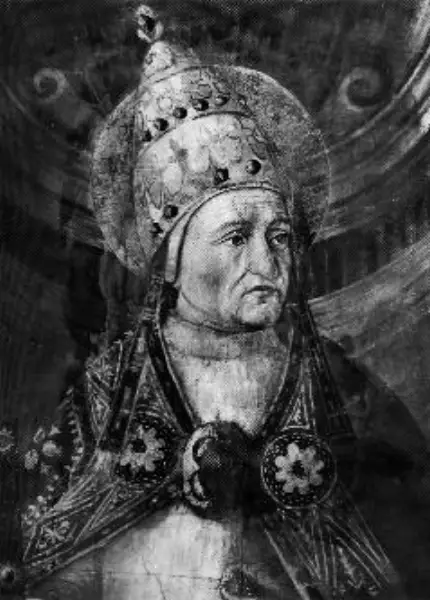
Overview
Felix I, a Roman by birth, led the church of Rome from 5 January 269 until his death on 30 December 274, succeeding Dionysius, who had died twelve days before his election. His pontificate is remembered above all for doctrine. He wrote an important dogmatic letter defending the oneness of Christ's person, and he lent the weight of the Roman see to the defense of orthodoxy at Antioch, where the bishop Paul of Samosata had been deprived for denying the divinity of Christ. When Paul refused to surrender his see to the lawful bishop Domnus, the emperor Aurelian was asked in 272 to decide between the rivals, and the church building was adjudged to whichever bishop the episcopate of Italy and of Rome acknowledged. Tradition also credits Felix with decreeing that Mass be celebrated over the tombs of the martyrs, an attribution scholars now question. Later generations wrongly enrolled him among the martyrs, having mistaken him for a different saint of the same name whose grave lay along the Via Aurelia. He died of natural causes, was interred in the Catacomb of Callixtus, and is commemorated on 30 December.
The Complete Life
A Roman Born to the City's Church
Felix was a Roman by birth, a son of the city whose church he would one day govern. Of his family, his education, and his service in the Roman clergy before his elevation, history preserves nothing; he enters the record on the day of his election. The electors made him pope on 5 January 269, barely ten days after the death of his predecessor Dionysius on 26 December 268. The Church into which he was born and in which he was raised had passed through the crisis of the mid-third century, through the persecutions that had claimed Fabian and the exiles that had carried Cornelius away, and had emerged under the emperor Gallienus with a recognized legal standing. It was a community experienced in both endurance and administration. Nothing suggests that Felix's own life had been dramatic; his significance lay in the office he assumed and in the theological question that providence would bring to his door. The year of his birth is unrecorded, as is nearly everything between his Roman childhood and the January morning when the electors made him bishop.
§ Life and works
The Successor of Dionysius
Felix's election on 5 January 269 made him the twenty-sixth occupant of the Roman see in an unbroken line running back to Peter. His reign of almost exactly six years, from 5 January 269 to 30 December 274, spanned a period of unusual importance for the doctrine of the East, for it was in those very years that the church of Antioch tore itself apart over the teaching of Paul of Samosata. The Roman bishop's voice carried weight in such disputes, and the events of his pontificate would show it. His immediate legacy within Rome was literary: a weighty dogmatic letter on the oneness of Christ's person, a teaching document issued from the Roman see at a moment when the Church's language about Christ was being tested in the fires of controversy. The letter's exact text is clouded, for a disciple of Apollinaris afterwards inserted changes in it to serve his sect, a fate that befell many orthodox documents of the age. Even so, the tradition that Felix taught on the unity of the person of Christ reflects the reputation he enjoyed in the ancient Church as a defender of the true doctrine.
§ Life and works
The Case of Paul of Samosata
The great affair of Felix's pontificate reached him from Antioch. Paul of Samosata, occupying that ancient see, denied the divinity of Christ, and a council of bishops had deprived him of his office for the heresy, installing the orthodox Domnus in his place. Paul refused to give way and kept possession of the church building, and the dispute hardened into a deadlock that the Church's own machinery could not resolve. In 272 the rivals carried their case to the emperor Aurelian, who was asked to decide between them. The emperor's ruling was a landmark without quite intending to be one: the church building was adjudged to whichever of the two men the episcopate of Italy and of Rome's own city acknowledged, that is, to Felix and his colleagues. The doctrine of the Roman communion, in the emperor's decree, became the test of who truly held a church. Paul was thus dispossessed, and the orthodox Christology that Felix had defended in writing was enforced as the public faith of Antioch. The intervention, prompted by Felix, reinforced the orthodox doctrine of Christ in the very city where his divinity had been denied.
§ Life and works
Mass over the Tombs of the Martyrs
The entry on Felix in the Liber Pontificalis credits him with ordering that Mass be offered at the martyrs' tombs. The attribution has been much debated. The compiler of the papal book evidently had in mind the usage of his own era, private Mass offered at altars beside or upon the graves of the martyrs in the catacomb crypts, the missa ad corpus, while solemn celebration belonged to the basilicas towering above the cemeteries. That usage, still vigorous at the close of the fourth century, seems to have sprung from the memorial services kept at the martyrs' graves on each anniversary of their burial as far back as the third century, the age of the great cemeterial basilicas. Scholars judge that Felix almost certainly issued no such decree; the compiler credited him with it precisely because his reign had broken in no way with the usage of the day. Whether or not the decree is his, the tradition attached to his name testifies to the deep instinct of the Roman Church that the Eucharist and the memory of the martyrs belong together, at one altar.
§ Death and veneration
Death on the Last Day of 274
Felix died at Rome on 30 December 274, closing both his pontificate and the year. On that same date he was interred, as the fourth-century Roman calendar of feasts records, in the Catacomb of Callixtus on the Via Appia, the burial place of the bishops of Rome. The Roman Feriale, the calendar of the Church's commemorations, enters his name in the list of the bishops, the Depositio episcoporum, and not in the list of the martyrs, the oldest and clearest evidence that the Church of Rome itself remembered him as a bishop who died in peace. The date of his burial is preserved in the old Roman fashion as the third day before the Kalends of January. He was succeeded by Eutychian, who inherited a Church at rest outwardly but standing, as Felix's own pontificate had shown, in the front line of the doctrinal battles of the East. Felix had held the see for nearly six years, taught its faith in writing, and seen the emperor of the world bow to the judgment of the Italian bishops; he left the Roman Church stronger in doctrine than he found it.
§ Death and veneration
A Martyr by Mistake
In the acts of the Council of Ephesus Pope Felix appears as a martyr, and his Liber Pontificalis biography repeats the claim, yet no genuine early evidence stands behind it and arose, as scholars have long recognized, from a confusion of names. A Roman martyr named Felix was buried on the Via Aurelia, over whose grave a church was built, and the pope gradually absorbed the martyr's honors. The Liber Pontificalis goes so far as to relate that Felix built a basilica on the Via Aurelia and was buried there, a double error contradicted by the fourth-century Depositio episcoporum, which places his burial at Callixtus. On the strength of the confusion, the saint honored on 30 May, the date the Liber Pontificalis gives for the pope's death under the reading III Kal. Jun., was long identified with Felix I; the 30 May date itself probably arose from a transcriber's slip of Jun. for Jan. The error persisted in the Roman calendar until the reforms of the twentieth century: Pope Pius XII reduced the feast of Saint Felix I on 30 May to a mere commemoration, and after 1969 his celebration was moved to his true day of death, 30 December, without the title of martyr. Recent studies confirm that the saint of 30 May was the little-known martyr of the Via Aurelia.
§ Death and veneration
Doctrine Remembered, Error Corrected
Felix's lasting monument is doctrinal. The dogmatic letter on the unity of Christ's person, even though its text was later tampered with by an Apollinarian forger, kept his name attached in the memory of the Church to the defense of the true faith at a formative moment, and the Aurelian ruling of 272 that he prompted became a precedent invoked for centuries: the church building belongs to the bishop in communion with Rome. His liturgical legacy, the supposed decree on Masses over the tombs of the martyrs, embodies the Roman instinct that altars and martyrs' graves belong together, and it preserves for the historian the memory of how the city's oldest sanctuaries came to be. His cult, purged by modern scholarship of the martyr's title it never deserved, stands as an early and instructive case study in how the names of the saints and the names of other holy dead could merge in the memory of the Church, and in how patient liturgical and archaeological work could separate them again. The correction of his calendar, accomplished by the middle of the twentieth century and sealed after the Council, restored him to his true day, 30 December, and to the quiet dignity of a bishop who died in peace.
§ Death and veneration
Timeline
- 26 Dec 268
Pope Dionysius died, leaving the see of Rome vacant for Felix's election.
§ Life and works
- 5 Jan 269
Chosen to be pope in succession to Dionysius.
§ Life and works
- 272
Emperor Aurelian, asked to settle the dispute at Antioch, adjudged the Antiochene church building to whichever claimant the Italian and Roman bishops acknowledged.
§ Life and works
- 30 Dec 274
Died at Rome and received burial in the Catacomb of Callixtus, beside the Appian Way.
§ Death and veneration
In Their Own Words
Hic constituit supra memorias martyrum missas celebrare
The Record
- Major works
- Dogmatic letter on the unity of Christ's Person
- Canonization
- Pre-congregation canonization; later accounts honored him as a martyr, though contemporary scholarship concludes he died of natural causes
Prayer
Bibliography
Show 7 sources
- "Hator 6: Lives of Saints: Synaxarium – CopticChurch.net".
- "Saint Felix I | Italian, Roman, Bishop | Britannica". www.britannica.com. 26 December 2024. Retrieved 3 January 2025.
- Annuario Pontificio 2012. Libreria Editrice Vaticana, 2008. ISBN 978-88-209-8722-0, p. 8*.
- Chisholm, Hugh, ed. (1911). "Felix (Popes)". Encyclopædia Britannica (11th ed.). Cambridge University Press.
- Herbermann, Charles, ed. (1913). "Pope St. Felix I". Catholic Encyclopedia. New York: Robert Appleton Company.
- "Martyrologium Romanum". Libreria Editrice Vaticana, 2001. ISBN 88-209-7210-7.
- "Calendarium Romanum". Libreria Editrice Vaticana, 1969, p. 125.
Profile text adapted from the Wikipedia article, licensed CC BY-SA 4.0.
Pray with this saint every day
Save St. Felix I to your favorites, read the full profile, and get feast-day reminders in the Saints app.
Get the Saints AppFree on the App Store for iPhone and iPad