
611 – 683·Feast June 28
St. Leo II
Pope who confirmed the Sixth Ecumenical Council and reformed the chant
Overview
Leo II led the Roman church from 17 August 682 until 28 June 683, occupying the see of Rome in the age of Byzantine dominance over the papacy; a biographer of his own era calls him both just and learned. Born in Sicily to a father called Paul, he stood among the colony of Sicilian clergy in Rome, a presence that grew as the raids of the Caliphate battered their island in the mid-seventh century. Created a cardinal by Pope Agatho in 680, he was elected to succeed Agatho on 16 April 681 but waited more than a year for consecration, an interval connected with negotiations in which Emperor Constantine IV agreed to abolish or reduce the tax long levied on papal consecrations. His pontificate lasted barely ten months, yet he confirmed the acts of the Sixth Ecumenical Council against Monothelitism and announced them to the West, took pains to clarify that Pope Honorius I had been condemned for negligence rather than heresy, subdued the separatist ambitions of the Archbishops of Ravenna while abolishing the tax they paid for the pallium, moved the relics of martyrs within the walls against Lombard raids, dedicated two churches, reformed Gregorian chant, and composed sacred hymns for the Divine Office. Known as an eloquent preacher and for his charity to the poor, he died in 683 and was succeeded by Benedict II.
The Complete Life
A Sicilian in Rome
Leo was born in Sicily on 1 January 611, the son of a man named Paul, and grew up on an island that stood in the front line of the seventh-century Mediterranean world. In the middle decades of that century the forces of the Caliphate began to attack Sicily, and one wave of consequence followed: clergy from the island made their way to Rome in growing numbers, and Leo was likely among the Sicilian churchmen who found their home and their career in the eternal city. There his gifts made him conspicuous. He earned a reputation as an eloquent preacher, and the biographical tradition records that he was drawn to music and noted for his generosity to the poor — a combination of eloquence, song, and almsgiving that would characterize his whole ministry. On 5 December 680 Pope Agatho raised him to the cardinalate, and in that capacity he stood within the Roman church at the very moment it was sending delegates and letters to the council then assembling at Constantinople to judge the Monothelite controversy. When Agatho died on 10 January 681, the choice of the Roman church fell upon the Sicilian cardinal.
§ Early career
An Election Delayed for the Church's Freedom
Leo was elected pope on 16 April 681, but for more than a year he could not be consecrated. The delay appears to have belonged to the strange politics of the Byzantine Papacy, in which the emperor at Constantinople held a hand over the election of Rome's bishop. For roughly a century the emperors had required the popes to pay a tax to the imperial treasury at the moment of their consecration, and Leo's predecessor Agatho had spent his final years negotiating with Emperor Constantine IV for relief from it. Constantine had already promised Agatho that he would abolish or reduce the levy, and the negotiations over that promise appear to account for the fifteen months between Leo's election and his consecration as bishop of Rome on 17 August 682. If the price of the delay was long, the result was a gain for the liberty of the Roman church: the century-old tax on consecrations was abolished or reduced, and the newly consecrated pope entered his office with a measure of freedom his predecessors had not enjoyed. The episode set the pattern of his pontificate, which joined loyalty to the emperor's good faith with a steady defense of the Roman see's own dignity.
§ Papacy
Confirming the Sixth Ecumenical Council
The great work of Leo's short pontificate was the reception of the Sixth Ecumenical Council, held at Constantinople in 680 and 681 against the Monothelite teaching that Christ had only one will. Leo confirmed the acts of the council, notified the emperor that its decrees had been ratified, and then made them known across the West. In letters addressed to the Visigothic king, the bishops, and the nobles of that realm he set out what the council had achieved, and pressed the bishops to set their signatures to its decrees. The assembly had taken the extraordinary step of anathematizing Pope Honorius I for tolerating Monothelitism, and Leo labored to make clear what that condemnation meant: Honorius had been condemned not because he had taught heresy, but because he had not been active enough in opposing it. Obedient to the papal mandate, the Spanish church met in synod at Toledo in 684 and there accepted the decisions of the Third Council of Constantinople. Within Italy, Leo also brought to an end the long-running attempts of the Archbishops of Ravenna to break loose from the control of the bishop of Rome — while at the same time abolishing the customary tax those archbishops had paid when receiving the pallium, easing their burden even as he bound them to the apostolic see.
§ Papacy
Singer of the Divine Office
The tradition of the Roman church has always connected Leo II with its song. He is remembered as a pope who reformed the Gregorian Chant, bringing order and refinement to the repertoire of the Roman liturgy, and as a composer in his own right who wrote several sacred hymns for the Divine Office. The interest was not accidental: from his early years in Rome he had been known as a man drawn to music, and the eloquence of his preaching belonged to the same temper, a mind that believed the faith should be both spoken beautifully and sung rightly. His charity completed the picture, for the same sources that praise his eloquence note his care for the poor. In the last year of his life he gave that devotion a durable form. In apparent response to the Lombard raids that threatened the countryside around Rome, he brought the remains of certain martyrs up from the catacombs beyond the walls and into churches within the city, laying the bones of the confessors in places of safety where the faithful could venerate them. He dedicated two churches for the purpose, St Paul's and a church of Sts Sebastian and George, so that the martyrs' presence entered the daily worship of the Roman people and the liturgy he loved gained new patrons.
§ Papacy
Ten Months and a Quiet Death
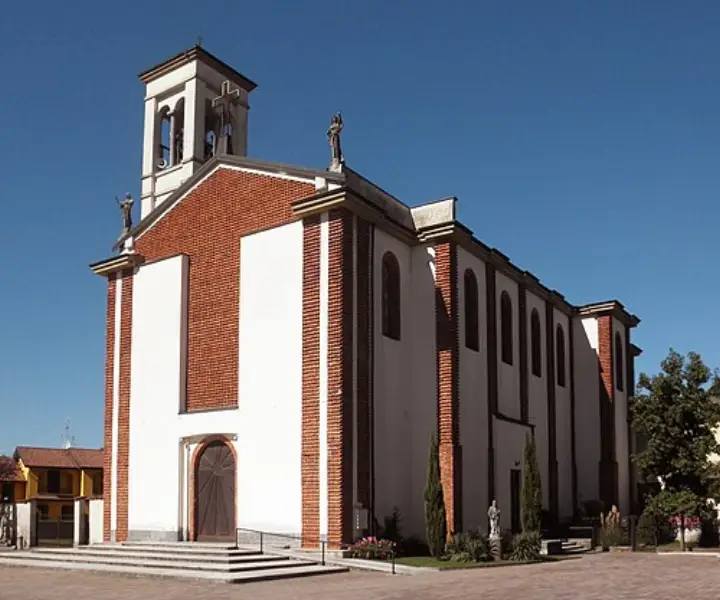
Leo's pontificate, begun on 17 August 682, lasted barely ten months. The brevity did not escape his own contemporaries, and the tradition acknowledges that his short-lived time in office did not allow him to accomplish everything a pope of his gifts might have; yet the record of those months — the confirmation of an ecumenical council, the settlement of Ravenna, the relief of the pallium tax, the translation of the martyrs, the reform of the chant — is the record of a pope who wasted no day. He died at Rome on 28 June 683, at the age of seventy-two, and the succession passed to Benedict II. He was laid first in a monument of his own, but within a few years of his burial his body was placed in a tomb shared with the first four of his papal namesakes, the earlier Leos, so that in death he was gathered to the company of the Popes Leo who had gone before him. The Roman church kept his memory on the day of his death, 28 June; in the calendar as it stood before 1970 his feast was assigned to 3 July. A church dedicated to him stands at Villanova del Sillaro in Lombardy, a far-off echo of a pope honored across Italy.
§ Death
Commemorated in the Martyrology
The Roman Martyrology keeps Leo II among its saints, ranking him with the confessors of the Roman see rather than with its martyrs, for he died a natural death at the age of seventy-two. His sanctity rested on the witness of his governance: a biographer who wrote near his own time described him as both just and learned, and the medieval tradition that handed him down added the portrait of an eloquent preacher, a lover of sacred music, and a benefactor of the poor. The pre-1970 Roman calendar kept his feast on 3 July, and the modern calendar returns it to 28 June, the anniversary of his death. In the roll of the saints he stands with the seventh-century popes who steered the Roman church through the age of the Byzantine Papacy, when emperors taxed its elections, Lombards raided its countryside, and dissident archbishops tested its unity. What the church found worthy of commemoration in him was the same combination the council of his day demanded of every bishop: orthodoxy defended without rancor, as in the care he took to distinguish Honorius's negligence from heresy, and doctrine joined to devotion, as in the chant he reformed and the hymns he left to the Office he prayed.
§ Death
The Faith Confirmed and the Song Renewed
Leo's ten months set forces in motion that long outlived him. His confirmation of the Sixth Ecumenical Council fixed the doctrine of Christ's two wills in the loyalty of the Western church, and the letters he sent to the Visigothic king, bishops, and nobles carried the council's decrees into Spain, where the synod of Toledo gave them formal acceptance in 684. The clarification he drew around the condemnation of Pope Honorius I — negligence, not heresy — remained the standard account for centuries of a case that would be argued again in the nineteenth century. His settlement of Ravenna ended a schism-minded ambition of that metropolitan see and secured the place of the archbishops within obedience to Rome, while the abolition of the pallium tax removed a grievance that had soured relations between the apostolic see and its suffragans. His translation of the martyrs' relics within the walls of Rome joined a practice the popes would repeat whenever danger pressed upon the city's outskirts, and the two churches he dedicated carried his name into the topography of Christian Rome. Above all, the reform of the chant and the sacred hymns he composed for the Divine Office left a mark on the liturgy of the West, joining the memory of Leo II not to battles won alone but to the daily song of the church.
§ Papacy
Timeline
- 1 Jan 611
Born in Sicily, son of a man named Paul.
§ Early career
- 5 Dec 680
Created a cardinal by Pope Agatho.
§ Introduction
- 16 Apr 681
Elected pope ten weeks after the death of Agatho, though not consecrated for another year.
§ Papacy
- 17 Aug 682
Consecrated bishop of Rome after the delay caused by negotiations with Emperor Constantine IV over papal elections.
§ Papacy
- 28 Jun 683
Died at Rome after a pontificate of about ten months and was succeeded by Benedict II.
§ Death
- 684
In accordance with his papal mandate, a synod at Toledo accepted the acts of the Third Council of Constantinople.
§ Papacy
The Record
- Major works
- Sacred hymns composed for the Divine Office·Reform of Gregorian Chant·Dedication of the churches of St Paul's and of Sts Sebastian and George
- Symbols
- Papal vestments
- Canonization
- Pre-congregation; commemorated as a saint in the Roman Martyrology
Prayer
Bibliography
Show 7 sources
- Mann, Horace Kinder (1910). "Pope St. Leo II". In Herbermann, Charles (ed.). Catholic Encyclopedia. Vol. 9. New York: Robert Appleton Company.
- Chisholm, Hugh, ed. (1911). "Leo II". Encyclopædia Britannica. Vol. 16 (11th ed.). Cambridge University Press. p. 432.
- Richards, Jeffrey (2014). The Popes and the Papacy in the Early Middle Ages: 476–752. Routledge. p. 270. ISBN 9781317678175.
- Monks of Ramsgate. "Leo II". Book of Saints, 1921. CatholicSaints.Info. 4 November 2014.
- Ffoulkes, Edmund Salusbury (1882). "Leo (6) II., pope". In Wace, Henry; Smith, William (eds.). A Dictionary of Christian Biography. Vol III. London: John Murray. p. 673.
- Butler, Alban. "Saint Leo II, Pope and Confessor". Lives of the Fathers, Martyrs, and Principal Saints, 1866. CatholicSaints.Info. 26 June 2013.
- Reardon, Wendy (2004). The deaths of the Popes. McFarland, Incorporated, Publishers. ISBN 9780786415274.
Profile text adapted from the Wikipedia article, licensed CC BY-SA 4.0.
Pray with this saint every day
Save St. Leo II to your favorites, read the full profile, and get feast-day reminders in the Saints app.
Get the Saints AppFree on the App Store for iPhone and iPad