
6 January 255 – 16 January 309·Feast January 16
St. Marcellus I
Reorganizer of the Roman Church after persecution
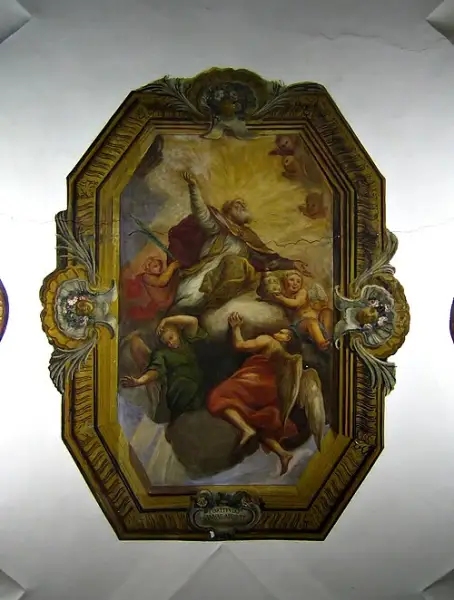
Overview
Marcellus was a Roman who became bishop of Rome on 27 May 308, after one of the longest vacancies in the early papacy. Marcellinus had died in 304 while the Diocletian persecution still raged, and nearly four years passed before the Christians of the capital, enjoying a measure of peace under Maxentius, dared elect a new shepherd. Marcellus found his church in disarray: meeting-places and burial grounds had been confiscated, and the community was torn by dissension over the many members who had lapsed during the persecution and now, led by an apostate, demanded readmission to communion without penance. The new pope insisted on the prescribed penances and set about rebuilding the Church's structures. The Liber Pontificalis credits him with dividing Rome's ecclesiastical administration into twenty-five districts, each under a priest responsible for catechumens, public penance, the burial of the dead, and the memorials of the martyrs, and with laying out a new cemetery on the Via Salaria. His severity made him enemies among the lapsed, and violent conflict followed: Maxentius banished him from the city in 309, and he died shortly afterward, on 16 January. Pope Damasus I honored him in verse as a faithful shepherd hated by the fallen for demanding penance.
The Complete Life
Born Between Peace and Persecution
Marcellus was born at Rome on 6 January 255, into a Christian community that had known both freedom and terror. The persecutions under Valerian had recently struck the Roman church, but the boy grew up in the decades of relative calm that followed, years in which the community recovered its strength, organized its cemeteries, and worshiped in the houses of its wealthy members. He lived through the great persecution of Diocletian as an adult, watching the church of the capital lose its bishop Marcellinus in 304 and then endure more than three years without a successor while the storm continued. After Diocletian abdicated in 305 and Maxentius seized power at Rome in October 306, the Christians of the city again enjoyed comparative peace. Even then almost two years went by before the community chose a new bishop, a silence that suggests how badly the community had been wounded. In 308 Marcellus finally entered on the office, according to the Catalogus Liberianus, as bishop in the time of Maxentius. The fifty-three-year-old Roman accepted leadership of a church in the greatest confusion, its meeting-places and burial grounds confiscated and its people fractured.
§ Election
Rebuilding the Church of the Capital
Marcellus's response to chaos was organization. The Liber Pontificalis relates that he divided the territorial administration of the Roman church into twenty-five districts, the famous tituli, appointing a priest over each. These priests prepared catechumens for baptism, directed the performance of public penances, buried the dead, and arranged the yearly memorials of the martyrs. The pope also laid out a new burial ground on the Via Salaria, called the Cœmeterium Novellœ, facing the catacomb of Saint Priscilla. Some scholars note that twenty-five title churches are attested in Rome only at the beginning of the seventh century, and that the compiler of the Liber Pontificalis may have projected a later situation backward; even so, a clear historical tradition supports the claim that this pope restructured the ecclesiastical administration of Rome in the aftermath of the great persecution. His work addressed the practical needs of a community emerging from catastrophe: converts requiring instruction, penitents seeking reconciliation, the bodies of the faithful needing burial, and the memory of the martyrs demanding honor. In scarcely more than a year Marcellus gave the Roman church a structure that endured for centuries.
§ Pontificate
Conflict, Exile, and Death
The same firmness that rebuilt the church's machinery ignited its internal quarrel. A large number of weaker members had fallen away during the long persecution, and under the leadership of an apostate they violently demanded readmission to communion without doing penance. Marcellus refused, insisting on the prescribed penance for their guilt, and the poetic tribute composed by Pope Damasus I for his grave records that the lapsed came to look on him as a wicked enemy. Violence broke out in the streets of the capital, and Maxentius — who had himself apostatized before the persecution began — had him arrested and deported from the city. The Catalogus Liberianus dates the breach to late in 308 or early in 309 and reckons the pontificate at barely eighteen months, twenty days over and above six or seven of them. Marcellus died shortly after leaving Rome, on 16 January 309, at the age of fifty-four. A fifth-century passion narrative offers a different, probably legendary ending, in which the pope is condemned to serve as a stable hand in the catabulum and dies in that menial occupation; Damasus's account is judged far more trustworthy.
§ Pontificate
Honored by the Roman Church
Marcellus was venerated as a saint from the moment of his death, honored by the Church he had served at such cost. His feast was kept on 16 January, the date found in the Chronography of 354's Depositio episcoporum and in every other Roman authority, though it is no longer certain whether the day marks his death or the return and burial of his remains from the unknown place of his exile. He was laid in the catacomb of Saint Priscilla, where the pilgrim itineraries listing the graves of Rome's martyrs mention his tomb in the basilica of Saint Silvester. Pope Damasus I placed an epitaph in verse over his grave, praising the bishop whom the lapsed had hated for demanding penance — an early and eloquent act of vindication. His relics now rest under the altar of the Roman church of San Marcello al Corso, which still bears his name, a living tie between the saint and the city that exiled him. Since 1969 his feast has been left to local calendars and no longer appears in the General Roman Calendar, but on 16 January the Church still remembers the pope who rebuilt her after the storm.
§ Veneration
The Structure That Endured
Marcellus's lasting monument was institutional. The tituli he established became the parishes of ancient Rome, and the system of priests with defined territorial responsibilities for baptism, penance, burial, and the martyr memorials shaped the city's church for a thousand years. His short and stormy pontificate also fixed a pattern in the Church's memory of the post-persecution age: the question of the lapsed, which had divided Rome since the time of Cornelius and Novatian, flared one last time under a bishop who would not compromise the discipline of penance, and the conflict cost him his freedom and his life. Theodor Mommsen once theorized that Marcellus was never truly a bishop but a presbyter entrusted with the church's administration during the vacancy of the papal chair, with 16 January the date of his death and Eusebius the next true occupant of the see; the Catholic Encyclopedia dismisses the hypothesis as unsupported. Whatever his exact title, the tradition of the Roman church has always counted him among its popes, painted among the successors of Peter, represented by a statue in the colonnade of Saint Peter's Square, and invoked in the Canon of the Mass among the early witnesses of the Roman faith.
§ Veneration
Timeline
- 6 Jan 255
Born at Rome, according to the date preserved in the early papal records.
§ Pope Marcellus I
- 305
Diocletian abdicated, beginning the sequence of events that eased the persecution of the Roman Christians.
§ Election
- Oct 306
Maxentius acceded to the throne of the Caesars at Rome, and the capital's Christians again enjoyed comparative peace.
§ Election
- 27 May 308
Entered on his office as bishop of Rome, nearly two years of vacancy after the death of Marcellinus.
§ Election
- 308
Divided the Roman church into twenty-five territorial districts under priests, according to the Liber Pontificalis.
§ Pontificate
- 309
Banished from Rome by Maxentius after violent conflicts with the lapsed who rejected his penitential discipline.
§ Pontificate
- 16 Jan 309
Died shortly after leaving Rome, after a pontificate of about one year and six or seven months.
§ Pontificate
- 1969
His feast was left to local calendars and removed from the General Roman Calendar.
§ Pope Marcellus I
In Their Own Words
He established a cemetery on the Via Salaria, and he appointed 25 "title" churches as jurisdictions within the city of Rome to provide baptism and penance for the many who were converted among the pagans and burial for the martyrs.
The Record
- Major works
- Division of the Roman church into twenty-five tituli, each under a priest·New cemetery (Cœmeterium Novellœ) on the Via Salaria
- Symbols
- papal vestments·palm of martyrdom
- Canonization
- Pre-congregation; venerated as a saint since antiquity.
Prayer
Bibliography
Show 4 sources
- Liber Pontificalis, ed. Louis Duchesne, I, 164–6; cf. Introduction, xcix–c; Acta SS., January, II, 369.
- Joseph Langen, Geschichte der Römischen Kirche I, 379 sqq.
- Paul Allard, Histoire des persécutions, V, 122–4.
- Louis Duchesne, Histoire ancienne de l'Église, II, 95–7.
Profile text adapted from the Wikipedia article, licensed CC BY-SA 4.0.
Pray with this saint every day
Save St. Marcellus I to your favorites, read the full profile, and get feast-day reminders in the Saints app.
Get the Saints AppFree on the App Store for iPhone and iPad